
Why You’ll Love This Vanilla Cake Recipe
This vanilla cake recipe stands out for its straightforward approach, making it ideal for anyone from beginners to seasoned bakers. The blend of simple steps and fresh flavors ensures a dessert that’s not only easy to prepare but also delivers on taste and texture every time. You’ll appreciate how it keeps that moist and delicious quality for days, perfect for sharing with family and friends.
One of the best parts is the health benefits it offers through everyday ingredients like eggs and milk, which provide protein and essential vitamins. This recipe is flexible, allowing easy tweaks for different dietary needs, so it fits into various lifestyles without losing its charm. Whether you’re baking for a quick treat or a special event, this cake’s rich vanilla flavor and soft crumb make it a go-to favorite that impresses everyone.
Key Highlights
- It takes just basic kitchen tools and ingredients to get started.
- The cake’s texture stays soft and moist longer than typical recipes.
- You can adapt it for occasions from everyday snacks to celebrations.
For more baking ideas, check out our simple baking tips to enhance your skills even further.
Jump to:
- Why You’ll Love This Vanilla Cake Recipe
- Key Highlights
- Essential Ingredients for Vanilla Cake Recipe
- Ingredients for the Cake
- Ingredients for the Vanilla Buttercream
- How to Prepare the Perfect Vanilla Cake Recipe: Step-by-Step Guide
- Vanilla Buttercream Directions
- Dietary Substitutions to Customize Your Vanilla Cake Recipe
- Mastering Vanilla Cake Recipe: Advanced Tips and Variations
- How to Store Vanilla Cake Recipe: Best Practices
- FAQs: Frequently Asked Questions About Vanilla Cake Recipe
- What type of flour is best for making a moist vanilla cake?
- Can I replace baking powder with baking soda in a vanilla cake recipe?
- Why should eggs be at room temperature before baking vanilla cake?
- How long does a homemade vanilla cake stay fresh and how should I store it?
- What frosting options pair well with vanilla cake?
- Vanilla Cake Recipe
- Ingredients
- Instructions
- Last Step:
- Notes
- Nutrition
- Did you make this recipe?
Essential Ingredients for Vanilla Cake Recipe
Gathering the right ingredients is the first step to success in baking this vanilla cake. Below, you’ll find a complete list for both the cake and the vanilla buttercream, using precise measurements to ensure perfect results. This setup helps you measure out everything with ease before you start.
Ingredients for the Cake
- 2 cups plain or all-purpose flour
- 2 1/2 teaspoons baking powder
- 1/4 teaspoon kosher salt
- 4 large eggs at room temperature (about 50 55g each)
- 1 1/2 cups caster or superfine sugar (regular granulated sugar also works)
- 115g unsalted butter, cut into cubes
- 1 cup full-fat milk
- 3 teaspoons vanilla extract
- 3 teaspoons vegetable or canola oil
Ingredients for the Vanilla Buttercream
- 225g unsalted butter, softened
- 500g sifted icing sugar (powdered sugar)
- 3 teaspoons vanilla extract
- 2 to 4 tablespoons milk, to adjust consistency
These ingredients create a balanced mix of moisture, sweetness, and flavor. Each one plays a key role, so follow the quantities closely for the best outcome. If you’re new to substitutions, remember that sticking to these basics helps keep the cake light and flavorful.
How to Prepare the Perfect Vanilla Cake Recipe: Step-by-Step Guide
Ready to bake? This guide walks you through the process with clear, simple steps. Start by getting your oven and ingredients ready for a smooth experience. The key is to follow each step carefully to achieve that soft, moist texture we all love.
- Preheat oven to 180°C (350°F) with fan 160°C. Grease and line two 20cm (8 inch) cake pans.
- Whisk together 2 cups plain or all-purpose flour, 2 1/2 teaspoons baking powder, and 1/4 teaspoon kosher salt. Set aside.
- Beat 4 large eggs (about 50 55g each) for 30 seconds on medium speed. Gradually add 1 1/2 cups caster or superfine sugar over 45 seconds while beating.
- Continue beating the eggs and sugar for 7 minutes on high speed until the volume triples and the mixture turns pale and thick.
- While the eggs are beating, melt 115g unsalted butter in 1 cup full-fat milk by heating together until hot but not boiling.
- Add the flour mixture into the egg mixture in three parts, mixing briefly and gently to just combine.
- Take about 1 1/2 cups of the egg batter and whisk it into the hot milk-butter mixture until smooth and foamy.
- Slowly pour this milk mixture back into the egg batter while mixing on low speed gently.
- Scrape the bowl sides and mix lightly for about 10 seconds until the batter is smooth and pourable.
- Pour the batter evenly into the prepared pans. Tap the pans 3 times on the countertop to release large air bubbles.
- Bake for 30 minutes or until the cakes are golden and a skewer inserted comes out clean.
- Cool the cakes in the pans for 15 minutes, then turn out onto racks. For neat layers, cool upside down to flatten the dome.
- Once cool, frost with the vanilla buttercream or preferred frosting.
Vanilla Buttercream Directions
- Beat 225g unsalted butter at high speed until pale and fluffy, about 3 minutes.
- Gradually add 500g sifted icing sugar in three additions, mixing lightly between each addition to avoid dust clouds.
- Beat on high for a full 3 minutes until fluffy and creamy.
- Add 3 teaspoons vanilla extract and 2 to 4 tablespoons milk, mixing to the desired consistency. Use immediately or refrigerate and rewhip before using.
It takes about 20 minutes of active preparation, 30 minutes of baking, and 2 hours of cooling for the best results. This timing helps everything set just right.

Dietary Substitutions to Customize Your Vanilla Cake Recipe
If you need to tweak this recipe, it’s easy to do. You can swap ingredients based on your preferences while keeping the cake delicious. Start with these options to make it fit your needs.
- Replace eggs with flaxseed or chia seeds mixed with water for vegan options.
- Use plant-based butter or oils instead of dairy butter for dairy-free needs.
- Add natural flavor enhancers like almond extract or citrus zest to vary taste.
- Swap milk for almond, soy, or oat milk to suit lactose intolerance or vegan diets.
- Use gluten-free flour blends to accommodate gluten sensitivity.
These changes keep the cake moist and tasty. For more ideas, explore our baking substitutions guide on the blog.
Mastering Vanilla Cake Recipe: Advanced Tips and Variations
Once you’re comfortable with the basics, try these tips to level up your baking. Room temperature ingredients help the batter mix smoothly and rise better, giving you that perfect crumb. Feel free to play with flavors for a personal touch.
- Use room temperature eggs to get more volume when whipping.
- Experiment with adding spices such as cinnamon or nutmeg.
- Garnish with fresh berries or edible flowers for a nice look.
- Prepare the batter ahead and refrigerate for up to 24 hours.
Remember, testing your baking powder ensures it works well for a good rise. Don’t forget, baking times change with pan size, like using 2 x 20cm pans for about 30 minutes.
How to Store Vanilla Cake Recipe: Best Practices
Keeping your cake fresh is simple with the right methods. Store it in an airtight container at room temperature for up to 4 days to maintain that moisture. For longer storage, wrap it tightly and freeze it.
- Keep the cake in the refrigerator for up to 5 days.
- Wrap the cake tightly in plastic wrap and foil before freezing for up to 3 months.
- Warm slices in the microwave or oven to keep them fresh.
- Slice and portion the cake before freezing to make serving easier.
To keep it moist, store unfrosted layers wrapped in baking paper. During warm weather, chill the frosting briefly before using.
FAQs: Frequently Asked Questions About Vanilla Cake Recipe
What type of flour is best for making a moist vanilla cake?
For a moist vanilla cake, plain or all-purpose flour is ideal. It enhances the butter and vanilla flavors while producing a velvety crumb and lasting moisture. Cake flour, which has less protein, can make the cake lighter but may reduce richness and moisture.
Can I replace baking powder with baking soda in a vanilla cake recipe?
It’s not recommended to substitute baking powder with baking soda directly because baking powder contains both an acid and a base needed for proper rise. If you only have baking soda, use about 3/4 teaspoon, but expect changes in texture and rise.
Why should eggs be at room temperature before baking vanilla cake?
Room temperature eggs whip quicker and produce more volume, resulting in a lighter batter and fluffier cake texture. Cold eggs don’t aerate as well, which may lead to a denser crumb.
How long does a homemade vanilla cake stay fresh and how should I store it?
A homemade vanilla cake remains fresh and moist for up to 4 days when stored in an airtight container at room temperature. For longer storage, wrap it tightly and refrigerate, but allow it to come to room temperature before serving to preserve texture.
What frosting options pair well with vanilla cake?
Vanilla cake pairs excellently with classic vanilla buttercream, whipped cream and fresh berries, chocolate fudge frosting, or cream and jam for a Victoria sponge style. For a simple touch, dust powdered sugar or decorate with edible flowers.
Vanilla Cake Recipe
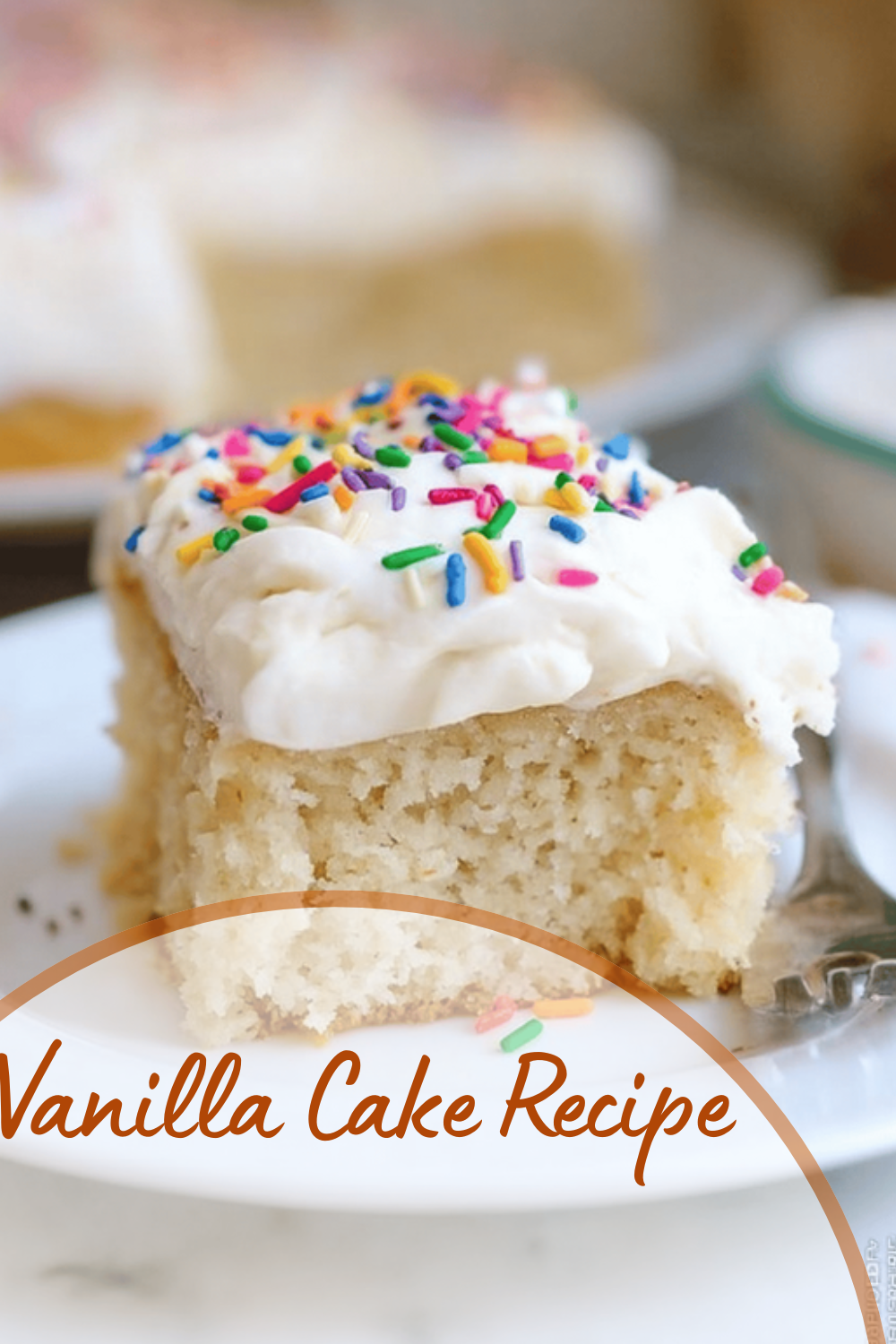
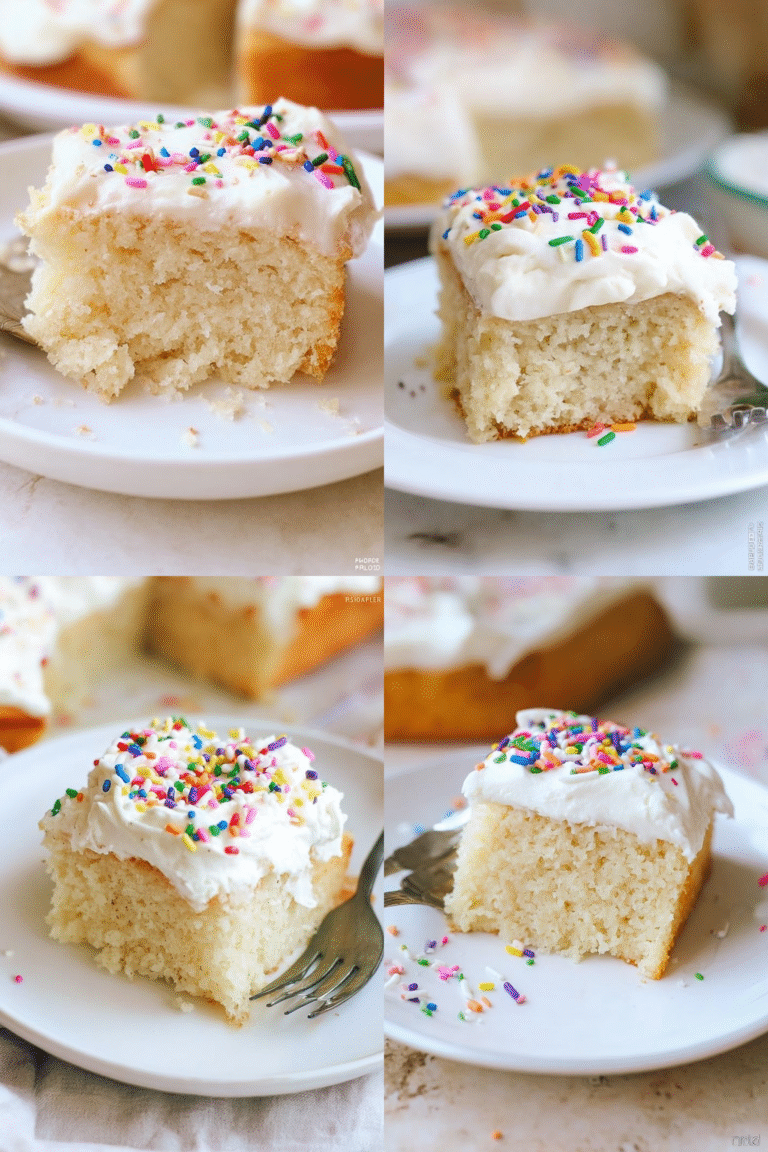
🎂 This Vanilla Cake Recipe delivers moist, fluffy layers that stay delicious for days, perfect for any celebration.
🍰 Its rich flavor and tender crumb make it a timeless classic, easy to prepare with simple ingredients and techniques.
- Total Time: 2 hours 50 minutes
- Yield: 10 to 12 slices 1x
Ingredients
2 cups plain or all-purpose flour
2 1/2 teaspoons baking powder
1/4 teaspoon kosher salt
4 large eggs at room temperature (about 50 55g each)
1 1/2 cups caster or superfine sugar (regular granulated sugar also works)
115g unsalted butter, cut into cubes
1 cup full-fat milk
3 teaspoons vanilla extract
3 teaspoons vegetable or canola oil
225g unsalted butter, softened
500g sifted icing sugar (powdered sugar)
3 teaspoons vanilla extract
2 to 4 tablespoons milk, to adjust consistency
Instructions
1-Preheat oven to 180°C (350°F) with fan 160°C. Grease and line two 20cm (8 inch) cake pans.
2-Whisk together 2 cups plain or all-purpose flour, 2 1/2 teaspoons baking powder, and 1/4 teaspoon kosher salt. Set aside.
3-Beat 4 large eggs (about 50 55g each) for 30 seconds on medium speed. Gradually add 1 1/2 cups caster or superfine sugar over 45 seconds while beating.
4-Continue beating the eggs and sugar for 7 minutes on high speed until the volume triples and the mixture turns pale and thick.
5-While the eggs are beating, melt 115g unsalted butter in 1 cup full-fat milk by heating together until hot but not boiling.
6-Add the flour mixture into the egg mixture in three parts, mixing briefly and gently to just combine.
7-Take about 1 1/2 cups of the egg batter and whisk it into the hot milk-butter mixture until smooth and foamy.
8-Slowly pour this milk mixture back into the egg batter while mixing on low speed gently.
9-Scrape the bowl sides and mix lightly for about 10 seconds until the batter is smooth and pourable.
10-Pour the batter evenly into the prepared pans. Tap the pans 3 times on the countertop to release large air bubbles.
11-Bake for 30 minutes or until the cakes are golden and a skewer inserted comes out clean.
12-Cool the cakes in the pans for 15 minutes, then turn out onto racks. For neat layers, cool upside down to flatten the dome.
13-Once cool, frost with the vanilla buttercream or preferred frosting.
14-Vanilla Buttercream Directions:
14.1-Beat 225g unsalted butter at high speed until pale and fluffy, about 3 minutes.
14.2-Gradually add 500g sifted icing sugar in three additions, mixing lightly between each addition to avoid dust clouds.
14.3-Beat on high for a full 3 minutes until fluffy and creamy.
14.4-Add 3 teaspoons vanilla extract and 2 to 4 tablespoons milk, mixing to the desired consistency. Use immediately or refrigerate and rewhip before using.
Last Step:
Please leave a rating and comment letting us know how you liked this recipe! This helps our business to thrive and continue providing free, high-quality recipes for you.Notes
🥚 Use room temperature eggs for better volume; warm in warm water if needed.
🧁 Ensure baking powder is fresh to get proper rise.
🔥 Use hot milk-butter mixture in batter without cooling to maintain moisture.
⏰ Do not interrupt beating to keep air bubbles for fluffy texture.
🍚 Mix flour only until just combined to avoid dense texture.
🎂 Tap cake pans before baking to release large bubbles.
🥄 Cool cakes upside down for even layers.
💧 Store unfrosted layers wrapped well at room temperature to maintain moisture.
🍫 Use varied frostings like vanilla buttercream, chocolate fudge, or fresh cream with berries.
🍰 Do not reduce sugar; it’s key for aeration and moisture.
- Prep Time: 20 minutes
- Cooling Time: 2 hours
- Cook Time: 30 minutes
- Category: Dessert
- Method: Baking
- Cuisine: American
- Diet: Vegetarian
Nutrition
- Serving Size: 1 slice
- Calories: 339
- Sugar: 31 g
- Sodium: 97 mg
- Fat: 13 g
- Saturated Fat: 7 g
- Carbohydrates: 51 g
- Fiber: 1 g
- Protein: 6 g
- Cholesterol: 91 mg