
Why You’ll Love This Thai Chicken Soup
This Thai chicken soup is a go-to recipe for anyone craving bold, comforting flavors that come together with minimal effort. With its quick prep and a symphony of aromatic herbs, it’s perfect for busy weeknights when you need something hearty yet healthy. Let’s dive into what makes this dish a favorite among home cooks and families alike.
The ease of preparation stands out, as this soup simmers in just 20 minutes from start to finish, making it ideal for beginners or those with packed schedules. Health benefits abound from ingredients like fresh ginger and coconut milk, which can support hydration and provide anti-inflammatory properties as noted in various sources. For more on ginger’s perks, check out this guide on ginger benefits, and it pairs well with the soup’s overall nourishing profile.
Versatility is another highlight, allowing you to adapt it for different diets, such as using vegetable broth for a vegetarian version. The distinctive flavor comes from a balance of lime, herbs, and spices that create a restaurant-quality taste right at home. Overall, it’s a healthy twist on comfort food that fits seamlessly into various lifestyles.
Jump to:
- Why You’ll Love This Thai Chicken Soup
- Essential Ingredients for Thai Chicken Soup
- How to Prepare the Perfect Thai Chicken Soup: Step-by-Step Guide
- Building the Flavor Base
- Cooking the Main Components
- Final Touches and Serving
- Protein and Main Component Alternatives
- Vegetable, Sauce, and Seasoning Modifications
- Mastering Thai Chicken Soup: Advanced Tips and Variations
- Pro Cooking Techniques
- Flavor Variations and Presentation
- How to Store Thai Chicken Soup: Best Practices
- FAQs: Frequently Asked Questions About Thai Chicken Soup
- Can I use rice instead of rice noodles in Thai chicken soup?
- How can I make Thai chicken soup spicier?
- What is the best way to store leftover Thai chicken soup?
- What side dishes go well with Thai chicken soup?
- Do I need to measure rice noodles precisely for this soup?
- Thai Chicken Soup
- Ingredients
- Instructions
- Last Step:
- Notes
- Nutrition
- Did you make this recipe?
Essential Ingredients for Thai Chicken Soup
Great Thai chicken soup starts with the right ingredients, and this recipe keeps things simple yet flavorful. Below is a comprehensive list of all the items you’ll need, based on a reliable preparation method. Each ingredient is listed with its precise measurement to ensure your soup turns out just right.
- 1 tablespoon olive oil
- 1/2 medium onion, chopped finely
- 1 teaspoon grated fresh ginger
- 3 cloves garlic, minced
- 4 heaping tablespoons Thai red curry paste
- 4 cups chicken or vegetable broth
- 2 cups water
- Juice of 1 lime
- 3.5 ounces uncooked rice noodles
- 1 (13.5 ounce) can full fat coconut milk
- 2 cups shredded cooked chicken (rotisserie style recommended)
- Generous handful fresh basil, torn
- Handful fresh cilantro, chopped
- Chopped scallions to taste
- Salt and pepper to taste
- Lime wedges for serving (optional)
These ingredients provide a solid base for the soup, with options like vegetable broth for vegetarians. For those watching their diet, coconut milk adds creaminess while keeping things dairy-free, and you can learn more about its advantages from coconut milk benefits.
How to Prepare the Perfect Thai Chicken Soup: Step-by-Step Guide
Gathering your ingredients is the first key to success in making Thai chicken soup. Start by trimming and preparing 2 cups of shredded cooked chicken, along with chopping 1/2 medium onion finely and grating 1 teaspoon of fresh ginger. Having everything ready, or mise en place, helps the process flow smoothly, especially if you’re adapting for dietary swaps like using tofu.
Building the Flavor Base
In a large pot over medium-high heat, add 1 tablespoon olive oil and the chopped onion, then sauté for about 5 minutes until softened. Next, stir in the grated ginger, minced garlic, and 4 heaping tablespoons of Thai red curry paste, cooking for 30 seconds until fragrant. This step infuses the base with essential aromas, setting the stage for the broth.
Cooking the Main Components
Pour in 4 cups of broth, 2 cups of water, and the juice of 1 lime, then add 3.5 ounces of uncooked rice noodles and bring to a gentle boil. Stir in the can of full fat coconut milk and the 2 cups of shredded chicken, reducing the heat to medium-low for a 10-minute simmer. This allows the flavors to meld without overcooking the noodles.
Final Touches and Serving
Add the generous handful of torn fresh basil, handful of chopped cilantro, and chopped scallions to taste, then season with salt and pepper as needed. For added texture, consider serving with lime wedges, and if you’re looking for dessert ideas to complement this meal, try a simple treat like classic sugar cookies from our site. Serve immediately for the best experience.
This method ensures a balanced soup that’s ready in just 20 minutes, with prep taking 5 minutes and cooking 15. It’s straightforward and adaptable, making it perfect for weeknights.
Protein and Main Component Alternatives
To keep your Thai chicken soup flexible, consider swapping the protein based on your preferences. For instance, replace the 2 cups of shredded cooked chicken with extra-firm tofu or tempeh for a vegetarian option. These changes help maintain the soup’s hearty nature while accommodating various diets.
Adaptations like using shrimp or fish keep the flavors intact, and adjusting quantities to about 2 cups ensures each serving stays satisfying. This approach makes the recipe versatile for everyone from students to seniors.
Vegetable, Sauce, and Seasoning Modifications
Vegetables can enhance your Thai chicken soup by adding nutrition and variety. Try incorporating items like spinach or bell peppers alongside the existing onions and garlic for a fresh twist. Sauces and seasonings play a big role too, such as using tamari instead of fish sauce for umami in vegan versions.
Adjust heat with Thai chilies or reduce sodium by opting for low-sodium broth. These tweaks let you tailor the soup to your taste, whether you’re aiming for a lighter meal or something more robust, as suggested in the tips for spiciness.
Mastering Thai Chicken Soup: Advanced Tips and Variations
Pro Cooking Techniques
To elevate your soup, focus on building a deep broth by gently simmering the base ingredients. Roasting elements like ginger can intensify flavors, and straining for clarity ensures a polished result. These methods are great for food enthusiasts looking to refine their skills.
Flavor Variations and Presentation
Experiment with more lemongrass or curry paste for unique profiles, and present the soup with fresh herbs for visual appeal. Make-ahead options, like preparing the broth in advance, help with meal prep for busy parents. Freezing portions keeps it convenient without losing quality.
Timing is key, so use fresh aromatics when possible and simmer gently to preserve flavors. This section builds on the original recipe’s tips, like freezing ginger for ease.
How to Store Thai Chicken Soup: Best Practices
Proper storage keeps your Thai chicken soup fresh and safe. After cooking, cool it quickly in shallow containers before refrigerating in airtight ones for up to 3-4 days. Always keep noodles and herbs separate to avoid sogginess.
For freezing, portion without fresh add-ins and store for up to 3 months. Reheat gently to maintain texture, and add fresh elements before serving. These steps make batch-cooking easy for working professionals.

FAQs: Frequently Asked Questions About Thai Chicken Soup
Can I use rice instead of rice noodles in Thai chicken soup?
Yes, you can replace rice noodles with cooked rice in Thai chicken soup. Add about one cup of cooked rice toward the end of cooking, stirring gently to combine. This substitution works well if you prefer a heartier texture or don’t have rice noodles on hand.
How can I make Thai chicken soup spicier?
To increase the spice level, add spicy red curry paste instead of the mild version. You can also include chopped fresh Thai chilies or sprinkle crushed red pepper flakes. Another option is to serve the soup with sriracha sauce on the side, letting each person adjust the heat to their taste.
What is the best way to store leftover Thai chicken soup?
Store leftover Thai chicken soup in an airtight container in the refrigerator for up to 3-4 days. When reheating, warm it over low heat on the stove, adding a little water or broth if the soup has thickened. Freezing is possible but may alter the texture of the chicken and soften the noodles excessively.
What side dishes go well with Thai chicken soup?
Thai chicken soup pairs nicely with fresh, crunchy sides like bean sprouts or a Thai cabbage salad. A slice of crusty bread is also a simple way to complement the flavors and add a satisfying texture to the meal.
Do I need to measure rice noodles precisely for this soup?
It’s not necessary to measure rice noodles exactly since sizes and thicknesses vary by brand. Using thicker noodles can give a better texture, and you can adjust the amount based on how soupy or noodle-heavy you prefer your soup. Just soak or boil the noodles according to package instructions before adding them to the soup.
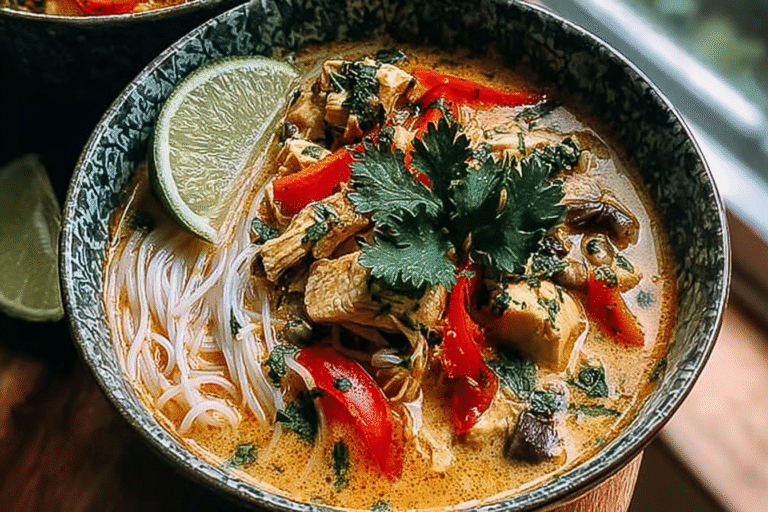
Thai Chicken Soup
🍲 Thai Chicken Curry Soup brings bold, vibrant flavors with simple ingredients, offering a comforting and aromatic meal.
🌿 This easy-to-make soup combines creamy coconut milk, fragrant herbs, and tender chicken for a satisfying and nutritious dish.
- Total Time: 20 minutes
- Yield: 4 servings
Ingredients
– 1 tablespoon olive oil
– 1/2 medium onion, chopped finely
– 1 teaspoon grated fresh ginger
– 3 cloves garlic, minced
– 4 heaping tablespoons Thai red curry paste
– 4 cups chicken or vegetable broth
– 2 cups water
– Juice of 1 lime
– 3.5 ounces uncooked rice noodles
– 1 (13.5 ounce) can full fat coconut milk
– 2 cups shredded cooked chicken (rotisserie style recommended)
– Generous handful fresh basil, torn
– Handful fresh cilantro, chopped
– Chopped scallions to taste
– Salt and pepper to taste
– Lime wedges for serving (optional)
Instructions
1-Gathering your ingredients: is the first key to success in making Thai chicken soup. Start by trimming and preparing 2 cups of shredded cooked chicken, along with chopping 1/2 medium onion finely and grating 1 teaspoon of fresh ginger. Having everything ready, or mise en place, helps the process flow smoothly, especially if you’re adapting for dietary swaps like using tofu.
2-Building the Flavor Base: In a large pot over medium-high heat, add 1 tablespoon olive oil and the chopped onion, then sauté for about 5 minutes until softened. Next, stir in the grated ginger, minced garlic, and 4 heaping tablespoons of Thai red curry paste, cooking for 30 seconds until fragrant. This step infuses the base with essential aromas, setting the stage for the broth.
3-Cooking the Main Components: Pour in 4 cups of broth, 2 cups of water, and the juice of 1 lime, then add 3.5 ounces of uncooked rice noodles and bring to a gentle boil. Stir in the can of full fat coconut milk and the 2 cups of shredded chicken, reducing the heat to medium-low for a 10-minute simmer. This allows the flavors to meld without overcooking the noodles.
4-Final Touches and Serving: Add the generous handful of torn fresh basil, handful of chopped cilantro, and chopped scallions to taste, then season with salt and pepper as needed. For added texture, consider serving with lime wedges, and if you’re looking for dessert ideas to complement this meal, try a simple treat like classic sugar cookies from our site. Serve immediately for the best experience.
Last Step:
Please leave a rating and comment letting us know how you liked this recipe! This helps our business to thrive and continue providing free, high-quality recipes for you.Notes
🌱 Store fresh ginger in the freezer for easier grating and longer shelf life.
⏰ Prepare other ingredients while onion is sautéing to save time.
🌶️ Adjust spiciness by tasting curry paste first and adding Thai chilis or red pepper flakes if desired.
- Prep Time: 5 minutes
- Cook Time: 15 minutes
- Cook Time: 15 minutes
- Category: Soup
- Method: Simmering
- Cuisine: Thai
Nutrition
- Serving Size: 1 serving
- Calories: 304
- Sugar: 1 g
- Sodium: 660 mg
- Fat: 20 g
- Saturated Fat: 13 g
- Unsaturated Fat: 5 g
- Trans Fat: 0 g
- Carbohydrates: 19 g
- Fiber: 1 g
- Protein: 15 g
- Cholesterol: 38 mg