
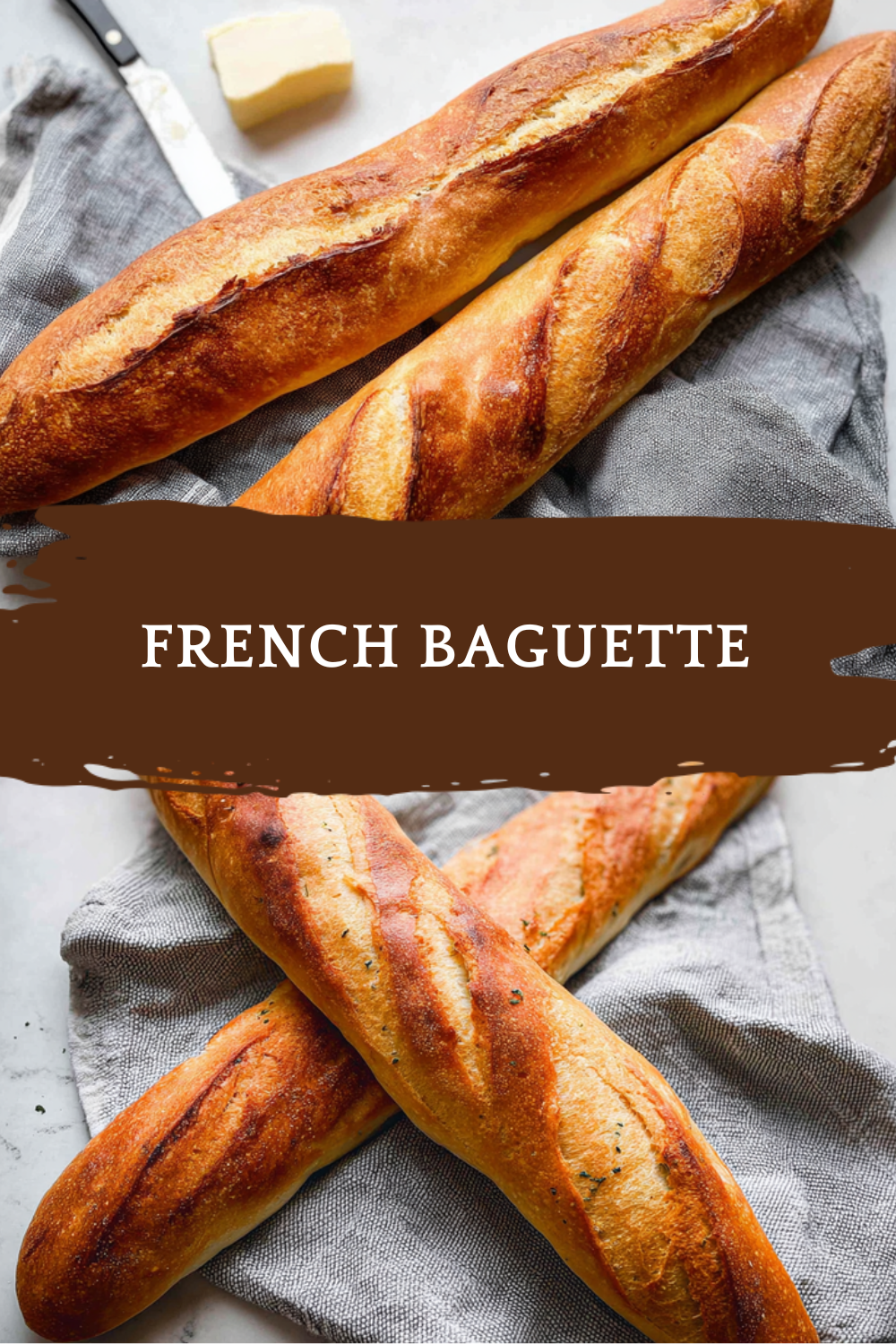
Why You’ll Love This French Baguette
Imagine pulling a warm, crusty French baguette straight from your oven, with that perfect contrast of a crispy exterior and a soft, airy interior that makes every bite feel like a treat. This recipe stands out because it’s simple enough for beginners yet delivers professional results that will wow your guests. Whether you’re a busy parent looking for an easy baking project or a food enthusiast wanting to try something new, making French baguettes at home brings a sense of accomplishment and fresh flavor to your table.
One reason you’ll enjoy this French baguette is its ease of preparation, ideal for both new bakers and those with packed schedules. It uses straightforward ingredients and steps that fit into your routine without needing fancy tools. Plus, the health benefits are clear, as it’s made from basic, wholesome components that provide natural energy and low-fat goodness.
This baguette’s versatility lets you adapt it to various needs, from vegan tweaks to gluten-free options, making it a go-to for different diets. Its distinctive flavor comes from the natural fermentation process, creating that signature taste that elevates any meal, whether it’s a quick sandwich or a fancy dinner.
For more ideas on using baguettes in meals, check out our French Dip Sandwich recipe that pairs perfectly with fresh bread. Additionally, the baguette’s adaptability means you can enjoy it in countless ways, adding to its appeal for home cooks everywhere.
Jump to:
- Why You’ll Love This French Baguette
- Essential Ingredients for French Baguette
- Main Ingredients
- Equipment Needed
- How to Prepare the Perfect French Baguette: Step-by-Step Guide
- Mixing and Initial Rest
- Building Dough Strength
- Fermentation Time
- Shaping the Dough
- Forming the Baguettes
- Proofing and Baking
- Dietary Substitutions to Customize Your French Baguette
- Protein and Main Component Alternatives
- Vegetable, Sauce, and Seasoning Modifications
- Mastering French Baguette: Advanced Tips and Variations
- Pro Cooking Techniques
- Flavor Variations
- Presentation and Make-Ahead Options
- How to Store French Baguette: Best Practices
- FAQs: Frequently Asked Questions About French Baguette
- What ingredients do I need to make a traditional French baguette?
- How long can I store baguette dough in the refrigerator before baking?
- Do I need special equipment to bake French baguettes at home?
- What’s the best way to know when baguette dough is ready to bake?
- Can I freeze freshly baked baguettes, and how should I reheat them?
- French Baguette
- Ingredients
- Instructions
- Last Step:
- Notes
- Nutrition
- Did you make this recipe?
Essential Ingredients for French Baguette
Gathering the right ingredients is the first step to baking a great French baguette, and using precise measurements helps ensure success. This section lists everything you need, based on a reliable recipe that focuses on quality and simplicity.
Main Ingredients
- 500 g all-purpose flour
- 360 g water (about 1 1/2 cups plus 1 tablespoon)
- 10 g salt (about 2 teaspoons)
- 3 g instant yeast (about 1 teaspoon)
- 25 g honey (about 1 tablespoon; optional for subtle sweetness)
Equipment Needed
- Oven
- Large, thick baking stone or kiln shelf (approximately 16 x 21 inches)
- Baker’s couche or kitchen towel
- Bread lame or sharp serrated knife for scoring
- Large wooden peel or similar tool for transferring baguettes
- Bread pan with hot water and rolled kitchen towel for steam
- Parchment paper (optional)
Special dietary options can make this recipe even more flexible. For a vegan version, stick with the basic ingredients since they’re plant-based. If you’re going gluten-free, swap the all-purpose flour with a gluten-free blend that works for bread. For a low-calorie twist, use the honey sparingly or opt for whole grain flours to keep things light and nutritious.
How to Prepare the Perfect French Baguette: Step-by-Step Guide
Baking a French baguette at home is easier than you might think, and following these steps will help you get that crispy crust and soft interior just right. Start by mixing your ingredients carefully to build a strong dough base, then move through the process with patience for the best results.
Mixing and Initial Rest
First, mix all the ingredients in a bowl until the dough is fully hydrated and uniform. Cover it and let it rest for 15 minutes to let the flavors start developing.
Building Dough Strength
Next, perform 3 sets of stretch and folds over 1 1/2 hours. Each set involves pulling and folding each corner of the dough four times, then resting for 30 to 45 minutes between sets in a warm spot. This step helps create that airy texture inside the baguette.
Fermentation Time
After the folds, cover the dough and refrigerate it for cold fermentation, which takes 12 to 24 hours and can go up to 48 hours. During this time, the dough will roughly double in volume, adding depth to the flavor.
Shaping the Dough
Once fermentation is done, remove the dough from the fridge and turn it out onto a floured surface. Divide it into three equal pieces and shape each into a rectangle about 4-5 by 7-8 inches. Let them rest for 45 to 60 minutes before moving on.
Forming the Baguettes
Stretch the rectangles slightly and roll them into cylinders by folding the longer sides into the rectangle and sealing the seams with your thumb. Repeat the folding two more times to form tight cylinders about 14-15 inches long.
Proofing and Baking
Place the shaped baguettes seam side up on a baker’s couche dusted with a mix of regular and rice flour, cover them, and proof at room temperature for 30 to 60 minutes. The dough should spring back slowly when poked. Preheat your oven to 500°F (260°C) with the baking stone on the upper rack and a pan of hot water on the lower rack for steam.
Transfer the baguettes seam side down onto parchment paper, dust off excess flour, and score each with 3 angled cuts. Slide them onto the hot baking stone, reduce the oven to 475°F (246°C), and bake for 15 minutes. Then, remove the water pan, rotate the baguettes 180 degrees, lower the temperature to 450°F (232°C), and bake for another 15 minutes until deep golden brown.

Dietary Substitutions to Customize Your French Baguette
One of the best parts of this French baguette recipe is how easy it is to tweak for different needs. If you’re looking to make it fit your diet, start with simple swaps that keep the taste and texture intact.
Protein and Main Component Alternatives
- For a vegan variation, the recipe is already vegan-friendly since it uses no animal products.
- Gluten-free flour blends can replace the all-purpose flour to suit gluten-sensitive diets, helping maintain a similar texture if you adjust the hydration.
- Low-calorie options might involve using whole wheat flour and cutting back on honey to reduce sugar while boosting nutrients.
Vegetable, Sauce, and Seasoning Modifications
Experiment with additions like herbs or seeds to change things up. For instance, adding rosemary can bring a fresh twist, or you could use garlic-infused oil as a topping for extra flavor.
Seasonal tweaks, such as mixing in sun-dried tomatoes or olives, can make your baguette more exciting. Remember to reduce sodium if you’re watching your intake, keeping the bread healthy and adaptable.
Mastering French Baguette: Advanced Tips and Variations
Once you’re comfortable with the basics, try these advanced tips to take your French baguette to the next level. Using techniques like cold fermentation can make a big difference in flavor and texture.
Pro Cooking Techniques
Try refrigerating the dough overnight for deeper flavors, as this slows things down and improves the crust. Always use a heavy baking stone for better oven spring, and don’t forget steam during baking to get that perfect rise.
Flavor Variations
- Add seeds like sesame or poppy on the crust for extra crunch.
- Mix whole grains into the dough for a heartier version.
Presentation and Make-Ahead Options
Score your baguettes at 30-40 degree angles for the best expansion, and brush with water for a shiny finish. You can prepare the dough ahead, freeze it after the first rise, and bake later to save time while keeping that fresh taste.
| Tips for Success | Why It Helps |
|---|---|
| Use a kitchen scale for ingredients | Ensures consistent results every time |
| Maintain 72% hydration | Creates a softer crumb without making the dough too sticky |
| Handle dough gently | Preserves the texture and crumb structure |
How to Store French Baguette: Best Practices
Keeping your French baguette fresh is key to enjoying it later, and proper storage helps maintain that crispy crust. Store it in a paper bag at room temperature for short-term use to keep it from going stale too quickly.
If you need to keep it longer, wrap the baguette tightly and freeze it for up to 3 months. When you’re ready to eat, reheat it in the oven at 350°F (175°C) for about 10 minutes to bring back that fresh-baked feel.
Slicing before freezing makes meal prep easier, so you can grab just what you need. These methods ensure your baguettes stay tasty, whether you’re planning ahead or dealing with leftovers.
FAQs: Frequently Asked Questions About French Baguette
What ingredients do I need to make a traditional French baguette?
A classic French baguette uses just four ingredients: flour, water, yeast, and salt. These simple components, when combined properly, create the bread’s distinctive crust and chewy crumb. You can use bread flour for best texture, but all-purpose flour also works. Avoid adding extra ingredients like sugar or fat to maintain the authentic taste.
How long can I store baguette dough in the refrigerator before baking?
You can keep baguette dough refrigerated for up to 48 hours. This cold fermentation process, called cold retarding, slows yeast activity and enhances flavor and texture. Beyond 48 hours, the dough may start to degrade, potentially affecting rise and taste. Always cover the dough tightly to prevent drying.
Do I need special equipment to bake French baguettes at home?
Essential tools include a baking stone or steel to retain heat and create a crisp crust, a baker’s couche or clean kitchen towel for proofing shaped dough, a bread lame or sharp blade for scoring, and a peel or flat board for transferring the dough to the oven. Alternatives for stones include unglazed tiles or stacked baking sheets.
What’s the best way to know when baguette dough is ready to bake?
Use the finger poke test: gently press the dough with your fingertip. If the indentation springs back slowly but remains slightly, the dough is properly proofed. If it springs back quickly, it needs more time; if it doesn’t spring back at all, it may be over-proofed. Also, look for small surface bubbles and increased volume.
Can I freeze freshly baked baguettes, and how should I reheat them?
Yes, baguettes freeze well when fully baked and cooled. Wrap them tightly with vacuum sealing or plastic wrap and place in the freezer. To reheat, thaw at room temperature and warm in the oven at 350°F (175°C) for about 10 minutes. This restores the crust’s crispness and the bread’s fresh texture.
French Baguette
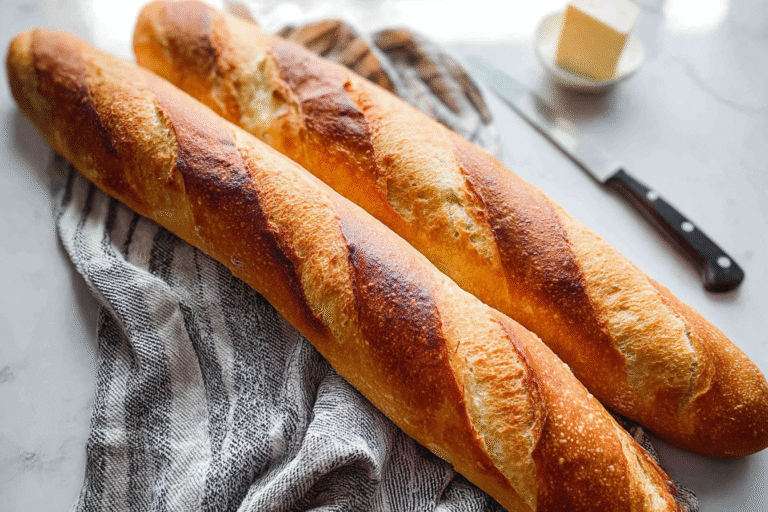
🥖 Enjoy the rich and authentic taste of homemade French baguettes with a perfectly crispy crust and soft, airy interior.
🌟 This recipe guarantees a deliciously satisfying bread experience, ideal for sandwiches or as a table centerpiece.
- Total Time: 12 hours 45 minutes to 24 hours 45 minutes
- Yield: 3 baguettes
Ingredients
– 500 g all-purpose flour
– 360 g water (about 1 1/2 cups plus 1 tablespoon)
– 10 g salt (about 2 teaspoons)
– 3 g instant yeast (about 1 teaspoon)
– 25 g honey (about 1 tablespoon; optional for subtle sweetness)
Instructions
1-Mixing and Initial Rest: First, mix all the ingredients in a bowl until the dough is fully hydrated and uniform. Cover it and let it rest for 15 minutes to let the flavors start developing.
2-Building Dough Strength: Next, perform 3 sets of stretch and folds over 1 1/2 hours. Each set involves pulling and folding each corner of the dough four times, then resting for 30 to 45 minutes between sets in a warm spot. This step helps create that airy texture inside the baguette.
3-Fermentation Time: After the folds, cover the dough and refrigerate it for cold fermentation, which takes 12 to 24 hours and can go up to 48 hours. During this time, the dough will roughly double in volume, adding depth to the flavor.
4-Shaping the Dough: Once fermentation is done, remove the dough from the fridge and turn it out onto a floured surface. Divide it into three equal pieces and shape each into a rectangle about 4-5 by 7-8 inches. Let them rest for 45 to 60 minutes before moving on.
5-Forming the Baguettes: Stretch the rectangles slightly and roll them into cylinders by folding the longer sides into the rectangle and sealing the seams with your thumb. Repeat the folding two more times to form tight cylinders about 14-15 inches long.
6-Proofing and Baking: Place the shaped baguettes seam side up on a baker’s couche dusted with a mix of regular and rice flour, cover them, and proof at room temperature for 30 to 60 minutes. The dough should spring back slowly when poked. Preheat your oven to 500°F (260°C) with the baking stone on the upper rack and a pan of hot water on the lower rack for steam.
6-Proofing and Baking: Transfer the baguettes seam side down onto parchment paper, dust off excess flour, and score each with 3 angled cuts. Slide them onto the hot baking stone, reduce the oven to 475°F (246°C), and bake for 15 minutes. Then, remove the water pan, rotate the baguettes 180 degrees, lower the temperature to 450°F (232°C), and bake for another 15 minutes until deep golden brown.
Last Step:
Please leave a rating and comment letting us know how you liked this recipe! This helps our business to thrive and continue providing free, high-quality recipes for you.Notes
⚖️ Use a kitchen scale for precise measurements to ensure dough consistency.
💧 Maintain dough hydration at 72% for the perfect crumb texture.
🔥 Steam in the oven is crucial for achieving the ideal crust and oven spring.
- Prep Time: 15 minutes
- Cold Fermentation Time: 12 to 24 hours
- Cook Time: 30 minutes
- Category: Bread
- Method: Baking
- Cuisine: French
- Diet: Vegetarian
Nutrition
- Serving Size: 1 slice (about 50 g)
- Calories: 158 kcal
- Sugar: 2 g
- Sodium: 326 mg
- Fat: 1 g
- Saturated Fat: 1 g
- Unsaturated Fat: 0 g
- Trans Fat: 0 g
- Carbohydrates: 33 g
- Fiber: 1 g
- Protein: 4 g
- Cholesterol: 0 mg