
Why You’ll Love This Peanut Sauce
If you’re looking for a simple yet delicious new favorite, this peanut sauce recipe is here to win your heart. In just a few minutes, you can whip up a batch of homemade peanut sauce that’s perfect for adding flair to any meal. It’s versatile enough to fit into your busy life, whether you’re a home cook trying new flavors or a busy parent needing a quick dip for veggies.
One of the best parts about this peanut sauce is its ease of preparation. It takes only 5 minutes to make with no cooking required, so even if you’re in a rush, you can stir it together quickly using basic ingredients from your pantry. This makes it ideal for students or working professionals who want a tasty, effortless addition to their meals without spending hours in the kitchen.
From a health angle, this peanut sauce offers some great benefits. Each tablespoon packs about 50 calories, including 2g of protein and 4g of fat, with just 3g of carbohydrates and a bit of fiber to keep you satisfied. It’s full of nutrients like potassium, vitamins A, calcium, and iron, making it a smart choice for diet-conscious folks or those seeking nutrient-packed options that support daily wellness.
Then there’s the amazing versatility of this recipe, which is a game-changer for many. You can use it as a dip, sauce, or dressing for a variety of dishes, adapting it to different dietary needs like vegan or gluten-free swaps. Whether you’re serving it with stir-fries, salads, or even as a spread, this homemade peanut sauce recipe shines in many scenarios.
Lastly, the distinctive flavor sets this peanut sauce apart, blending sweet, salty, and spicy notes into something truly special. The mix of smooth peanut butter, ginger, and a hint of sesame seeds creates a taste that’s both comforting and exciting, perfect for food enthusiasts exploring new tastes. If you love thai peanut sauce, this easy homemade version will quickly become your go-to for its balanced, customizable profile.
Jump to:
- Why You’ll Love This Peanut Sauce
- Essential Ingredients for Peanut Sauce
- How to Prepare the Perfect Peanut Sauce: Step-by-Step Guide
- Dietary Substitutions to Customize Your Peanut Sauce
- Protein and Main Component Alternatives
- Vegetable, Sauce, and Seasoning Modifications
- Mastering Peanut Sauce: Advanced Tips and Variations
- Pro Cooking Techniques
- Flavor Variations
- How to Store Peanut Sauce: Best Practices
- FAQs: Frequently Asked Questions About Peanut Sauce
- What are the main ingredients in peanut sauce?
- How do you make peanut sauce from scratch?
- What can I serve peanut sauce with?
- How long does homemade peanut sauce last in the fridge?
- Can you substitute peanut butter in peanut sauce if allergic?
- Peanut Sauce
- Ingredients
- Instructions
- Last Step:
- Notes
- Nutrition
- Did you make this recipe?
Essential Ingredients for Peanut Sauce
- ⅓ cup smooth peanut butter (microwave for about 15 seconds if thick) – This forms the creamy base, providing richness and a nutty flavor that makes the sauce smooth and irresistible.
- ¼ teaspoon ground or freshly minced ginger – Adds a zesty kick and warmth, enhancing the overall spice without overwhelming the other flavors; it’s key for that authentic thai peanut sauce vibe.
- 1 tablespoon maple syrup or agave – Brings in natural sweetness to balance the savory elements, making this peanut sauce recipe adaptable for those watching sugar intake.
- 2 tablespoons low-sodium soy sauce – Offers saltiness and depth, while keeping sodium in check; this is essential for a savory homemade peanut sauce that’s flavorful yet approachable.
- 1 teaspoon rice wine vinegar – Provides a tangy acidity that brightens the sauce, helping to make it versatile as an easy peanut sauce for dressings or dips.
- ½ teaspoon sesame seeds – Contributes a nutty crunch and subtle earthiness, elevating the texture and taste of your homemade peanut sauce.
- ¼ teaspoon crushed red pepper flakes (optional) – Adds a touch of heat for those who enjoy a spicy twist, allowing you to customize this easy homemade peanut sauce to your preference.
- 2 to 4 tablespoons hot water – Used to adjust the consistency, ensuring your peanut sauce is just right for pouring, dipping, or mixing into recipes.
For special dietary options, this recipe is naturally vegan since all ingredients are plant-based. It’s gluten-free if you choose a gluten-free soy sauce, which is great for those with restrictions. If you’re aiming for a low-calorie version, simply use less peanut butter or opt for a lower-fat alternative to keep things light without losing flavor.
How to Prepare the Perfect Peanut Sauce: Step-by-Step Guide
Making your own peanut sauce at home is a breeze, and this easy homemade peanut sauce recipe will guide you through it. Start by gathering all your ingredients to ensure a smooth process. This thai peanut sauce comes together in just 5 minutes, making it perfect for busy days or impromptu meals.
First Step: Begin by preparing your peanut butter if it’s thick. Take ⅓ cup of smooth peanut butter and microwave it for about 15 seconds to make it easier to mix this step ensures your peanut sauce has a creamy texture from the start.
Second Step: In a bowl or jar, combine the microwaved peanut butter with ¼ teaspoon of ground or freshly minced ginger, 1 tablespoon of maple syrup or agave, 2 tablespoons of low-sodium soy sauce, 1 teaspoon of rice wine vinegar, ½ teaspoon of sesame seeds, and ¼ teaspoon of crushed red pepper flakes if you want some spice.
Third Step: Add 2 tablespoons of hot water to the mixture and whisk everything together vigorously until it’s smooth and well-blended. A blender works great for this if you prefer a super creamy result with your homemade peanut sauce.
Fourth Step: Taste the sauce and adjust as needed. If it’s too thick for your liking, gradually stir in more hot water, one tablespoon at a time, until you reach the desired consistency. This is your chance to tweak the sweetness, saltiness, or spice to match your preferences, making this peanut sauce recipe truly customizable.
Fifth Step: Once blended, your easy peanut sauce is ready to use right away as a dip, dressing, or sauce. For dietary adaptations, swap soy sauce for tamari if you’re gluten-free, or use agave for a vegan-friendly sweetener. This step ensures the sauce fits various needs while maintaining its delicious flavor.
Sixth Step: If you’re preparing ahead, store the sauce in an airtight container in the fridge for up to one week. Remember, this thai peanut sauce can be adapted for low-sodium diets by reducing the soy sauce or using alternatives, keeping it accessible for everyone.
Final Step: Serve your homemade peanut sauce with your favorite dishes, like stir-fries or salads. It’s versatile enough for meal prep, so double the recipe if needed, and enjoy the traces of vitamins A, calcium, and iron in every tablespoon. For a related treat, check out our chewy almond blondies recipe for another nutty delight that pairs well with sauces.

Dietary Substitutions to Customize Your Peanut Sauce
Protein and Main Component Alternatives
When customizing your peanut sauce, think about swapping the main base for better dietary fits. For example, if you’re dealing with peanut allergies, substitute the peanut butter with almond butter, tahini, or sunflower seed butter to keep that creamy texture intact.
These options maintain the essence of your thai peanut sauce while catering to allergies or preferences. Always start with the same ⅓ cup measurement and adjust water as needed for consistency, ensuring your homemade peanut sauce stays delicious and adaptable.
Vegetable, Sauce, and Seasoning Modifications
For vegetable tweaks, add fresh herbs like cilantro if you want a brighter note in your easy peanut sauce. When it comes to sauces, swap rice wine vinegar for lime juice to amp up the tang, or use coconut aminos instead of soy sauce for a lower-sodium, gluten-free version of this peanut sauce recipe.
Seasoning changes can include more ginger for extra zing or skipping the red pepper flakes for a milder homemade peanut sauce. These modifications make it easy to tailor the recipe to seasons or dietary needs, like making it lighter for summer meals.
Mastering Peanut Sauce: Advanced Tips and Variations
Pro Cooking Techniques
To elevate your homemade peanut sauce, focus on blending techniques for the smoothest result. Using a high-speed blender can make your thai peanut sauce extra creamy, which is perfect for dressings, while whisking by hand works for a chunkier dip.
Pro tip: Always microwave thick peanut butter first to avoid lumps, and taste as you go to fine-tune flavors. For busy schedules, this 5-minute prep makes it ideal for meal prep, ensuring you’re ready for any occasion.
Flavor Variations
Experiment with different sweeteners like agave for a vegan twist or add garlic for a deeper flavor in your easy peanut sauce. Try incorporating coconut milk instead of water for a creamier version that’s great for thai-inspired dishes.
These changes let you create unique variations of your peanut sauce recipe, such as a spicier blend with more red pepper flakes. Pair it with our banana bread for a sweet-savory combo that adds fun to your meals.
How to Store Peanut Sauce: Best Practices
Proper storage keeps your homemade peanut sauce fresh and flavorful for as long as possible. For short-term needs, refrigeration is key, so place it in an airtight jar and keep it in the fridge for up to one week.
When freezing for longer storage, portion it into ice cube trays and store for up to three months, making it easy to thaw just what you need. For reheating, gently warm in the microwave or on the stove, stirring to maintain its smooth consistency and prevent separation.
Consider meal prep by doubling the recipe and storing batches ahead, which is perfect for busy parents or working professionals. Always check for signs of spoilage before use to ensure safety and quality in your easy peanut sauce.
FAQs: Frequently Asked Questions About Peanut Sauce
What are the main ingredients in peanut sauce?
Peanut sauce typically includes creamy peanut butter as the base, soy sauce or tamari for saltiness, fresh ginger for zing, a sweetener like maple syrup or brown sugar, rice vinegar for tang, sesame oil or seeds for nuttiness, a spice such as chili garlic sauce or sriracha for heat, and water or coconut milk to thin it out. Start with 1/2 cup peanut butter, 2 tablespoons soy sauce, 1 tablespoon each of ginger, sweetener, and vinegar, 1 teaspoon sesame oil, 1/2 teaspoon spice, and 1/4 cup liquid. Blend until smooth. This makes about 1 cup of sauce. Adjust ratios for taste—traditional Thai versions often swap water for coconut milk for creaminess. It’s naturally gluten-free if using tamari, and vegan. Prep time is under 5 minutes. (92 words)
How do you make peanut sauce from scratch?
Making peanut sauce is simple: combine 1/2 cup smooth peanut butter, 2 tbsp soy sauce, 1 tbsp grated ginger, 1 tbsp maple syrup, 1 tbsp rice vinegar, 1 tsp sesame oil, 1/2 tsp chili paste, and 1/4 cup warm water or coconut milk in a bowl. Whisk vigorously until creamy, or use a blender for smoothness. If too thick, add water 1 tbsp at a time. Microwave peanut butter 15 seconds first if stiff. Taste and tweak—more soy for salt, syrup for sweet, chili for spice. Yields 1 cup; ready in 5 minutes. Store in a jar. No cooking needed, perfect for quick meals. Pairs with satay or bowls. (112 words)
What can I serve peanut sauce with?
Peanut sauce is versatile—drizzle over rice noodles, veggie stir-fries, or grain bowls with tofu, chicken, shrimp, or tempeh. Use as a dip for spring rolls, fresh veggies like carrots and cucumber, or satay skewers. Toss with salads, cold noodles, or Buddha bowls for creamy dressing. Great on grilled meats, fish, or roasted potatoes. For snacks, pair with apple slices or crackers. In Thai cuisine, it’s classic with pad Thai or gado-gado. One batch covers multiple dishes. Thin with water for drizzling, thicken for dipping. Keeps meals exciting without extra effort. Experiment with proteins for variety. (98 words)
How long does homemade peanut sauce last in the fridge?
Homemade peanut sauce lasts up to 1 week in an airtight jar in the fridge. The natural oils in peanut butter help preserve it, but vinegar and soy add stability. Stir before use as it may separate. For longer storage, freeze in ice cube trays for 3 months—pop out portions for easy thawing. Signs it’s bad: off smell, mold, or sliminess—discard then. Double recipes for meal prep. Microwave briefly to loosen if thickened. Pro tip: add lime juice before storing for brighter flavor. This makes it practical for weekly use without waste. Always use clean utensils to avoid contamination. (102 words)
Can you substitute peanut butter in peanut sauce if allergic?
Yes, swap peanut butter for allergy-friendly options like sunflower seed butter, almond butter, cashew butter, or tahini (sesame paste). Use the same 1/2 cup amount. Sunflower mimics peanut flavor best; tahini adds earthiness. Test small batches—adjust liquid as some are thicker. All keep it creamy and nutty. For nut-free, try soy nut butter. These maintain sauce texture for dipping or drizzling. Nutrition stays similar: about 100 calories per 2 tbsp serving with 8g fat, 4g protein. Label clearly for allergies. Works in all recipes like satay or salads. Safe, tasty alternative without sacrificing flavor. (96 words)
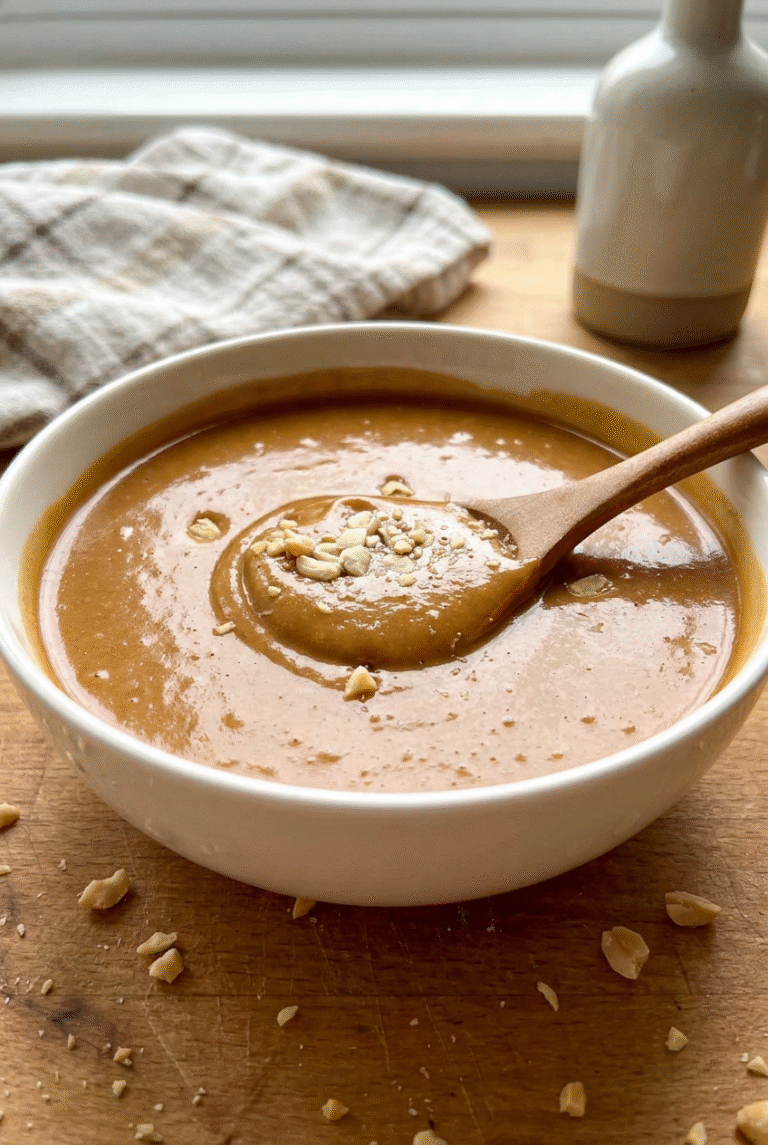
Peanut Sauce
🥜 Discover the creamy, nutty goodness of this easy homemade Thai peanut sauce, perfect for adding authentic flavor to your dishes without store-bought additives.
🌶️ Try this versatile vegan sauce for dipping, drizzling, or marinades, offering a quick way to elevate stir-fries and salads with balanced sweet-spicy notes.
- Total Time: 5 minutes
- Yield: ½ cup
Ingredients
– ⅓ cup smooth peanut butter for creamy base
– ¼ teaspoon ground or freshly minced ginger for zesty kick and warmth
– 1 tablespoon maple syrup or agave for natural sweetness
– 2 tablespoons low-sodium soy sauce for saltiness and depth
– 1 teaspoon rice wine vinegar for tangy acidity
– ½ teaspoon sesame seeds for nutty crunch
– ¼ teaspoon crushed red pepper flakes (optional) for heat
– 2 to 4 tablespoons hot water for adjusting consistency
Instructions
1-First Step: Begin by preparing your peanut butter if it’s thick. Take ⅓ cup of smooth peanut butter and microwave it for about 15 seconds to make it easier to mix this step ensures your peanut sauce has a creamy texture from the start.
2-Second Step: In a bowl or jar, combine the microwaved peanut butter with ¼ teaspoon of ground or freshly minced ginger, 1 tablespoon of maple syrup or agave, 2 tablespoons of low-sodium soy sauce, 1 teaspoon of rice wine vinegar, ½ teaspoon of sesame seeds, and ¼ teaspoon of crushed red pepper flakes if you want some spice.
3-Third Step: Add 2 tablespoons of hot water to the mixture and whisk everything together vigorously until it’s smooth and well-blended. A blender works great for this if you prefer a super creamy result with your homemade peanut sauce.
4-Fourth Step: Taste the sauce and adjust as needed. If it’s too thick for your liking, gradually stir in more hot water, one tablespoon at a time, until you reach the desired consistency. This is your chance to tweak the sweetness, saltiness, or spice to match your preferences, making this peanut sauce recipe truly customizable.
5-Fifth Step: Once blended, your easy peanut sauce is ready to use right away as a dip, dressing, or sauce. For dietary adaptations, swap soy sauce for tamari if you’re gluten-free, or use agave for a vegan-friendly sweetener. This step ensures the sauce fits various needs while maintaining its delicious flavor.
6-Sixth Step: If you’re preparing ahead, store the sauce in an airtight container in the fridge for up to one week. Remember, this thai peanut sauce can be adapted for low-sodium diets by reducing the soy sauce or using alternatives, keeping it accessible for everyone.
7-Final Step: Serve your homemade peanut sauce with your favorite dishes, like stir-fries or salads. It’s versatile enough for meal prep, so double the recipe if needed, and enjoy the traces of vitamins A, calcium, and iron in every tablespoon. For a related treat, check out our chewy almond blondies recipe for another nutty delight that pairs well with sauces.
Last Step:
Please leave a rating and comment letting us know how you liked this recipe! This helps our business to thrive and continue providing free, high-quality recipes for you.Notes
🔥 Microwave thick peanut butter briefly to make whisking effortless and ensure a smooth texture.
🥄 Customize the heat level by adjusting the red pepper flakes or sriracha for your preferred spice intensity.
🧊 For nut allergies, substitute with almond butter or sunflower seed butter while keeping the rest of the recipe the same.
- Prep Time: 5 minutes
- Category: Sauce
- Method: No Cook
- Cuisine: Thai
- Diet: Vegan
Nutrition
- Serving Size: 1 tablespoon
- Calories: 50 kcal
- Sugar: 2 g
- Sodium: 128 mg
- Fat: 4 g
- Saturated Fat: 1 g
- Unsaturated Fat: 3 g
- Trans Fat: 0 g
- Carbohydrates: 3 g
- Fiber: 0.4 g
- Protein: 2 g
- Cholesterol: 0 mg