
Why You’ll Love This Lemon Curd
If you have fresh lemons on hand, this Lemon Curd recipe is about to become your new favorite kitchen trick. It is bright, silky, and has that sweet-tart zing that makes spoon-licking feel completely justified. Best of all, this lemon curd recipe comes together fast, so you can make something special without spending all afternoon at the stove.
- Easy to make: This is an easy lemon curd recipe that uses simple pantry staples and only takes about 10 minutes to cook. With a quick whisk over simmering water, you get a luscious result without complicated steps.
- Bright, fresh flavor: Fresh lemon juice and zest bring a clean citrus pop that tastes far better than anything from a jar. If you love a tangy lemon curd recipe, this one hits that sweet spot between tart and creamy.
- So many ways to use it: Spread it on toast, swirl it into yogurt, tuck it into tarts, or spoon it over cake. This makes homemade lemon curd a smart choice for busy parents, students, bakers, and anyone who wants quick dessert magic.
- Simple ingredients, rich payoff: Eggs, sugar, butter, lemon zest, lemon juice, and salt turn into a smooth custard with a glossy finish. That is the kind of kitchen win that makes a classic lemon curd recipe feel extra rewarding.
One small batch can turn an ordinary breakfast or dessert into something bright, fresh, and a little fancy without much effort at all.
For another citrusy treat idea, you might also enjoy these almond croissant bites with a little spoonful of lemon curd tucked inside.
Jump to:
- Why You’ll Love This Lemon Curd
- Essential Ingredients for Lemon Curd
- Ingredient List
- Special Dietary Options
- How to Prepare the Perfect Lemon Curd: Step-by-Step Guide
- Step 1: Set up your double boiler
- Step 2: Combine the base ingredients
- Step 3: Cook slowly and whisk constantly
- Step 4: Add the butter
- Step 5: Strain and chill
- Step 6: Serve and enjoy
- Dietary Substitutions to Customize Your Lemon Curd
- Protein and Main Component Alternatives
- Vegetable, Sauce, and Seasoning Modifications
- Mastering Lemon Curd: Advanced Tips and Variations
- Pro cooking techniques
- Flavor variations
- Presentation tips
- Make-ahead options
- How to Store Lemon Curd: Best Practices
- Refrigeration
- Freezing
- Reheating
- Meal prep considerations
- FAQs: Frequently Asked Questions About Lemon Curd
- What is lemon curd and how do I use it?
- How long does homemade lemon curd last?
- Can I make lemon curd with other citrus fruits?
- How do I fix lemon curd that didn’t thicken?
- Can I make vegan lemon curd?
- Lemon Curd
- Ingredients
- Instructions
- Last Step:
- Notes
- Nutrition
- Did you make this recipe?
Essential Ingredients for Lemon Curd
This silky lemon curd recipe uses just a handful of ingredients, but each one matters. Stick with fresh lemons and good butter for the best flavor and texture. If you want a thicker curd, replace 2 egg yolks with 1 whole egg for a slightly firmer set.
Ingredient List
- 4 large egg yolks – These create the rich custard base and help the curd thicken properly.
- 2/3 cup granulated sugar – Adds sweetness and balances the tart lemon juice.
- 1 tablespoon lemon zest (from about 1 lemon) – Brings bold citrus aroma and deeper lemon flavor.
- 1/3 cup fresh lemon juice (from about 2 to 3 lemons) – Gives the curd its bright, tangy taste.
- 1/8 teaspoon salt – Sharpens the flavor and keeps the sweetness in check.
- 6 tablespoons unsalted butter, softened and cut into 6 pieces – Makes the curd smooth, glossy, and creamy.
Special Dietary Options
- Vegan: Swap the eggs for aquafaba or a cornstarch and plant milk mixture, and replace butter with coconut oil or vegan margarine.
- Gluten-free: This recipe is naturally gluten-free as written, which makes it a great choice for many diets.
- Low-calorie: Use a little less sugar, but keep in mind that sugar helps with texture as well as sweetness.
| Ingredient | Role in the Recipe |
|---|---|
| Egg yolks | Thicken the curd and create a custard-like base |
| Sugar | Balances tartness and smooths the flavor |
| Lemon zest and juice | Deliver fresh citrus taste and aroma |
| Butter | Adds silkiness and a creamy finish |
If you like citrus-forward breakfast ideas, try serving lemon curd with homemade cinnamon bread for a cozy sweet-and-tangy combo.
How to Prepare the Perfect Lemon Curd: Step-by-Step Guide
Step 1: Set up your double boiler
Fill the bottom of a double boiler with 1 to 2 inches of water and bring it to a boil. Then reduce the heat to a gentle simmer. If you do not have a double boiler, a heatproof glass bowl set over a saucepan works well too. This gentle heat matters because lemon curd can scorch fast if the temperature climbs too high.
Step 2: Combine the base ingredients
In the top pan or heatproof bowl, whisk together the egg yolks, granulated sugar, lemon zest, lemon juice, and salt. Keep whisking until the mixture looks smooth and combined. Fresh lemon juice gives the best flavor, and non-metal utensils can help avoid any metallic taste in this homemade lemon curd.
Step 3: Cook slowly and whisk constantly
Place the bowl over the simmering water and whisk without stopping. You want the mixture to thicken into a texture that looks a lot like hollandaise sauce. This usually takes about 10 minutes, or until the curd reaches 170°F to 77°C. A thermometer is handy, but you can also test by dipping a spoon into the curd. If it coats the back of the spoon, you are right on track.
Whisking steadily is the secret to an easy to make lemon curd that stays smooth. Slow heat plus constant movement helps prevent curdling, which is what gives the curd its silky finish.
Step 4: Add the butter
Once the curd has thickened, remove it from the heat right away. Add the butter pieces one at a time and whisk until each piece melts into the mixture. The butter makes the curd glossy, creamy, and luxurious without being fussy. If you are making the thicker version, using 2 egg yolks and 1 whole egg can give you a firmer result for fillings.
Step 5: Strain and chill
For an extra smooth finish, you can strain the curd through a fine-mesh sieve into a jar or bowl. This removes any tiny bits of cooked egg zest or egg. Then press plastic wrap directly onto the surface of the curd so a skin does not form while it cools.
Refrigerate until set. The total time is about 1 hour 15 minutes, including cooling, though the active work is only 15 minutes. That makes this classic lemon curd recipe a great make-ahead option for busy weeks or last-minute dessert needs.
Step 6: Serve and enjoy
Once chilled, your tangy lemon curd recipe is ready to use. Spoon it onto scones, layer it into parfaits, fill tart shells, or spread it on toast. It is also fantastic as a topping for pancakes, cheesecake, and pound cake. For a fun brunch pairing, try it with peanut butter and jelly pancakes for a sweet breakfast spread.
Tip: If you want the smoothest texture possible, use fresh lemon juice, whisk constantly, and keep the heat gentle from start to finish.

Dietary Substitutions to Customize Your Lemon Curd
Protein and Main Component Alternatives
If you need to change the eggs, there are a few useful swaps. For a vegan version, replace the egg yolks with aquafaba or a cornstarch slurry mixed with plant milk. Aquafaba works well for a lighter style, while cornstarch creates a thicker, more pudding-like result. If you want a richer egg-free version, some cooks also blend in silken tofu, but that changes the flavor more noticeably.
For dairy-free needs, use coconut oil or vegan margarine in place of butter. Coconut oil gives a soft set and a mild tropical note, while vegan margarine keeps the flavor closer to the original. If you are making a batch for guests with different needs, label it clearly so everyone knows what is in the jar.
Vegetable, Sauce, and Seasoning Modifications
Lemon is the star here, but the same method works with other citrus fruits too. Try lime juice and zest for a sharper bite, orange juice for a sweeter flavor, or grapefruit for a more bitter edge. You can even make a mixed-citrus version for a more layered taste. If you like seasonal twists, a little vanilla, ginger, or rosemary can add a gentle flavor shift without overpowering the citrus.
For low-sugar needs, reduce the sugar slightly, though the texture may be a bit less smooth. When making a lighter batch, taste as you go and remember that sugar helps balance the tartness. This flexibility is part of what makes easy lemon curd such a handy recipe for home cooks.
Mastering Lemon Curd: Advanced Tips and Variations
Pro cooking techniques
Keep the heat low and steady, and do not step away from the stove. The biggest mistake with lemon curd is letting it get too hot too fast. If you notice any little lumps, pull it off the heat and whisk hard. A fine-mesh sieve can rescue the texture if needed. Also, use non-metal bowls and tools when possible to avoid a tinny flavor.
Flavor variations
Want a playful twist on this silky lemon curd recipe? Try adding a little lime zest for a sharper citrus kick, or swap some of the lemon juice for orange juice to soften the tartness. You can also stir in a tiny splash of vanilla after cooking for a rounder flavor. For dessert lovers, a berry swirl makes a pretty and tasty finish.
Presentation tips
Serve lemon curd in a small glass jar, a pretty bowl, or a tart shell for a more polished look. Top it with berries, a mint leaf, or a light dusting of powdered sugar. If you are using it as a filling, chill the curd fully before piping or spreading so it holds its shape better.
Make-ahead options
This recipe is a lifesaver for busy schedules. Make it up to several days ahead and keep it chilled until you need it. You can also freeze it in small portions for quick dessert upgrades later. That means the next time you need a bright finish for a cake or breakfast board, your homemade lemon curd is ready to go.
How to Store Lemon Curd: Best Practices
Good storage keeps your lemon curd tasting fresh and smooth. Since it is made with eggs and butter, it needs to be chilled properly once it cools.
Refrigeration
Store the curd in an airtight jar or container in the refrigerator. It will keep for up to 10 days, and many home cooks find it stays lovely even a bit longer if handled carefully. Always press plastic wrap onto the surface before sealing to help prevent a skin from forming.
Freezing
You can freeze lemon curd for 3 to 6 months. Freeze it in small containers or silicone trays so you can thaw only what you need. This works especially well for meal prep or holiday baking when you want a quick filling on hand.
Reheating
Thaw frozen curd in the fridge overnight. If you want to loosen it slightly, let it sit at room temperature for a short time and stir gently. Avoid microwaving at high heat, since that can break the texture.
Meal prep considerations
If you make batch recipes, portion the curd into smaller jars for easy grab-and-go use. That way you can add a spoonful to yogurt, pancakes, or pastries without opening the whole batch every time.
FAQs: Frequently Asked Questions About Lemon Curd
What is lemon curd and how do I use it?
Lemon curd is a smooth, creamy spread made from fresh lemon juice, zest, sugar, eggs, and butter, cooked into a thick custard-like filling. It has a bright, tangy flavor perfect for desserts and breakfasts. Spread it on toast, scones, or pancakes for a zesty twist. Use it as a filling for tarts, pies, cakes, or macarons. Layer it in parfaits with whipped cream and berries, or swirl it into cheesecake batter. It’s also great in thumbprint cookies or as a topping for yogurt. One batch yields about 2 cups, enough for a 9-inch tart or multiple servings. Store extras in the fridge for quick use—its versatility makes it a kitchen staple for citrus lovers. (98 words)
How long does homemade lemon curd last?
Homemade lemon curd stays fresh in the refrigerator for up to 2 weeks when stored in an airtight container or jar. The high acidity from lemons acts as a natural preservative, but always check for off smells or mold before using. For longer storage, freeze it in freezer-safe bags or containers for up to 3 months—thaw overnight in the fridge. Avoid leaving it at room temperature for more than 2 hours to prevent bacterial growth. Label containers with dates for easy tracking. Pro tip: Portion into ice cube trays before freezing for single-use portions in recipes like smoothies or cocktails. This keeps your curd safe and ready anytime. (112 words)
Can I make lemon curd with other citrus fruits?
Yes, swap lemons for other citrus in the same recipe. Use limes for a tart kick, oranges for milder sweetness, or grapefruits for a bitter edge. Pineapple juice works too, creating a tropical pineapple curd like in layered cakes. For cranberries, simmer juice first to reduce tartness. Adjust sugar slightly—tart fruits like limes may need 1-2 extra tablespoons. Zest adds bold flavor, so grate finely from fresh fruit. Cooking time stays the same: gentle heat until it thickens to coat a spoon. Yields the same creamy texture. Test small batches first to perfect ratios. This flexibility lets you match seasonal produce or preferences easily. (108 words)
How do I fix lemon curd that didn’t thicken?
If your lemon curd is too thin, don’t worry—several quick fixes work. First, ensure it reached 170-175°F (77-80°C) on a thermometer; low heat often causes issues. Simmer gently 1-2 more minutes while whisking constantly to avoid curdling. For major fails, strain and return to heat with 1 teaspoon cornstarch slurry (mixed with cold water) per cup of curd—cook until glossy. Another option: whisk in 1 beaten egg yolk and reheat slowly. Chill fully; it firms up more in the fridge. Prevent next time by using room-temperature eggs and fresh lemons. Thick, spoonable curd results every time with these steps. (104 words)
Can I make vegan lemon curd?
Absolutely, create dairy-free, eggless lemon curd using simple swaps. Replace butter with coconut oil or vegan margarine (1/4 cup). For eggs, use 1/4 cup aquafaba (chickpea liquid, whipped to soft peaks) or 2 tablespoons cornstarch dissolved in 1/4 cup plant milk like almond or oat. Combine with 3/4 cup sugar, 1/2 cup lemon juice, and 1 tablespoon zest in a saucepan. Cook over medium-low heat, whisking until thickened (about 8-10 minutes). It sets firmer than traditional versions. Cool and store as usual. Taste-test sugar levels—vegan options may need a bit more. Perfect for pies, fillings, or spreads in plant-based baking. (106 words)
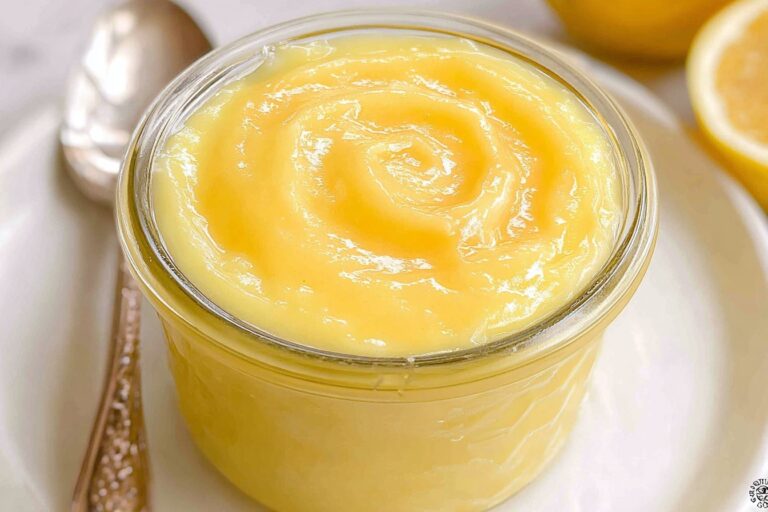
Lemon Curd
🍋 Discover the silky smooth texture and tangy brightness of homemade lemon curd – a burst of fresh citrus perfection!
🍰 Effortlessly made in minutes, it’s versatile for tarts, cakes, toast, or straight from the jar for instant joy!
- Total Time: 1 hour 15 minutes
- Yield: 1 1/2 cups
Ingredients
– 4 large egg yolks for rich custard base and thickening
– 2/3 cup granulated sugar for sweetness and balancing tartness
– 1 tablespoon lemon zest (from about 1 lemon) for citrus aroma and deeper lemon flavor
– 1/3 cup fresh lemon juice (from about 2 to 3 lemons) for bright tangy taste
– 1/8 teaspoon salt for sharpening flavor
– 6 tablespoons unsalted butter, softened and cut into 6 pieces for smooth glossy and creamy
Instructions
1-Step 1: Set up your double boiler Fill the bottom of a double boiler with 1 to 2 inches of water and bring it to a boil. Then reduce the heat to a gentle simmer. If you do not have a double boiler, a heatproof glass bowl set over a saucepan works well too. This gentle heat matters because lemon curd can scorch fast if the temperature climbs too high.
2-Step 2: Combine the base ingredients In the top pan or heatproof bowl, whisk together the egg yolks, granulated sugar, lemon zest, lemon juice, and salt. Keep whisking until the mixture looks smooth and combined. Fresh lemon juice gives the best flavor, and non-metal utensils can help avoid any metallic taste in this homemade lemon curd.
3-Step 3: Cook slowly and whisk constantly Place the bowl over the simmering water and whisk without stopping. You want the mixture to thicken into a texture that looks a lot like hollandaise sauce. This usually takes about 10 minutes, or until the curd reaches 170°F to 77°C. A thermometer is handy, but you can also test by dipping a spoon into the curd. If it coats the back of the spoon, you are right on track. Whisking steadily is the secret to an easy to make lemon curd that stays smooth. Slow heat plus constant movement helps prevent curdling, which is what gives the curd its silky finish.
4-Step 4: Add the butter Once the curd has thickened, remove it from the heat right away. Add the butter pieces one at a time and whisk until each piece melts into the mixture. The butter makes the curd glossy, creamy, and luxurious without being fussy. If you are making the thicker version, using 2 egg yolks and 1 whole egg can give you a firmer result for fillings.
5-Step 5: Strain and chill For an extra smooth finish, you can strain the curd through a fine-mesh sieve into a jar or bowl. This removes any tiny bits of cooked egg zest or egg. Then press plastic wrap directly onto the surface of the curd so a skin does not form while it cools. Refrigerate until set. The total time is about 1 hour 15 minutes, including cooling, though the active work is only 15 minutes. That makes this classic lemon curd recipe a great make-ahead option for busy weeks or last-minute dessert needs.
6-Step 6: Serve and enjoy Once chilled, your tangy lemon curd recipe is ready to use. Spoon it onto scones, layer it into parfaits, fill tart shells, or spread it on toast. It is also fantastic as a topping for pancakes, cheesecake, and pound cake. For a fun brunch pairing, try it with peanut butter and jelly pancakes for a sweet breakfast spread.
Last Step:
Please leave a rating and comment letting us know how you liked this recipe! This helps our business to thrive and continue providing free, high-quality recipes for you.Notes
🔥 Use a double boiler or heatproof glass bowl over simmering water to gently cook and avoid burning or curdling.
🍋 Always opt for fresh lemon juice and zest, and use non-metal utensils to prevent off flavors.
❄️ Store in the fridge for up to 10 days or freeze for 3-6 months; perfect for spreads, fillings, or toppings!
- Prep Time: 5 minutes
- Chill Time: 1 hour
- Cook Time: 10 minutes
- Category: Condiments & Sauces
- Method: Double Boiler
- Cuisine: American
- Diet: Vegetarian, Gluten-Free
Nutrition
- Serving Size: 2 tablespoons
- Calories: 120 kcal per serving
- Sugar: 10g
- Sodium: 30mg
- Fat: 8g
- Saturated Fat: 4.5g
- Unsaturated Fat: 3.5g
- Trans Fat: 0g
- Carbohydrates: 11g
- Fiber: 0g
- Protein: 1g
- Cholesterol: 85mg