
Why You’ll Love This Greek Moussaka
Greek Moussaka stands out as a comforting classic that’s easy to make and packed with flavor. Imagine layers of tender eggplant swapped in for pasta, all topped with a creamy sauce that feels like a warm hug on your plate. This recipe offers a balance of hearty ingredients that make it a go-to for anyone craving Greek cuisine without the fuss of complicated steps.
- Ease of preparation: This Greek Moussaka recipe simplifies things with straightforward steps, like setting up your ingredients ahead for quick assembly. You’ll need just about 40 minutes of prep and 30 minutes of cooking, totaling around 1 hour and 10 minutes. It’s perfect for busy parents or working professionals who want a savory meat sauce and layered eggplant dish without spending all evening in the kitchen.
- Health benefits: Dive into the nutritional perks with about 434 calories per serving, including 20g of carbs and 32g of protein, making it a smart choice for diet-conscious individuals. The eggplant brings fiber and vitamins, like Vitamin C and potassium, while the mix of protein and healthy fats supports wellness without overloading on carbs.
- Versatility: Adapt this Mediterranean recipe to fit various needs, such as vegetarian swaps or gluten-free options, so it’s ideal for students and travelers. Serve it for family dinners or as a low-calorie meal, and it pairs well with different occasions, from casual weeknights to special gatherings.
- Distinctive flavor: What sets this Moussaka recipe with layered eggplant and meat sauce apart is the blend of spices like oregano and cinnamon, creating a rich, aromatic profile. The béchamel sauce adds a creamy texture that ties everything together, making each bite of this traditional Greek Moussaka recipe truly memorable.
Whether you’re a food enthusiast or just starting out, this dish brings the essence of how to make Greek Moussaka in a way that’s both satisfying and straightforward. For more dessert ideas to follow your meal, check out our light lemon olive oil cake that complements the flavors nicely.
Jump to:
- Why You’ll Love This Greek Moussaka
- Essential Ingredients for Greek Moussaka
- For the Eggplant
- For the Meat Filling
- For the Béchamel Sauce
- For the Topping
- Special Dietary Options
- How to Prepare the Perfect Greek Moussaka: Step-by-Step Guide
- Initial Preparation and Mise en Place
- Preparing and Seasoning the Meat Ragu
- Cooking the Eggplant and Potatoes
- Preparing the Béchamel Sauce
- Assembling the Layers
- Final Baking and Checking Doneness
- Finishing Touches and Serving
- Dietary Substitutions to Customize Your Greek Moussaka
- Protein and Main Component Alternatives
- Vegetable, Sauce, and Seasoning Modifications
- Mastering Greek Moussaka: Advanced Tips and Variations
- Pro Cooking Techniques
- Flavor Variations and Presentation Tips
- How to Store Greek Moussaka: Best Practices
- FAQs: Frequently Asked Questions About Greek Moussaka
- What ingredients do I need to make traditional Greek Moussaka?
- How do I prepare and cook eggplant for Moussaka without making it soggy?
- Can I substitute beef for lamb in the meat sauce without changing the flavor too much?
- How should I store leftover Moussaka and can it be frozen?
- Is it possible to prepare Moussaka ahead of time and bake it just before serving?
- Greek Moussaka
- Ingredients
- Instructions
- Last Step:
- Notes
- Nutrition
- Did you make this recipe?
Essential Ingredients for Greek Moussaka
Putting together a great Greek Moussaka starts with the right ingredients, each playing a key role in building layers of flavor and texture. Below is a detailed list of everything you’ll need, organized by section for clarity. I’ve included precise measurements and a quick note on why each one matters, helping you understand how they enhance this eggplant and meat Moussaka dish.
For the Eggplant
- 1 kg eggplant, sliced about 0.75 cm thick – Provides the base layers and adds a hearty, low-carb texture while soaking up flavors.
- 1 tsp salt – Draws out excess moisture to prevent sogginess and reduce bitterness in the eggplant.
- 2 to 3 tbsp olive oil – Helps crisp and brown the slices during baking for a healthier alternative to frying.
For the Meat Filling
- 1 tbsp olive oil – Used for sautéing to build a flavorful base without overwhelming the dish.
- 1 diced onion – Adds sweetness and depth to the savory meat sauce.
- 3 minced garlic cloves – Infuses aromatic notes that enhance the overall Greek cuisine profile.
- 700 g ground beef or lamb – Serves as the main protein, providing richness and traditional taste; lamb adds authenticity.
- 1/2 cup dry red wine (optional) – Deglazes the pan for extra flavor, though you can skip it if preferred.
- 400 g crushed tomatoes – Forms the hearty base of the sauce, contributing moisture and tanginess.
- 3 tbsp tomato paste – Thickens the sauce and intensifies the tomato flavor.
- 1 cup beef broth or stock – Keeps the mixture juicy and balances the spices.
- 1 beef bouillon cube or 1 tsp powder – Boosts the savory depth without adding extra liquid.
- 2 bay leaves – Infuse subtle herbal notes during simmering.
- 1.5 tsp sugar – Balances acidity in the tomatoes for a well-rounded taste.
- 2 tsp dried oregano – A key spice in Greek Moussaka that adds earthy, Mediterranean flair.
- 1/2 tsp cinnamon – Brings warmth and a unique twist to the meat sauce.
- 3/4 tsp salt – Seasons the filling to perfection, enhancing all the flavors.
For the Béchamel Sauce
- 60 g butter – Creates a smooth roux base for the creamy topping.
- 5 tbsp plain flour – Thickens the sauce; use gluten-free flour for adaptations.
- 2 1/2 cups milk – Provides creaminess and helps the sauce set during baking.
- 1/4 tsp freshly grated nutmeg (optional) – Adds a hint of warmth and spice.
- 1/2 cup grated parmesan or traditional Greek cheese – Brings cheesy richness and helps bind the sauce.
- 1 egg – Adds structure so the béchamel sets firmly.
- 1 egg yolk – Enhances the sauce’s richness and stability.
- 1 1/4 tsp vegetable or chicken stock powder (or salt) – Seasons to taste for a flavorful finish.
- 1/4 tsp pepper – Adds a touch of heat and balances the creaminess.
For the Topping
- 1/3 cup breadcrumbs – Creates a crunchy finish on top of the dish.
Special Dietary Options
For those with specific needs, here are easy swaps to make this Moussaka recipe with layered eggplant and meat sauce work for you. For vegan versions, replace ground beef or lamb with lentils or textured vegetable protein to keep the protein high, use plant milk and vegan butter in the béchamel, and swap cheese with nutritional yeast or cashew cream for that creamy element. If going gluten-free, opt for gluten-free flour in the béchamel and double-check labels on broth and bouillon to ensure they’re safe. For low-calorie tweaks, choose lean ground turkey instead of beef, reduced-fat milk, and an olive oil spray to cut down on fat, while skipping potatoes if you want to lower the carbs even more in this traditional Greek Moussaka recipe.
How to Prepare the Perfect Greek Moussaka: Step-by-Step Guide
Creating the perfect Greek Moussaka is all about layering flavors and textures just right. This step-by-step guide walks you through making this Moussaka recipe with layered eggplant and meat sauce from start to finish. We’ll cover everything from prepping your ingredients to baking, with tips to adapt for different diets along the way.
Initial Preparation and Mise en Place
First, gather and prep all your ingredients to make the process smooth. Start by washing and slicing 1 kg of eggplant into 0.75 cm thick pieces, then sprinkle with 1 tsp salt and let them drain in a colander for 30 minutes to remove excess moisture. Preheat your oven to 240°C (450°F) and prepare any optional potatoes by slicing them thinly if you’re adding a base layer. This mise en place step ensures everything is ready, making how to make Greek Moussaka feel less overwhelming for home cooks.
Preparing and Seasoning the Meat Ragu
Second, heat 1 tbsp olive oil in a pan over medium heat and cook 1 diced onion and 3 minced garlic cloves until softened, about 5 minutes. Add 700 g ground beef or lamb and brown it thoroughly, breaking it up as it cooks for 8-10 minutes. For dietary swaps, use lentils here for a vegetarian option. Deglaze with 1/2 cup dry red wine if using, letting it simmer for 2 minutes to cook off the alcohol, then stir in 400 g crushed tomatoes, 3 tbsp tomato paste, 1 cup beef broth, 1 beef bouillon cube, 2 bay leaves, 1.5 tsp sugar, 2 tsp dried oregano, 1/2 tsp cinnamon, and 3/4 tsp salt. Let this mixture simmer for 15 minutes until thickened, adjusting seasoning as needed for your Greek Moussaka.
Cooking the Eggplant and Potatoes
Third, pat the salted eggplant dry and brush with 2-3 tbsp olive oil. Spread the slices on a baking sheet and bake at 240°C (450°F) for 15-20 minutes until browned and softened. If using potatoes, roast them alongside for the same time. For low-calorie or vegan versions, reduce oil by using a spray or grilling the eggplant, which takes about 10 minutes and helps keep the layers firm in this eggplant and meat Moussaka dish.
Preparing the Béchamel Sauce
Fourth, in a separate pot, melt 60 g butter over medium heat and whisk in 5 tbsp plain flour, cooking for 1 minute to form a roux. Gradually add 2 1/2 cups milk, stirring constantly until the mixture thickens, about 5-7 minutes. Remove from heat and mix in 1/2 cup grated cheese, 1/4 tsp nutmeg if using, 1 1/4 tsp stock powder, and 1/4 tsp pepper. Let it cool for 5 minutes, then whisk in 1 egg and 1 egg yolk to help it set. For a vegan twist, use plant-based milk and butter substitutes to maintain the creamy texture in your traditional Greek Moussaka recipe.
Assembling the Layers
Fifth, lower the oven to 180°C (350°F). In a baking dish, layer half the eggplant slices at the bottom, followed by all the meat sauce. Add the remaining eggplant on top, then pour the béchamel sauce evenly over everything. For variations, press the layers gently to ensure they hold together. Sprinkle 1/3 cup breadcrumbs on top for a crunchy finish, adapting with gluten-free crumbs if needed.
Final Baking and Checking Doneness
Sixth, bake the assembled Moussaka for 30-40 minutes until the top is golden brown and the center is bubbling. To check doneness, insert a knife; it should slide in easily. Let it rest for 10 minutes before serving to allow the layers to set, ensuring your Moussaka recipe with layered eggplant and meat sauce slices beautifully.
Finishing Touches and Serving
Finally, garnish with fresh herbs if desired and portion out servings. This step lets the flavors meld, making it ideal for family meals. Remember, for simple sides like banana bread, which can pair as a sweet contrast, check our recipes for more ideas on how to make Greek Moussaka a full experience.
| Nutrient | Amount per Serving |
|---|---|
| Calories | 434 |
| Carbohydrates | 20g |
| Protein | 32g |
| Fat | 24g |

Dietary Substitutions to Customize Your Greek Moussaka
Protein and Main Component Alternatives
Swapping proteins can make your Greek Moussaka more accessible. For instance, replace 700 g ground beef or lamb with ground turkey or chicken to lighten it up, which cooks in the same 8-10 minutes but results in a milder flavor. If going plant-based, use cooked lentils or chopped mushrooms as a substitute, adjusting simmer time to 10 minutes for the right texture in this Moussaka recipe with layered eggplant and meat sauce. For lower-carb options, swap potatoes with sliced zucchini, which softens in 15 minutes and keeps the layers intact without adding extra bulk.
Vegetable, Sauce, and Seasoning Modifications
Experiment with vegetables like bell peppers or mushrooms in place of some eggplant, reducing baking time to 10-15 minutes for a fresher twist. For the sauce, try a roasted pepper purée instead of crushed tomatoes, which thickens faster and adds smokiness, or use cashew cream for the béchamel to keep it vegan while maintaining creaminess. Seasoning tweaks, such as more cinnamon for extra warmth or fresh herbs for brightness, can change the flavor profile of this traditional Greek Moussaka recipe, with each adjustment taking just a minute to incorporate.
Mastering Greek Moussaka: Advanced Tips and Variations
Pro Cooking Techniques
Take your Greek Moussaka to the next level with smart techniques. Start by salting and draining the eggplant for 30 minutes to cut down on oil absorption, leading to crisp layers. Oven-roasting at 240°C instead of frying gives better control over texture and is quicker for large batches, while letting the dish rest for 10 minutes helps the layers set firmly.
Flavor Variations and Presentation Tips
For flavor, add smoked cheese to the béchamel or incorporate herbs like dill for a fresh boost in this Mediterranean recipe. Presentation-wise, slice neatly and serve with a herb salad for contrast, ensuring your Moussaka recipe with layered eggplant and meat sauce looks as good as it tastes. Make-ahead options include assembling ahead and freezing, which works well with vegan substitutions for easy reheating.
To learn more about eggplant’s health perks, check out this guide on eggplant benefits.
How to Store Greek Moussaka: Best Practices
Proper storage keeps your Greek Moussaka fresh and tasty. For short-term, cool it to room temperature within 2 hours and cover tightly in the fridge for up to 3-4 days. Freezing works for longer, so portion it into containers, wrap well, and store for 2-3 months. Reheat in the oven at 160-180°C until warm, or use the microwave for quick servings, noting it might soften the top a bit in this traditional Greek Moussaka recipe.
FAQs: Frequently Asked Questions About Greek Moussaka
What ingredients do I need to make traditional Greek Moussaka?
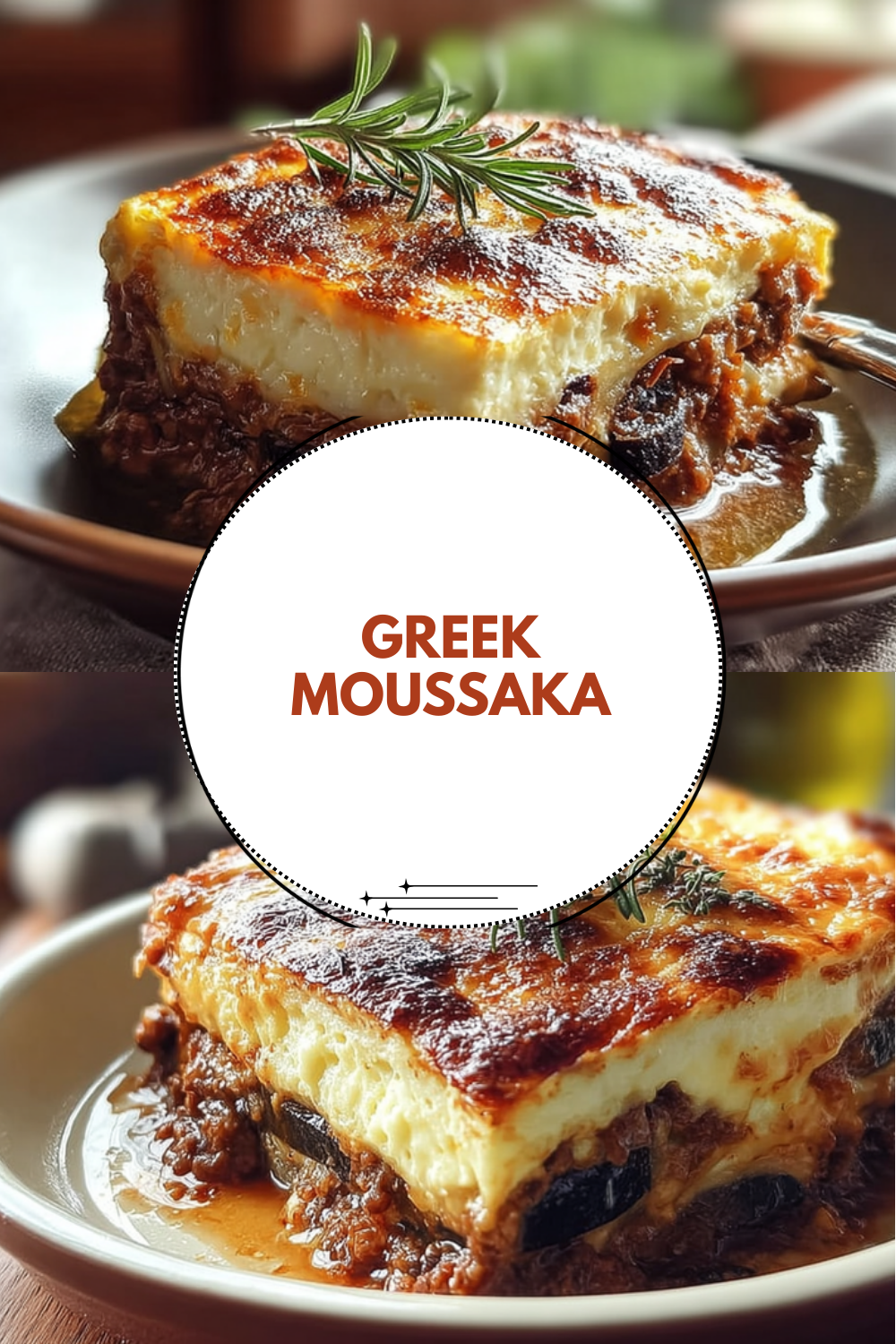
Traditional Greek Moussaka consists of four main components: sliced eggplant, a spiced meat sauce typically made with ground lamb or beef flavored with oregano and cinnamon, a thick béchamel sauce enriched with eggs to help it set, and a topping of breadcrumbs. These layers are assembled like a lasagna and baked until golden and bubbly. Additional ingredients often include onions, garlic, tomato paste for the meat sauce, and olive oil for cooking.
How do I prepare and cook eggplant for Moussaka without making it soggy?
To avoid soggy eggplant, start by slicing it about ½ inch thick and sprinkling salt on both sides. Let it sit for 20-30 minutes to draw out excess moisture, then pat dry with paper towels. Instead of frying, you can also bake or grill the slices using a light brush of olive oil, which reduces oil absorption and keeps the texture firm. This step prevents watery Moussaka and keeps the layers distinct.
Can I substitute beef for lamb in the meat sauce without changing the flavor too much?
Yes, ground beef is a popular substitute for lamb in Moussaka and produces a similarly rich meat sauce. Use classic Greek spices like cinnamon, allspice, and oregano to capture the authentic flavor. Adjust seasoning to taste and let the sauce simmer until thickened. The key is to have a thick consistency so the sauce holds well between layers and doesn’t run when sliced.
How should I store leftover Moussaka and can it be frozen?
Leftover Moussaka can be refrigerated in an airtight container for up to 3 days. For longer storage, allow it to cool completely, wrap tightly with plastic wrap and aluminum foil, then freeze. It keeps well for up to 3 months. To reheat, thaw overnight in the fridge and warm in a preheated oven at 350°F (175°C) until heated through, which will help keep the béchamel sauce creamy.
Is it possible to prepare Moussaka ahead of time and bake it just before serving?
Absolutely. You can fully assemble Moussaka up to one day in advance, cover it, and refrigerate. Baking it the next day allows the flavors to meld and makes for an easier serving day. When ready, bake in a preheated oven at 350°F (175°C) until the béchamel topping is golden and the dish is heated through, usually about 45 minutes to 1 hour.
Greek Moussaka
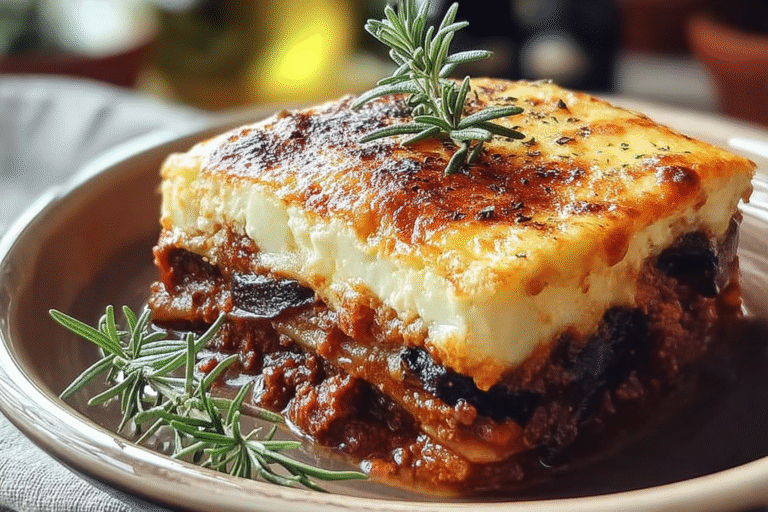
🍆 This Moussaka Recipe features layered eggplant and a savory meat sauce, topped with creamy béchamel for a comforting meal.
🔥 It’s a flavorful, lower-carb alternative to traditional pasta dishes, perfect for hearty family dinners or special occasions.
- Total Time: 1 hour 10 minutes
- Yield: 6 servings
Ingredients
– 1 kg eggplant sliced about 0.75 cm thick Provides the base layers and adds a hearty, low-carb texture while soaking up flavors
– 1 tsp salt Draws out excess moisture to prevent sogginess and reduce bitterness in the eggplant
– 2 to 3 tbsp olive oil Helps crisp and brown the slices during baking for a healthier alternative to frying
– 1 tbsp olive oil Used for sautéing to build a flavorful base without overwhelming the dish
– 1 diced onion Adds sweetness and depth to the savory meat sauce
– 3 minced garlic cloves Infuses aromatic notes that enhance the overall Greek cuisine profile
– 700 g ground beef or lamb Serves as the main protein, providing richness and traditional taste; lamb adds authenticity
– 1/2 cup dry red wine (optional) Deglazes the pan for extra flavor, though you can skip it if preferred
– 400 g crushed tomatoes Forms the hearty base of the sauce, contributing moisture and tanginess
– 3 tbsp tomato paste Thickens the sauce and intensifies the tomato flavor
– 1 cup beef broth or stock Keeps the mixture juicy and balances the spices
– 1 beef bouillon cube or 1 tsp powder Boosts the savory depth without adding extra liquid
– 2 bay leaves Infuse subtle herbal notes during simmering
– 1.5 tsp sugar Balances acidity in the tomatoes for a well-rounded taste
– 2 tsp dried oregano A key spice in Greek Moussaka that adds earthy, Mediterranean flair
– 1/2 tsp cinnamon Brings warmth and a unique twist to the meat sauce
– 3/4 tsp salt Seasons the filling to perfection, enhancing all the flavors
– 60 g butter Creates a smooth roux base for the creamy topping
– 5 tbsp plain flour Thickens the sauce; use gluten-free flour for adaptations
– 2 1/2 cups milk Provides creaminess and helps the sauce set during baking
– 1/4 tsp freshly grated nutmeg (optional) Adds a hint of warmth and spice
– 1/2 cup grated parmesan or traditional Greek cheese Brings cheesy richness and helps bind the sauce
– 1 egg Adds structure so the béchamel sets firmly
– 1 egg yolk Enhances the sauce’s richness and stability
– 1 1/4 tsp vegetable or chicken stock powder (or salt) Seasons to taste for a flavorful finish
– 1/4 tsp pepper Adds a touch of heat and balances the creaminess
– 1/3 cup breadcrumbs Creates a crunchy finish on top of the dish
Instructions
1-Initial Preparation and Mise en Place: First, gather and prep all your ingredients to make the process smooth. Start by washing and slicing 1 kg of eggplant into 0.75 cm thick pieces, then sprinkle with 1 tsp salt and let them drain in a colander for 30 minutes to remove excess moisture. Preheat your oven to 240°C (450°F) and prepare any optional potatoes by slicing them thinly if you’re adding a base layer. This mise en place step ensures everything is ready, making how to make Greek Moussaka feel less overwhelming for home cooks.
2-Preparing and Seasoning the Meat Ragu: Second, heat 1 tbsp olive oil in a pan over medium heat and cook 1 diced onion and 3 minced garlic cloves until softened, about 5 minutes. Add 700 g ground beef or lamb and brown it thoroughly, breaking it up as it cooks for 8-10 minutes. For dietary swaps, use lentils here for a vegetarian option. Deglaze with 1/2 cup dry red wine if using, letting it simmer for 2 minutes to cook off the alcohol, then stir in 400 g crushed tomatoes, 3 tbsp tomato paste, 1 cup beef broth, 1 beef bouillon cube, 2 bay leaves, 1.5 tsp sugar, 2 tsp dried oregano, 1/2 tsp cinnamon, and 3/4 tsp salt. Let this mixture simmer for 15 minutes until thickened, adjusting seasoning as needed for your Greek Moussaka.
3-Cooking the Eggplant and Potatoes: Third, pat the salted eggplant dry and brush with 2-3 tbsp olive oil. Spread the slices on a baking sheet and bake at 240°C (450°F) for 15-20 minutes until browned and softened. If using potatoes, roast them alongside for the same time. For low-calorie or vegan versions, reduce oil by using a spray or grilling the eggplant, which takes about 10 minutes and helps keep the layers firm in this eggplant and meat Moussaka dish.
4-Preparing the Béchamel Sauce: Fourth, in a separate pot, melt 60 g butter over medium heat and whisk in 5 tbsp plain flour, cooking for 1 minute to form a roux. Gradually add 2 1/2 cups milk, stirring constantly until the mixture thickens, about 5-7 minutes. Remove from heat and mix in 1/2 cup grated cheese, 1/4 tsp nutmeg if using, 1 1/4 tsp stock powder, and 1/4 tsp pepper. Let it cool for 5 minutes, then whisk in 1 egg and 1 egg yolk to help it set. For a vegan twist, use plant-based milk and butter substitutes to maintain the creamy texture in your traditional Greek Moussaka recipe.
5-Assembling the Layers: Fifth, lower the oven to 180°C (350°F). In a baking dish, layer half the eggplant slices at the bottom, followed by all the meat sauce. Add the remaining eggplant on top, then pour the béchamel sauce evenly over everything. For variations, press the layers gently to ensure they hold together. Sprinkle 1/3 cup breadcrumbs on top for a crunchy finish, adapting with gluten-free crumbs if needed.
6-Final Baking and Checking Doneness: Sixth, bake the assembled Moussaka for 30-40 minutes until the top is golden brown and the center is bubbling. To check doneness, insert a knife; it should slide in easily. Let it rest for 10 minutes before serving to allow the layers to set, ensuring your Moussaka recipe with layered eggplant and meat sauce slices beautifully.
7-Finishing Touches and Serving: Finally, garnish with fresh herbs if desired and portion out servings. This step lets the flavors meld, making it ideal for family meals. Remember, for simple sides like banana bread, which can pair as a sweet contrast, check our recipes for more ideas on how to make Greek Moussaka a full experience.
Last Step:
Please leave a rating and comment letting us know how you liked this recipe! This helps our business to thrive and continue providing free, high-quality recipes for you.Notes
🍽️ Salting eggplant helps remove bitterness and excess moisture.
🔥 Baking or grilling eggplant is healthier and less oily than frying.
🥄 Including eggs in béchamel sauce helps it set firmly during baking.
- Prep Time: 40 minutes
- Cook Time: 30 minutes
- Category: Main Course
- Method: Baking
- Cuisine: Greek
- Diet: Low Carb
Nutrition
- Serving Size: 1 serving
- Calories: 434
- Sugar: 7 g
- Sodium: 1317 mg
- Fat: 24 g
- Saturated Fat: 10 g
- Carbohydrates: 20 g
- Fiber: 5 g
- Protein: 32 g
- Cholesterol: 158 mg