
Why You’ll Love This Different Cuts Of Meat
When you’re diving into the world of cooking, knowing about different cuts of meat can make a big difference in your meals. This guide breaks it down so you can pick the right beef for whatever you’re making, whether it’s a quick weeknight dinner or a slow-cooked family feast. Let’s look at why focusing on these cuts is so helpful for home cooks like you.
- Ease of preparation: Understanding different cuts of meat simplifies your cooking routine. For instance, tender cuts like ribeye cook up quickly on the grill in just minutes, letting busy parents whip up a meal without spending hours in the kitchen. This approach cuts down on prep time and makes everyday cooking feel straightforward and enjoyable, enhancing your overall experience with beef sections.
- Health benefits: Many cuts, such as flank or round, are lean and packed with nutrients, supporting wellness goals for diet-conscious folks. These options provide protein while keeping fat levels lower, which is great for maintaining energy without overloading on calories a smart choice for students or working professionals watching their intake. Exploring meat cuts explained helps you align your meals with a healthier lifestyle effortlessly.
- Versatility: Different cuts of meat adapt to all sorts of recipes, from grilling sirloin for a barbecue to slow-cooking chuck for stews. This flexibility means you can tweak dishes for various tastes, like making them lighter for travelers or heartier for baking enthusiasts hosting parties. Beef cuts and their uses open up endless possibilities, making it easy to switch things up based on what you have on hand.
- Distinctive flavor: Each cut brings its own unique taste, like the rich marbling in rib cuts that adds a juicy, flavorful punch to your plate. Understanding beef cuts lets you experiment and create standout meals that delight food enthusiasts, from seniors enjoying familiar favorites to newlyweds trying new things. It’s all about beef anatomy turning ordinary ingredients into something special for any occasion.
This knowledge not only saves time but also helps you make informed choices that fit your lifestyle, making every meal more rewarding.
Jump to:
- Why You’ll Love This Different Cuts Of Meat
- Essential Ingredients for Different Cuts Of Meat
- How to Prepare the Perfect Different Cuts Of Meat: Step-by-Step Guide
- First Step: Select Your Cut
- Second Step: Prepare Your Ingredients
- Third Step: Preheat and Season
- Fourth Step: Cook According to Cut
- Fifth Step: Rest and Serve
- Dietary Substitutions to Customize Your Different Cuts Of Meat
- Protein and Main Component Alternatives
- Vegetable, Sauce, and Seasoning Modifications
- Mastering Different Cuts Of Meat: Advanced Tips and Variations
- Pro Cooking Techniques
- Flavor Variations
- Presentation Tips and Make-Ahead Options
- How to Store Different Cuts Of Meat: Best Practices
- FAQs: Frequently Asked Questions About Different Cuts Of Meat
- What are the most common cuts of beef and how do they vary in tenderness?
- How do different meat cuts affect cooking methods?
- Which meat cuts are best for slow cooking or stews?
- What should I know when buying meat cuts to get the best value?
- How can I tell the difference between front and rear cuts of meat?
- Different Cuts Of Meat
- Ingredients
- Instructions
- Last Step:
- Notes
- Nutrition
- Did you make this recipe?
Essential Ingredients for Different Cuts Of Meat
When working with different cuts of meat, the key is selecting the right beef sections to match your recipe. While these aren’t measured like in a traditional recipe, here’s a clear list of the main ingredients based on common uses. Each cut plays a specific role, adding flavor, texture, and nutrition to your dishes.
- Chuck – This cut from the shoulder adds rich, flavorful depth to stews and roasts, ideal for hearty meals.
- Rib – Sourced from the ribs, it brings tender, marbled goodness perfect for grilling or searing steaks.
- Loin – A versatile option divided into sirloin and short loin, great for quick-cooking methods like frying or grilling.
- Round – From the hind legs, it’s lean and works well in dishes needing slow cooking for tenderness.
- Flank – A boneless, flavorful cut that’s tough but excels when grilled quickly for stir-fries or tacos.
- Short plate – This fatty cut is affordable and adds moisture to recipes like braised dishes or ground beef mixtures.
- Brisket – Fatty and tough, it’s best for low-and-slow cooking, providing tender results in barbecue or pot roasts.
- Shank – Very tough and sinewy, it’s excellent for soups and stocks when cooked for extended periods.
- Seasonings – Vary based on the recipe, such as salt, pepper, or herbs, to enhance the natural flavors of the cuts.
- Marinades – Optional mixtures like oil and vinegar help tenderize tougher cuts, improving taste and texture.
For special dietary options, consider these adaptations: Vegan alternatives might replace beef with plant-based proteins like seitan or mushrooms for similar textures. Gluten-free choices are straightforward since most cuts are naturally gluten-free, just avoid any added sauces. Low-calorie versions focus on leaner cuts like flank to keep things light while maintaining meat cuts guide principles.
How to Prepare the Perfect Different Cuts Of Meat: Step-by-Step Guide
Getting the hang of different cuts of meat starts with choosing the right one for your cooking method. This step-by-step guide walks you through preparing beef cuts, ensuring great results every time. We’ll cover everything from basic prep to finishing touches, adapting for various needs along the way.
First Step: Select Your Cut
Begin by picking a cut that fits your recipe opt for tender ones like loin for fast meals or tougher ones like chuck for slow cooking. Check the meat’s color and marbling; bright red with even fat means it’s fresh. This step is key for understanding beef cuts and avoiding common pitfalls, especially if you’re adapting for dietary preferences like leaner options for health-focused eaters.
Second Step: Prepare Your Ingredients
Once selected, gather any seasonings or marinades, like herbs for flavor or oil for grilling. For tougher cuts, consider tenderizing with a simple rub or marinade to break down fibers. This makes the process easier for busy parents, and you can swap in low-fat versions if needed for diet-conscious individuals, tying into how different cuts of meat enhance overall meals.
Third Step: Preheat and Season
Heat your cooking surface grill for high-heat cuts like flank or oven for slow-cooked brisket at around 275°F for several hours. Season generously with salt and pepper, adding extras like garlic for more depth. Timing here is crucial; tender cuts might only need 5-10 minutes per side, while others take 2-4 hours, helping with beef sections for optimal tenderness.
Fourth Step: Cook According to Cut
For tender cuts like sirloin, grill over high heat for 3-5 minutes per side to keep it juicy. For tougher ones, like shank, use a slow cooker with moist heat for 6-8 hours until fork-tender. Monitor internal temperatures aim for 145°F for medium-rare and adjust for variations, such as using plant-based substitutes if going vegan, all while following meat cuts explained basics.
Fifth Step: Rest and Serve
Let the meat rest for 5-10 minutes after cooking to lock in juices, then slice against the grain for better texture. Pair with sides like veggies for a balanced meal, and consider how beef cuts and their uses can inspire creative plating. This final touch ensures your dish is not only delicious but also adaptable, making it perfect for food enthusiasts exploring different cuts of beef explained.
This method, taking about 30 minutes to several hours depending on the cut, helps you master understanding beef cuts while keeping things simple and adaptable.

Dietary Substitutions to Customize Your Different Cuts Of Meat
Protein and Main Component Alternatives
When working with different cuts of meat, swapping proteins can make your meal fit various needs. For instance, replace beef chuck with turkey for a lighter option, or use pork if you’re looking for a budget-friendly twist. These changes keep the dish versatile while aligning with meat cuts guide for those managing allergies or preferences.
Vegetable, Sauce, and Seasoning Modifications
Adapt vegetables by swapping in seasonal ones, like using zucchini instead of carrots in a stew with round cuts. For sauces, opt for tomato-based ones over creamy for low-calorie versions, and adjust seasonings with herbs for gluten-free tweaks. This ensures your recipes with beef sections remain flexible and flavorful, enhancing understanding beef cuts for all eaters.
Mastering Different Cuts Of Meat: Advanced Tips and Variations
Pro Cooking Techniques
To elevate your skills with different cuts of meat, try reverse searing for ribeye cook low then finish hot for a perfect crust. For flank, marinate overnight to boost tenderness, and always let meat rest post-cook. These tips, drawn from beef cuts and their uses, help avoid drying out lean cuts like round.
Flavor Variations
Experiment with rubs, like a spicy blend for sirloin or Asian-inspired marinades for skirt steak. Add complementary flavors from simple desserts to balance the meal, tying into meat cuts explained for creative pairings.
Presentation Tips and Make-Ahead Options
Slice against the grain and garnish with herbs for eye-catching plates. Prep tougher cuts like brisket ahead and freeze for busy days, making understanding beef cuts even more practical.
How to Store Different Cuts Of Meat: Best Practices
Proper storage keeps your different cuts of meat fresh and safe. For refrigeration, wrap cuts like loin in airtight packaging and store at 40°F or below for up to 3-5 days. Freezing works well for tougher cuts; portion brisket into bags and freeze at 0°F for 4-12 months to preserve quality. Learn more about beef cuts storage here.
For reheating, use low heat in the oven or microwave to avoid toughness, and always check for safety. Meal prep ideas include batch-cooking chuck for weekly stews, helping with beef sections management.
FAQs: Frequently Asked Questions About Different Cuts Of Meat
What are the most common cuts of beef and how do they vary in tenderness?
The most common beef cuts include ribeye, sirloin, tenderloin, chuck, and brisket. Tenderloin is the most tender but also one of the leanest cuts, ideal for steaks like filet mignon. Ribeye is marbled with fat, offering rich flavor and tenderness, perfect for grilling. Sirloin is moderately tender and versatile for frying or roasting. Chuck comes from the shoulder and is tougher, best suited for slow cooking or braising. Brisket is a tough cut that becomes tender when cooked low and slow, often used for smoking or stewing.
How do different meat cuts affect cooking methods?
Choice of cooking method depends largely on the cut’s tenderness and fat content. Tender cuts like ribeye and tenderloin are best suited for quick, high-heat methods such as grilling, pan-searing, or broiling. Tougher cuts like brisket, chuck, and shank require low-temperature, slow cooking (braising, slow roasting, or smoking) to break down connective tissues and become tender. Understanding the cut helps achieve the best texture and flavor, avoiding overcooking or undercooking.
Which meat cuts are best for slow cooking or stews?
Cuts from the shoulder, like beef chuck, as well as brisket, short ribs, and shank, are ideal for slow cooking or stews. These cuts contain more connective tissue and collagen, which dissolve during long, moist cooking, resulting in tender, flavorful meat. Using these tougher cuts in slow cooking methods like braising or pressure cooking tenderizes the meat and enhances flavor, making them perfect for hearty meals like pot roast or beef stew.
What should I know when buying meat cuts to get the best value?
When purchasing meat, consider marbling (fat distribution) as it impacts flavor and juiciness. For grilling, look for cuts with good marbling such as ribeye or strip steak. For budget-friendly options, tougher cuts like chuck or round roast can be more economical and versatile if cooked properly. Always check the color (bright red for beef), texture, and packaging date. Buying slightly thicker cuts can also offer more cooking flexibility and reduce overcooking risk.
How can I tell the difference between front and rear cuts of meat?
Front cuts of meat (from the shoulder area) like chuck, brisket, and shank tend to be tougher with more connective tissue, requiring slow cooking. Rear cuts, such as sirloin, tenderloin, and round, are generally leaner and more tender, suitable for grilling and roasting. Front cuts are often richer in flavor due to more fat and connective tissue. Knowing this difference helps in selecting the right cooking technique to maximize tenderness and taste.

Different Cuts Of Meat
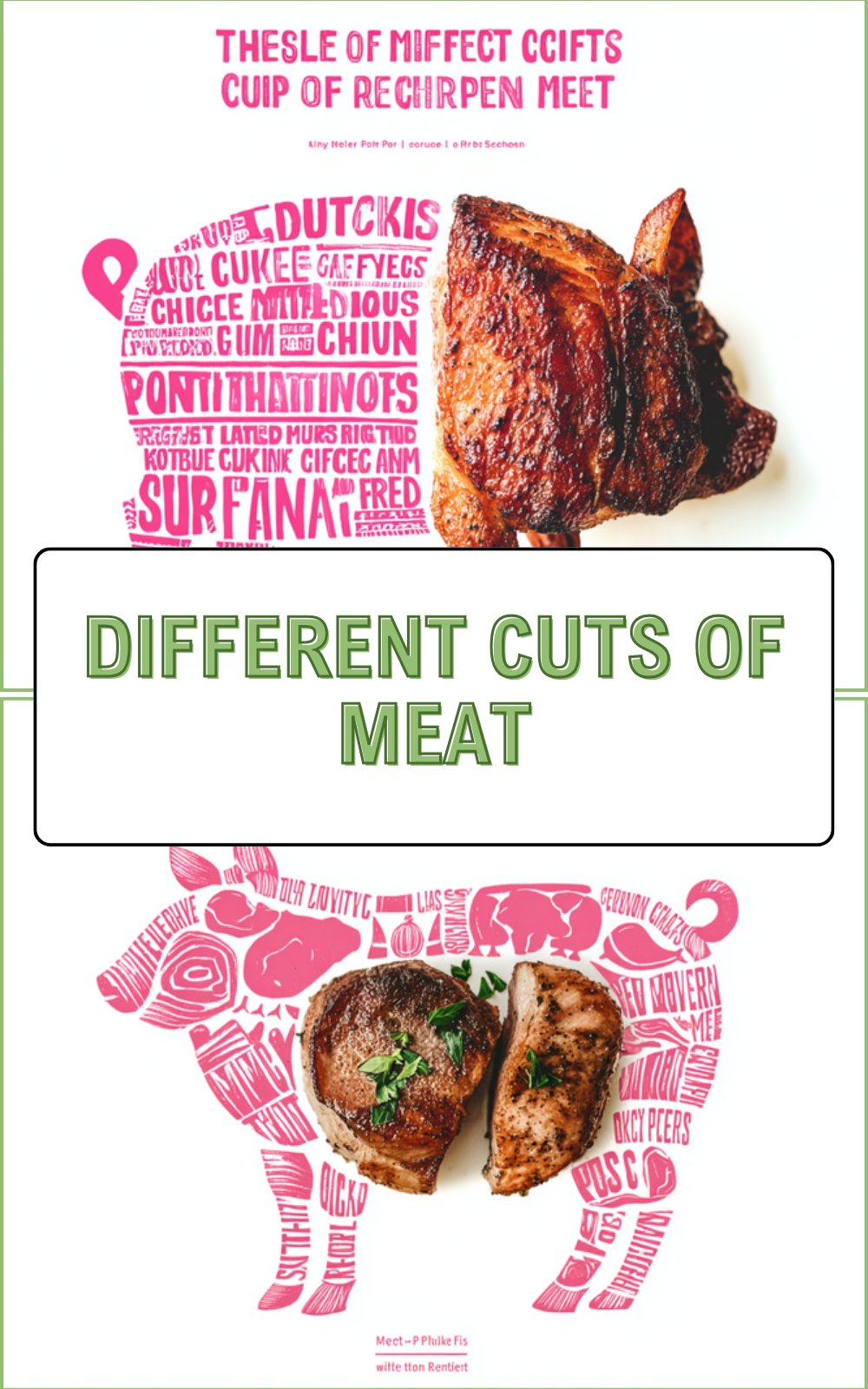
🥩 Understanding the 8 primary beef cuts helps you choose the right meat for any dish, ensuring better flavor and texture.
🍽️ Knowing the characteristics and cooking methods of cuts like chuck, rib, loin, and brisket allows you to cook meals perfectly every time.
- Total Time: Varies depending on preparation and cooking
- Yield: Varies by recipe
Ingredients
Chuck for stews and roasts
Rib for grilling or searing steaks
Loin for quick-cooking methods like frying or grilling
Round for slow cooking for tenderness
Flank for grilling quickly for stir-fries or tacos
Short plate for braised dishes or ground beef mixtures
Brisket for low-and-slow cooking, barbecue or pot roasts
Shank for soups and stocks
Seasonings such as salt, pepper, or herbs to enhance flavor
Marinades like oil and vinegar to tenderize tougher cuts
Instructions
First Step: Select Your Cut Begin by picking a cut that fits your recipe opt for tender ones like loin for fast meals or tougher ones like chuck for slow cooking. Check the meat’s color and marbling; bright red with even fat means it’s fresh. This step is key for understanding beef cuts and avoiding common pitfalls, especially if you’re adapting for dietary preferences like leaner options for health-focused eaters.
Second Step: Prepare Your Ingredients Once selected, gather any seasonings or marinades, like herbs for flavor or oil for grilling. For tougher cuts, consider tenderizing with a simple rub or marinade to break down fibers. This makes the process easier for busy parents, and you can swap in low-fat versions if needed for diet-conscious individuals, tying into how different cuts of meat enhance overall meals.
Third Step: Preheat and Season Heat your cooking surface grill for high-heat cuts like flank or oven for slow-cooked brisket at around 275°F for several hours. Season generously with salt and pepper, adding extras like garlic for more depth. Timing here is crucial; tender cuts might only need 5-10 minutes per side, while others take 2-4 hours, helping with beef sections for optimal tenderness.
Fourth Step: Cook According to Cut For tender cuts like sirloin, grill over high heat for 3-5 minutes per side to keep it juicy. For tougher ones, like shank, use a slow cooker with moist heat for 6-8 hours until fork-tender. Monitor internal temperatures aim for 145°F for medium-rare and adjust for variations, such as using plant-based substitutes if going vegan, all while following meat cuts explained basics.
Fifth Step: Rest and Serve Let the meat rest for 5-10 minutes after cooking to lock in juices, then slice against the grain for better texture. Pair with sides like veggies for a balanced meal, and consider how beef cuts and their uses can inspire creative plating. This final touch ensures your dish is not only delicious but also adaptable, making it perfect for food enthusiasts exploring different cuts of beef explained.
Last Step:
Please leave a rating and comment letting us know how you liked this recipe! This helps our business to thrive and continue providing free, high-quality recipes for you.Notes
🔪 Use slow cooking for tough cuts like brisket and shank to enhance tenderness.
🔥 Grill tender cuts like short loin and flank steak at high heat to avoid drying out.
🧂 Tenderize brisket before cooking to maintain juiciness and flavor.
- Prep Time: Varies by cut and cooking method
- Cooking time: Varies from minutes to several hours
- Cook Time: Varies based on cut and method
- Category: Cooking Guide
- Method: Varies (grilling, braising, slow cooking)
- Cuisine: General
- Diet: Varies
Nutrition
- Serving Size: Varies
- Calories: Varies by cut
- Sugar: 0g
- Sodium: Varies with seasoning
- Fat: Varies by cut
- Saturated Fat: Varies by cut
- Unsaturated Fat: Varies by cut
- Trans Fat: 0g
- Carbohydrates: 0g
- Fiber: 0g
- Protein: Varies by cut
- Cholesterol: Varies by cut