
Why You’ll Love This Vanilla Custard Profiterole
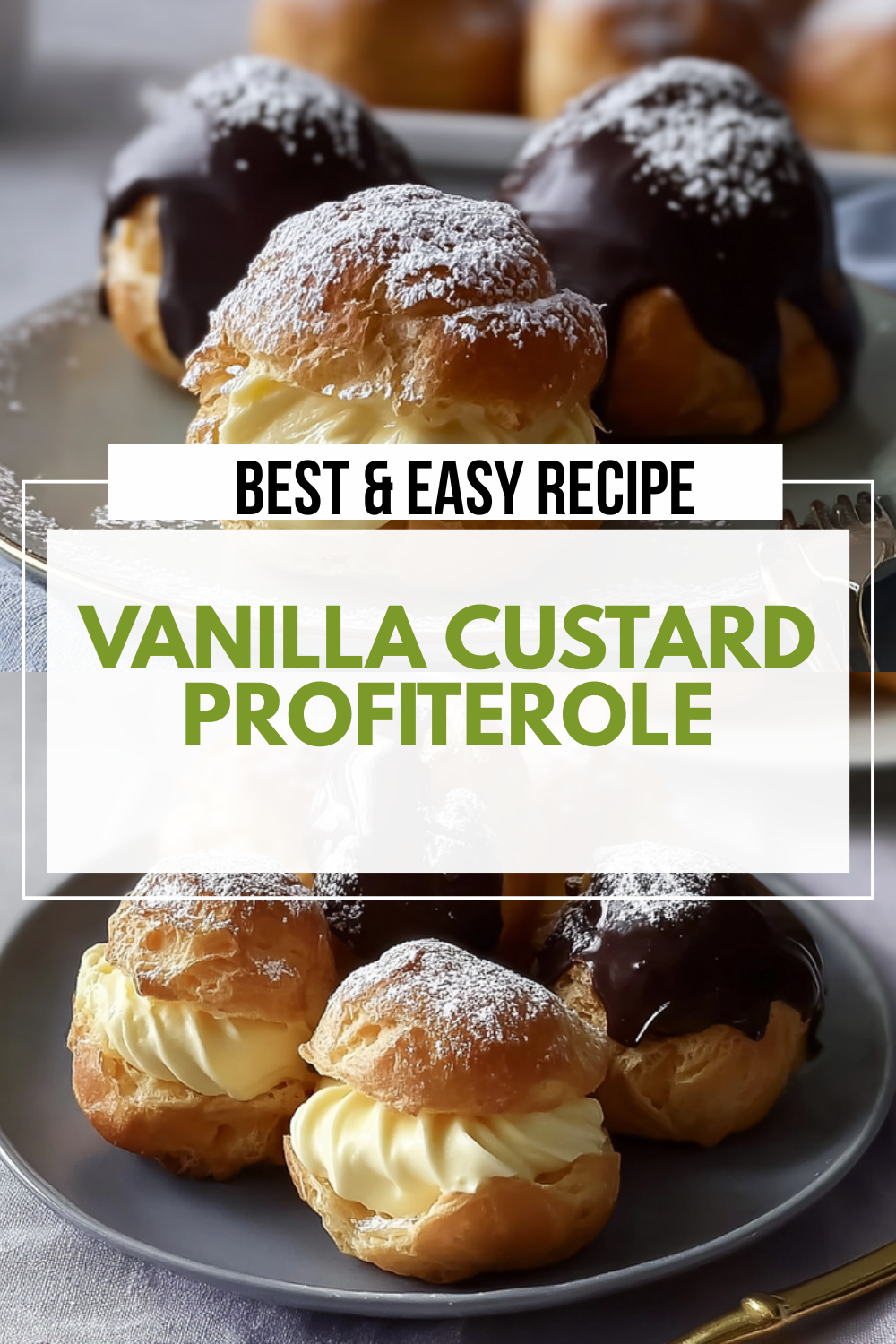
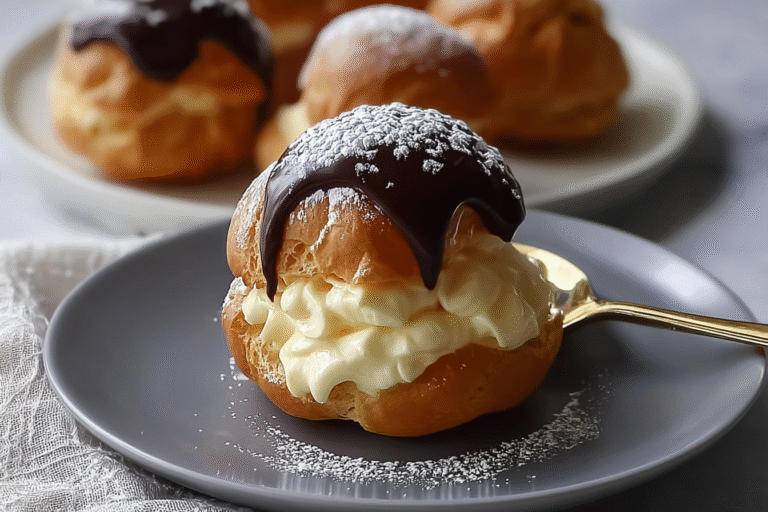
Imagine biting into a light, airy pastry that’s filled with a creamy vanilla custard and topped with a luxurious chocolate sauce these vanilla custard profiteroles are a treat that combines simplicity with indulgence. This recipe stands out because it’s straightforward enough for everyday baking, yet it delivers a professional-quality dessert that wows your guests. Whether you’re a beginner or a seasoned home cook, the step-by-step process makes it enjoyable and rewarding to create.
One of the best parts is the ease of preparation; it takes just about 30 minutes to prep and another 30 minutes to cook, totaling around 1 hour for about 12 delicious profiteroles. You’ll appreciate how this recipe uses common kitchen ingredients like eggs, flour, and milk, which means you probably have most items on hand already. Plus, the nutritional perks, such as protein from eggs and calcium from dairy, add a wholesome touch without sacrificing flavor.
Beyond that, these profiteroles are incredibly versatile, allowing you to tweak them for different dietary needs while keeping that signature rich vanilla custard and crisp pastry intact. For instance, you can experiment with substitutions to make them vegan or gluten-free, ensuring everyone at your table can enjoy this delightful dessert. Ultimately, the combination of textures and tastes makes every bite a special moment, perfect for family gatherings or a quiet night in.
Jump to:
- Why You’ll Love This Vanilla Custard Profiterole
- Essential Ingredients for Vanilla Custard Profiterole
- How to Prepare the Perfect Vanilla Custard Profiterole: Step-by-Step Guide
- Dietary Substitutions to Customize Your Vanilla Custard Profiterole
- Mastering Vanilla Custard Profiterole: Advanced Tips and Variations
- Quick Tips Table
- How to Store Vanilla Custard Profiterole: Best Practices
- FAQs: Frequently Asked Questions About Vanilla Custard Profiterole
- How do I make sure my choux pastry for profiteroles puffs up properly?
- What’s the best way to fill profiteroles with vanilla custard without making the pastry soggy?
- How can I tell if my vanilla custard is thick enough for profiterole filling?
- How do I prevent the chocolate sauce from becoming grainy when melting?
- What is the best way to store leftover custard profiteroles?
- Vanilla Custard Profiterole
- Ingredients
- Instructions
- Last Step:
- Notes
- Nutrition
- Did you make this recipe?
Essential Ingredients for Vanilla Custard Profiterole
To create these vanilla custard profiteroles, you’ll need a few key groups of ingredients for the choux pastry, custard cream filling, and chocolate sauce. Each component plays a vital role in achieving the perfect balance of light pastry, smooth filling, and glossy topping. Let’s break them down into a clear, structured list so you can gather everything easily for a seamless baking experience.
- 250 ml water
- 90 g cubed butter
- 150 g plain flour (sifted)
- pinch of salt
- 2 tsp sugar
- 3 to 4 large eggs
- 250 ml milk
- 175 ml heavy cream
- 2 tsp vanilla flavoring
- 3 egg yolks
- 75 g caster sugar
- 50 g flour
- 113 g dark baking chocolate
- 2 tbsp butter
- 65 ml thickened cream
- 2 tbsp sugar
For special dietary options, you might swap butter for a plant-based alternative, use gluten-free flour in place of plain flour, or opt for low-calorie sweeteners if you’re watching your sugar intake. These choices help make the recipe adaptable while keeping the profiteroles just as tasty and enjoyable.
How to Prepare the Perfect Vanilla Custard Profiterole: Step-by-Step Guide
Getting started with vanilla custard profiteroles is easier than you might think, especially with this detailed walkthrough that incorporates the full recipe for choux pastry, custard filling, and chocolate sauce. Begin by preheating your oven to 220°C (425°F) and lining a baking sheet with parchment paper for even baking. This initial step ensures your pastries puff up nicely and develop that signature crisp exterior. If you’re new to pastries like these, check out our almond croissant bites for more baking inspiration.
Next, in a saucepan, bring 250 ml water and 90 g cubed butter to a boil, then remove from heat and stir in 150 g sifted plain flour, a pinch of salt, and 2 tsp sugar until the dough forms a ball and pulls away from the pan. Let it cool for about 5 minutes before beating in 3 to 4 large eggs one at a time; this keeps the dough from becoming too runny and helps achieve a smooth, elastic consistency. For more on mastering choux pastry, visit this helpful guide on choux basics.
Once your dough is ready, pipe it into 2.5-inch diameter balls on the prepared sheet, spacing them 2 inches apart. Bake at 220°C (425°F) for 10 minutes, then lower the heat to 190°C (375°F) for 10-15 minutes until they’re golden and puffed; this two-stage baking is key for a crisp outside and airy inside. After baking, slit the base of each pastry to release steam and return them to the turned-off oven to dry out. Meanwhile, for the custard, warm 250 ml milk, 175 ml heavy cream, and 2 tsp vanilla flavoring without boiling, then whisk together 75 g caster sugar, 3 egg yolks, and 50 g flour until pale and smooth.
Gradually mix the egg blend into the warm milk, cooking over medium heat until thickened, and chill until it’s pourable. Fill the cooled pastries by lifting the tops and adding 1 to 2 tablespoons of custard inside. Finally, melt 113 g dark baking chocolate and 2 tbsp butter over low heat, stir in 65 ml thickened cream and 2 tbsp sugar until smooth, and drizzle over the filled profiteroles before serving. Remember, always cool the dough before adding eggs to avoid curdling, and keep an eye on the consistency to prevent flat results.

Dietary Substitutions to Customize Your Vanilla Custard Profiterole
Making vanilla custard profiteroles accessible for all diets is simple with a few smart swaps, ensuring everyone can savor this delightful dessert. For those avoiding animal products, replace eggs with flax or chia seed gel, and use plant-based milk and butter alternatives to keep the choux pastry light and the custard creamy. If gluten is a concern, swapping plain flour for a gluten-free blend works well, though you might need to adjust the dough’s texture slightly for the best rise.
Looking to cut calories? Try natural sweeteners like stevia in place of caster sugar, or opt for low-fat milk and cream to lighten the filling without losing that rich vanilla flavor. You can also add fun twists, such as mixing in fresh berries for a fruity variation or using almond extract instead of vanilla for a nutty twist. These changes not only make the recipe inclusive but also let you experiment while maintaining the profiteroles’ delicious core.
Mastering Vanilla Custard Profiterole: Advanced Tips and Variations
Taking your vanilla custard profiteroles to the next level involves fine-tuning techniques and exploring creative ideas, like baking at high heat first then lowering it for a perfectly crisp shell. To avoid common pitfalls, ensure the dough cools before adding eggs and aim for a consistency that’s smooth but not too wet, which helps prevent flat pastries. For more baking tips that pair well with this, explore our cinnamon bread recipe for additional flavor ideas.
Flavor variations can make things exciting try infusing the custard with coffee or citrus for a fresh spin, or experiment with different chocolates in the sauce. Presentation is key too; pipe the custard neatly and top with garnishes like powdered sugar or mint to make your platter pop. If you’re prepping ahead, freeze the unfilled shells and fill them fresh to keep that airy texture; these strategies build confidence and let you customize with ease.
Quick Tips Table
| Tips for Dough | Tips for Custard | Tips for Sauce |
|---|---|---|
| Cool dough for 5 minutes before eggs | Cook slowly to avoid curdling | Melt gently to prevent seizing |
| Check for elastic consistency | Chill until spoonable | Stir in cream off heat |
With these insights, you’ll refine your skills and turn out profiteroles that impress every time.
How to Store Vanilla Custard Profiterole: Best Practices
Proper storage keeps your vanilla custard profiteroles tasting fresh and maintaining their texture, so let’s cover the essentials. Keep filled pastries in an airtight container in the fridge for up to 2 days to avoid sogginess from the custard. For longer-term options, freeze unfilled shells in a sealed bag for up to a month, thawing them at room temperature before filling.
When reheating, use a low oven to crisp them up without melting the custard, and always assemble just before serving for the best results. Remember, filled treats shouldn’t sit out more than an hour due to the dairy in the custard, making this a great recipe for on-the-spot enjoyment or quick meal prep.
FAQs: Frequently Asked Questions About Vanilla Custard Profiterole
How do I make sure my choux pastry for profiteroles puffs up properly?
To get perfectly puffed profiteroles, bake the choux pastry at a high temperature of 425°F (220°C) for the first 10 minutes, then lower the heat to 375°F (190°C) for another 10-15 minutes. This initial high heat creates steam that helps the pastry rise, while the lower temperature finishes baking them without burning. Also, avoid opening the oven door during baking to prevent collapsing.
What’s the best way to fill profiteroles with vanilla custard without making the pastry soggy?
Fill profiteroles shortly before serving to keep them crisp. Use a piping bag fitted with a small nozzle to inject the custard gently into each puff through a small hole in the base. This method minimizes moisture exposure on the outside. If prepping in advance, store filled profiteroles in an airtight container in the fridge and consume within 24 hours for best texture.
How can I tell if my vanilla custard is thick enough for profiterole filling?
The custard should be thick enough to coat the back of a spoon, yet still soft enough to pipe or spoon into the pastry. When heated, it thickens but should remain pourable. After cooling, it will firm up further in the fridge. If it thickens too much, gently whisk in a small amount of milk or cream to loosen it before filling.
How do I prevent the chocolate sauce from becoming grainy when melting?
Melt your chocolate and butter slowly over low heat or use a double boiler (a heatproof bowl over simmering water). Stir gently and avoid overheating, which causes the chocolate to seize or become grainy. Once melted smoothly, add cream off heat to thin the sauce. Using good-quality chocolate also improves the final texture and flavor.
What is the best way to store leftover custard profiteroles?
Store leftover profiteroles in an airtight container in the refrigerator. Because the custard contains dairy and eggs, keep them chilled and consume within 1-2 days for safety and freshness. To maintain some crispness, store unfilled profiteroles separately and fill them just before serving. Avoid freezing filled profiteroles as custard texture often changes after thawing.
Vanilla Custard Profiterole
🍰 Profiteroles with Creamy Custard and Rich Chocolate Sauce offer an indulgent dessert experience with light, airy choux pastry filled with smooth custard and topped with luscious chocolate.
🍫 This recipe blends classic techniques to create impressive treats perfect for special occasions or anytime you crave a deliciously elegant sweet.
- Total Time: 1 hour
- Yield: 12 profiteroles
Ingredients
– 250 ml water
– 90 g cubed butter
– 150 g plain flour (sifted)
– pinch of salt
– 2 tsp sugar
– 3 to 4 large eggs
– 250 ml milk
– 175 ml heavy cream
– 2 tsp vanilla flavoring
– 3 egg yolks
– 75 g caster sugar
– 50 g flour
– 113 g dark baking chocolate
– 2 tbsp butter
– 65 ml thickened cream
– 2 tbsp sugar
Instructions
1-Getting started with vanilla custard profiteroles: Begin by preheating your oven to 220°C (425°F) and lining a baking sheet with parchment paper for even baking. This initial step ensures your pastries puff up nicely and develop that signature crisp exterior.
2-Next: In a saucepan, bring 250 ml water and 90 g cubed butter to a boil, then remove from heat and stir in 150 g sifted plain flour, a pinch of salt, and 2 tsp sugar until the dough forms a ball and pulls away from the pan. Let it cool for about 5 minutes before beating in 3 to 4 large eggs one at a time; this keeps the dough from becoming too runny and helps achieve a smooth, elastic consistency.
3-Once your dough is ready: Pipe it into 2.5-inch diameter balls on the prepared sheet, spacing them 2 inches apart. Bake at 220°C (425°F) for 10 minutes, then lower the heat to 190°C (375°F) for 10-15 minutes until they’re golden and puffed; this two-stage baking is key for a crisp outside and airy inside. After baking, slit the base of each pastry to release steam and return them to the turned-off oven to dry out. Meanwhile, for the custard, warm 250 ml milk, 175 ml heavy cream, and 2 tsp vanilla flavoring without boiling, then whisk together 75 g caster sugar, 3 egg yolks, and 50 g flour until pale and smooth.
4-Gradually mix the egg blend into the warm milk: Cooking over medium heat until thickened, and chill until it’s pourable. Fill the cooled pastries by lifting the tops and adding 1 to 2 tablespoons of custard inside. Finally, melt 113 g dark baking chocolate and 2 tbsp butter over low heat, stir in 65 ml thickened cream and 2 tbsp sugar until smooth, and drizzle over the filled profiteroles before serving. Remember, always cool the dough before adding eggs to avoid curdling, and keep an eye on the consistency to prevent flat results.
Last Step:
Please leave a rating and comment letting us know how you liked this recipe! This helps our business to thrive and continue providing free, high-quality recipes for you.Notes
🍳 Make sure the dough cools slightly before adding eggs to avoid cooking them.
🔥 Maintain correct dough consistency to prevent flat or dense pastries.
🌡 Bake first at high temperature then reduce to achieve a crisp exterior and hollow inside.
- Prep Time: 30 minutes
- Cook Time: 30 minutes
- Category: Dessert
- Method: Baking and filling
- Cuisine: French
- Diet: Vegetarian
Nutrition
- Serving Size: 1 profiterole
- Calories: 250 kcal
- Sugar: 15 g
- Sodium: 90 mg
- Fat: 15 g
- Saturated Fat: 9 g
- Unsaturated Fat: 5 g
- Trans Fat: 0 g
- Carbohydrates: 22 g
- Fiber: 1 g
- Protein: 5 g
- Cholesterol: 110 mg