
Why You’ll Love This Baking Powder Baking Soda Biscuits Recipe
Nothing beats fresh, flaky biscuits straight from the oven, especially when you understand the baking powder baking soda magic behind their rise. This recipe highlights the difference between baking soda and baking powder by using both for maximum lift and tenderness. Home bakers often mix up these leavening agents, but here they team up perfectly in a simple dough.
Check out this quick comparison table to see why knowing baking soda vs baking powder basics matters:
| Aspect | Baking Soda (Sodium Bicarbonate) | Baking Powder |
|---|---|---|
| Composition | Pure base | Baking soda + acid + starch |
| Activation | Needs acid (like buttermilk) | Liquid alone (double-acting with heat) |
| Best For | Acidic recipes | Neutral batters |
This combo in biscuits gives you layers of fluff without the guesswork.
- Ease of preparation: Whip up these biscuits in under 30 minutes with basic pantry staples. No yeast means no long rise times, perfect for busy parents or working professionals craving homemade comfort fast. Just mix, cut, and bake for breakfast or dinner sides.
- Health benefits: Buttermilk adds probiotics for gut health, while the low sugar keeps it diet-friendly. Use whole grain flour swaps for fiber boost, appealing to diet-conscious folks and seniors watching calories without sacrificing taste.
- Versatility: Adapt for gluten-free flour or vegan buttermilk (milk + vinegar). Travelers and students love the portable snack version; party hosts can scale up for crowds.
- Distinctive flavor: The tang from buttermilk and baking soda creates a subtle richness that plain baking powder alone can’t match. Results in golden, sky-high biscuits with buttery flakes every time.
Whether you’re a baking enthusiast or new to the kitchen, this recipe proves why mastering baking powder baking soda pairings leads to bakery-quality results at home.
Jump to:
- Why You’ll Love This Baking Powder Baking Soda Biscuits Recipe
- Essential Ingredients for Baking Powder Baking Soda Biscuits
- Step-by-Step Instructions
- Quick Troubleshooting Subheading
- Tips for Perfect Baking Powder Baking Soda Biscuits
- Delicious Variations and Serving Suggestions
- Frequently Asked Questions
- What’s the difference between baking powder and baking soda?
- Can you substitute baking powder for baking soda or vice versa?
- How do you test if baking soda or baking powder is still good?
- What happens if you use too much baking powder or baking soda?
- When should you use baking powder vs baking soda in recipes?
- Baking Powder Baking Soda
- Ingredients
- Notes
- Nutrition
- Did you make this recipe?
Essential Ingredients for Baking Powder Baking Soda Biscuits
Gathering the right ingredients sets the foundation for biscuits that rise tall and taste incredible. This list spotlights how baking powder and baking soda work together as leavening agents. Each one plays a key role in texture and flavor.
- 2 cups all-purpose flour – Provides structure and tenderness.
- 1 tablespoon baking powder – Acts as primary leavening agent for quick rise.
- 1/2 teaspoon baking soda – Enhances rise with acidity and adds tenderness.
- 1 teaspoon salt – Balances flavors.
- 6 tablespoons cold unsalted butter – Creates flaky layers.
- 3/4 cup cold buttermilk – Adds moisture and tang for fluffiness.
Why these amounts? The baking powder handles the bulk lift, while a touch of baking soda reacts with buttermilk’s acid for extra bubbles. Cold butter ensures steam pockets for flakiness, a trick from pro bakers. No fancy tools needed, just a bowl and fork. For best results, measure flour by spooning into the cup and leveling, avoiding packs that toughen dough. This setup keeps things simple yet effective for all skill levels.
Step-by-Step Instructions
Follow these steps for foolproof biscuits every time. Total prep and bake time: 25-30 minutes. Preheat your oven to 450°F (230°C) right away for even rising.
- Preheat oven and prepare baking sheet: Line a baking sheet with parchment paper or lightly grease it. This prevents sticking and promotes browning. Tip: Space biscuits 2 inches apart for air flow.
- Whisk dry ingredients together: In a large bowl, combine 2 cups flour, 1 tablespoon baking powder, 1/2 teaspoon baking soda, and 1 teaspoon salt. Whisk for 30 seconds to evenly distribute leaveners. Pro tip: Fresh baking powder and soda ensure peak rise test them first if unsure.
- Cut in butter until crumbly: Grate or cut 6 tablespoons cold butter into the flour mix. Use a pastry cutter or fingers to blend until pea-sized crumbs form. Keep it cold to trap steam later. Avoid melting for flaky results.
- Stir in buttermilk to form dough: Pour in 3/4 cup cold buttermilk. Stir gently with a fork just until dough comes together do not overmix. Shaggy is okay; it hydrates during patting.
- Gently knead and pat out dough: Turn onto a floured surface. Fold 4-5 times lightly (no kneading). Pat to 3/4-inch thick. Tip: Lamination-style folding builds layers like croissants.
- Cut into biscuits and bake until golden: Use a 2.5-inch cutter dipped in flour no twisting. Place on sheet, brush tops with extra buttermilk. Bake 12-15 minutes until tops are golden. Cool 5 minutes on rack.
Quick Troubleshooting Subheading
If dough seems dry, add 1 tablespoon more buttermilk. For higher altitude, reduce baking powder by 1/4 teaspoon. These baking powder baking soda biscuits shine with precise steps, showing baking soda vs baking powder in recipes in action. Store leftovers airtight for 2 days or freeze unbaked for later.
Tips for Perfect Baking Powder Baking Soda Biscuits
- Use cold ingredients for flakiness: Butter and buttermilk straight from fridge create steam pockets. Warm ones lead to flat biscuits.
- Don’t overwork the dough: Gentle handling preserves gluten strands for tenderness. Overkneading toughens like hockey pucks.
- Bake immediately for best rise: Leaveners activate fast; waiting deflates potential. Straight from counter to oven.
- Check freshness: Test baking soda with vinegar fizz, powder with hot water bubbles. Stale ones yield dense results.
- Flour your cutter: Prevents sticking without sealing edges, key for lift.
- Avoid twisting cutter: It crimps edges, stopping full rise. Straight up and down motion.
- Storage advice: Room temp in bag for 2 days; reheat at 350°F for crisp revival. Freeze dough rounds for quick batches.
These tips turn beginners into pros, emphasizing when to use baking soda vs baking powder.
Delicious Variations and Serving Suggestions
Customize these biscuits to fit any meal or mood. The base recipe’s balance lets creativity shine without ruining the rise.
- Add cheese or herbs: Mix 1 cup shredded cheddar and chives into dough for savory bites. Great with chili.
- Make sweet versions: Sprinkle cinnamon sugar on top or add blueberries like our blueberry banana muffins for fruity twist.
- Go gluten-free: Swap flour 1:1 with GF blend; extra 1/4 tsp xanthan gum mimics structure.
- Vegan option: Use plant butter and almond milk + 1 tsp vinegar for buttermilk sub.
- Spice it up: Fold in cinnamon for warmth, inspired by cinnamon bread flavors.
- Serve with gravy: Classic Southern pairing, or jam and honey for breakfast. Pairs with eggs or soup.
- Mini sizes: Cut smaller for party apps; top with sausage for sliders.
Versatile for food enthusiasts, newlyweds hosting brunches, or seniors seeking easy treats. Experiment safely to see baking powder vs baking soda in recipes effects.
Frequently Asked Questions
What’s the difference between baking powder and baking soda?
Baking soda, or sodium bicarbonate, is a pure base that reacts with an acid like buttermilk or vinegar to produce carbon dioxide gas, causing dough to rise. It works instantly when mixed with liquid and acid but requires an acidic ingredient in the recipe. Baking powder contains baking soda plus a dry acid (like cream of tartar) and a starch to absorb moisture; it activates with liquid alone and often has a second reaction in heat (double-acting). Use baking soda for recipes with natural acids, like chocolate cake with yogurt. Baking powder suits neutral batters, like sugar cookies. Always check expiration—stale versions won’t lift baked goods properly. (78 words)
Can you substitute baking powder for baking soda or vice versa?
Yes, but with adjustments. To replace 1 teaspoon baking powder, use 1/4 teaspoon baking soda plus 1/2 teaspoon cream of tartar or lemon juice—this mimics the acid component. For the reverse, triple the baking soda amount (1 teaspoon baking powder = 1/3 teaspoon baking soda) and add extra acid, like 1/2 teaspoon vinegar per teaspoon. Test in small batches first, as substitutions can alter texture or taste. In pancakes, swap evenly if the recipe has buttermilk. Avoid direct swaps in delicate items like meringues, where chemistry matters most. Measure precisely for best rise. (92 words)
How do you test if baking soda or baking powder is still good?
For baking soda, mix 1/2 teaspoon with 2 tablespoons vinegar or lemon juice in a bowl—if it fizzes vigorously, it’s fresh. Baking powder test: stir 1 teaspoon into 1/3 cup hot water; strong bubbles mean it’s active. No reaction? Discard and buy new. Both lose potency after 6-12 months once opened, faster in humid spots. Store in a cool, dry cupboard in airtight containers. Fresh leaveners ensure fluffy muffins and biscuits—stale ones lead to flat, dense results. Do this test monthly for staples. Pro tip: label packages with open dates. (89 words)
What happens if you use too much baking powder or baking soda?
Excess baking soda creates a soapy, metallic taste and yellow tint in cakes; it over-reacts without enough acid, causing collapse. Too much baking powder leads to bitter flavor from extra acid and a coarse, bubbly crumb. Stick to recipe ratios: typically 1 teaspoon per cup of flour. If overdone, salvage by adding more flour or acid (yogurt for soda). Prevention: level off spoons, don’t heap. In cookies, slight excess speeds spread but toughens chew. Balance is key for tender bakes—taste batter if possible before oven time. (84 words)
When should you use baking powder vs baking soda in recipes?
Choose baking soda for acidic recipes like red velvet cake (buttermilk) or banana bread (fruit acids)—it neutralizes for tender crumb. Pick baking powder for non-acidic mixes like white cake or biscuits without yogurt. Quick breads and muffins often blend both for reliability. Example: scones with cream (neutral) need powder; gingerbread with molasses (acidic) takes soda. Double-acting powder suits most home baking for two-rise action. Read labels—aluminum-free avoids metallic notes. Experiment: swap in pancakes next time for fluffier stacks. (82 words)
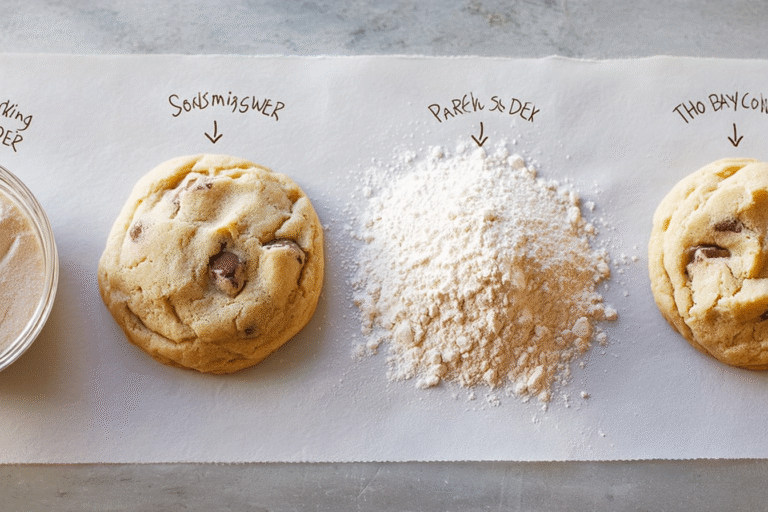
Baking Powder Baking Soda
🧪 Master the science behind perfect baked goods by understanding when to use baking soda versus baking powder
📚 Transform your baking results with this practical guide that eliminates the confusion between these two essential leavening agents
- Total Time: 20 minutes
- Yield: 2 demonstration samples
Ingredients
– 2 cups all-purpose flour Provides structure and tenderness
– 1 tablespoon baking powder Acts as primary leavening agent for quick rise
– 1/2 teaspoon baking soda Enhances rise with acidity and adds tenderness
– 1 teaspoon salt Balances flavors
– 6 tablespoons cold unsalted butter Creates flaky layers
– 3/4 cup cold buttermilk Adds moisture and tang for fluffiness
Notes
💡 Baking soda is 3-4 times stronger than baking powder, so always use the correct ratio when substituting
⚠️ Too much baking soda can leave a metallic or soapy taste, while excess baking powder creates bitter flavors
🌡️ Store both leavening agents in airtight containers away from moisture and heat to maintain effectiveness
- Prep Time: 5 minutes
- Observation Time: 10 minutes
- Cook Time: 5 minutes
- Category: Educational Guide
- Method: Demonstration
- Cuisine: Universal
- Diet: Not Applicable
Nutrition
- Serving Size: Not Applicable
- Calories: 0
- Sugar: 0
- Sodium: 0
- Fat: 0
- Saturated Fat: 0
- Unsaturated Fat: 0
- Trans Fat: 0
- Carbohydrates: 0
- Fiber: 0
- Protein: 0
- Cholesterol: 0