
Why You’ll Love This Hainanese Chicken Rice
Hainanese Chicken Rice is one of those dishes that looks simple at first glance, but once you taste it, you realize how much care is packed into every bite. The poached chicken stays tender and silky, the rice soaks up rich chicken stock and fat, and the sauces bring everything to life with bright, salty, sweet, and spicy notes. If you love meals that feel comforting without being fussy, this one belongs in your kitchen. For a helpful background on its roots and regional style, you can also read this classic Hainanese chicken rice guide.
- Easy enough for home cooks: The steps are straightforward, and most of the cooking time is hands-off while the chicken gently poaches.
- Comforting and balanced: You get lean protein, fragrant rice, and fresh sauces in one satisfying meal that works for lunch or dinner.
- Flexible for different eaters: You can adjust the chili, lighten the rice, or swap ingredients to fit dietary needs.
- Big flavor from simple ingredients: Ginger, garlic, scallions, chicken fat, and soy sauce create a dish that tastes much more complex than it looks.
This is the kind of meal that feels special, but still fits a normal weeknight if you plan it right.
It is also a great choice for busy parents, students, working professionals, and anyone who wants a filling meal that can stretch across several servings. The chicken broth on the side adds even more comfort, making the whole plate feel complete.
Jump to:
- Why You’ll Love This Hainanese Chicken Rice
- Essential Ingredients for Hainanese Chicken Rice
- Main ingredients
- Special dietary options
- How to Prepare the Perfect Hainanese Chicken Rice: Step-by-Step Guide
- First step: get the chicken ready
- Second step: poach gently and check for doneness
- Third step: make the rice fragrant
- Fourth step: mix the ginger-garlic sauce
- Fifth step: prepare the sweet dark soy sauce
- Sixth step: make the chili sauce
- Final step: carve, plate, and serve
- Protein and Main Component Alternatives
- Other proteins you can try
- When the main ingredient is hard to find
- Vegetable, Sauce, and Seasoning Modifications
- Vegetable swaps and add-ins
- Sauce and seasoning changes
- Mastering Hainanese Chicken Rice: Advanced Tips and Variations
- Pro cooking techniques
- Flavor variations
- Presentation tips
- Make-ahead options
- How to Store Hainanese Chicken Rice: Best Practices
- Refrigeration
- Freezing
- Reheating
- Meal prep considerations
- FAQs: Frequently Asked Questions About Hainanese Chicken Rice
- What is Hainanese chicken rice?
- How do you make Hainanese chicken rice at home?
- What are the calories in Hainanese chicken rice?
- What’s the difference between Singaporean and Malaysian Hainanese chicken rice?
- Is Hainanese chicken rice gluten-free?
- Hainanese Chicken Rice
- Ingredients
- Instructions
- Last Step:
- Notes
- Nutrition
- Did you make this recipe?
Essential Ingredients for Hainanese Chicken Rice
To make authentic Hainanese Chicken Rice at home, it helps to gather everything before you begin. This recipe has a few parts, but each one plays a clear role in the final flavor.
Main ingredients
- 1 small chicken, 3 to 3 1/2 pounds, preferably Buddhist-style or organic – The star of the dish; a smaller bird cooks more evenly and stays tender.
- 1 tablespoon salt – Used to rub the chicken before poaching.
- 12 to 14 cups water – Forms the poaching liquid for the chicken.
- 4 to 5 slices ginger – Adds warmth and fragrance to the poaching broth.
- 2 whole scallions – Bring gentle onion flavor to the broth.
- Ice – Used for the ice bath so the chicken skin stays smooth and silky.
- 2 ounces chicken fat – Creates rich, flavorful rice.
- 1 teaspoon neutral oil, such as vegetable, canola, or avocado – Helps render and cook the rice base.
- 4 cloves garlic, minced – Gives the rice a savory base.
- 3 cups uncooked white rice, preferably jasmine – Absorbs the chicken stock and fat beautifully.
- Chicken stock from cooking – The main liquid for cooking the rice.
- 2 teaspoons salt – Seasons the rice.
- 4-inch piece ginger, roughly chopped – Base for the ginger-garlic sauce.
- 2 cloves garlic – Added to the ginger-garlic sauce.
- 3 tablespoons neutral oil – Used to cook the ginger-garlic sauce.
- Pinch of salt – Seasons the ginger-garlic sauce.
- 1/4 cup water – Used in the sweet dark soy sauce.
- 1.25 ounces rock sugar or 2.5 tablespoons granulated sugar – Gives the sweet sauce its glossy sweetness.
- 1/4 cup dark soy sauce – Adds deep color and savory sweetness.
- 3 fresh red chilies, medium spice level like Holland – The chili sauce base.
- 1.5-inch piece ginger – Adds heat and freshness to the chili sauce.
- 2 cloves garlic – Helps build the chili sauce flavor.
- 1/4 teaspoon salt – Balances the chili sauce.
- 1/2 teaspoon sesame oil – Adds nutty aroma to the chili sauce.
- 1/4 teaspoon sugar – Softens the sharpness in the chili sauce.
- 1 tablespoon fresh lime juice, from half a lime – Brings brightness and tang.
- 1/2 teaspoon rice vinegar or white vinegar – Adds extra acidity.
- 2 tablespoons broth from boiling chicken – Loosens the chili sauce and carries flavor.
Special dietary options
- Vegan: Swap the chicken for poached tofu or king oyster mushrooms, use vegetable broth instead of chicken stock, and skip the chicken fat in favor of neutral oil or vegan butter.
- Gluten-free: This dish is naturally close to gluten-free, but double-check the dark soy sauce and broth labels. Choose gluten-free tamari if needed.
- Low-calorie: Use skinless chicken, reduce the rice portion a little, and go lighter on the sweet dark soy sauce.
How to Prepare the Perfect Hainanese Chicken Rice: Step-by-Step Guide
First step: get the chicken ready
Start by washing the chicken well, then pat it dry with paper towels. Rub the chicken all over with 1 tablespoon salt, including the cavity if needed. This simple step helps season the meat and gives the skin a cleaner taste. While you work, bring 12 to 14 cups of water to a boil in a large pot, then add 4 to 5 slices of ginger and 2 whole scallions.
Once the water is at a strong boil, lower the heat so the liquid settles into a gentle simmer. Carefully lower the chicken into the pot. The breast should stay just above the water if possible, so adjust the heat or water level as needed. This slow poaching method keeps the meat tender instead of tough.
Second step: poach gently and check for doneness
Let the chicken simmer uncovered for 30 to 35 minutes. Keep the heat low and steady so the broth stays calm, not bubbling hard. The chicken is ready when the juices run clear and a toothpick inserted into the thigh meets little resistance. If the bird is larger or smaller, adjust the timing slightly.
When the chicken is done, transfer it to a large bowl of ice water. This ice bath helps tighten the skin and gives the meat that signature silky texture. Leave it in the ice bath briefly, then drain and set aside. Save the poaching liquid, because it becomes the base for the rice and the soup on the side.
Third step: make the rice fragrant
While the chicken cools, render 2 ounces of chicken fat in a pan with 1 teaspoon neutral oil. Add 4 cloves minced garlic and cook briefly until fragrant, taking care not to brown it too much. Stir in 3 cups uncooked white rice, preferably jasmine, so every grain gets coated in flavor. This is where the rice starts to smell amazing.
Next, transfer the rice to a rice cooker or pot and cook it with the chicken stock from the poaching liquid. Add 2 teaspoons salt and enough stock to cook the rice as usual. If you simmer the poaching liquid uncovered for a while, the stock gets even more concentrated, which makes the rice richer. Let the rice rest after cooking so it stays fluffy.
Fourth step: mix the ginger-garlic sauce
For the ginger-garlic sauce, roughly chop a 4-inch piece of ginger and blend or pound it with 2 cloves garlic and a pinch of salt. Heat 3 tablespoons neutral oil until warm, then pour it over the ginger and garlic mixture or cook the paste briefly in the oil, depending on the texture you want. Stir until it turns aromatic and spoonable.
If the sauce thickens too much, loosen it with a little hot chicken broth. This makes it easier to drizzle over the chicken or rice. The flavor should be sharp, fresh, and lively.
Fifth step: prepare the sweet dark soy sauce
In a small saucepan, combine 1/4 cup water and 1.25 ounces rock sugar, or 2.5 tablespoons granulated sugar if that is what you have on hand. Heat gently until the sugar melts completely. Then stir in 1/4 cup dark soy sauce and simmer just long enough for the sauce to come together.
The result should be glossy, sweet, and salty at the same time. This sauce is perfect for drizzling over the chicken or rice when you want a deeper, darker flavor.
Sixth step: make the chili sauce
For the chili sauce, grind or blend 3 fresh red chilies, a 1.5-inch piece of ginger, and 2 cloves garlic. Add 1/4 teaspoon salt, 1/2 teaspoon sesame oil, 1/4 teaspoon sugar, 1 tablespoon fresh lime juice from half a lime, and 1/2 teaspoon rice vinegar or white vinegar. Then mix in 2 tablespoons broth from boiling the chicken, adding it gradually until the sauce reaches the texture you like.
This sauce should taste bright, spicy, and tangy. If you prefer more heat, keep the seeds in the chilies. If you want a gentler sauce, remove some of the seeds before blending.
Final step: carve, plate, and serve
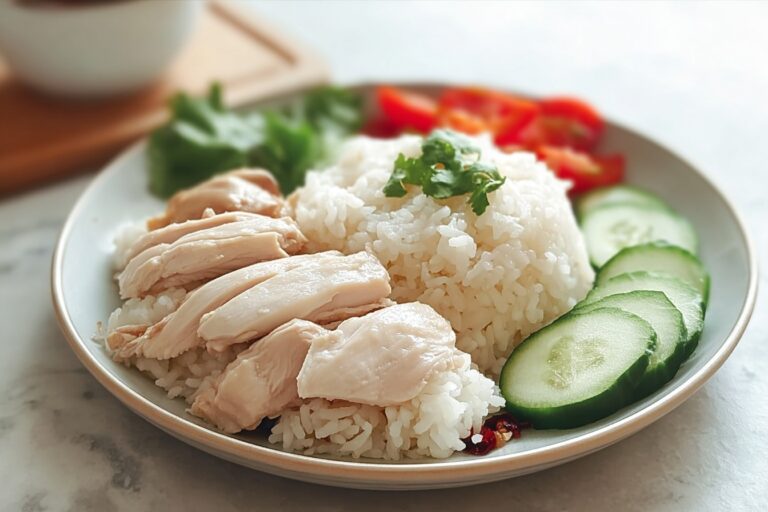
Carve the cooled chicken into neat pieces and arrange it on a platter. Spoon the rice beside it, then serve all three sauces in small bowls so everyone can mix and match. Do not forget a bowl of seasoned chicken broth on the side. It is a simple touch, but it brings the meal together beautifully.
For the best eating experience, serve the chicken at room temperature and the rice hot, with the sauces ready at the table.
| Component | Time | Key cue |
|---|---|---|
| Chicken poaching | 30 to 35 minutes | Juices run clear and thigh tests done with a toothpick |
| Rice cooking | About 15 to 20 minutes plus resting | Fluffy grains with rich chicken aroma |
| Sauce prep | 15 to 20 minutes | Bright, balanced, and easy to spoon |
Protein and Main Component Alternatives
Other proteins you can try
If you do not have a whole chicken, you can still make a comforting version of Hainanese Chicken Rice with other cuts. Bone-in chicken thighs are a great option because they stay juicy and cook evenly. Chicken breast works too, though it needs a close eye so it does not dry out. If you want a richer version, try a slightly larger bird and extend the poaching time as needed.
For seafood lovers, poached fish can give you a lighter meal with a similar sauce setup, though the texture and flavor will be different. Tofu is another good option for plant-based eaters, especially when paired with a savory broth made from vegetables, ginger, and garlic. You can also use mushrooms for a meaty bite that still feels satisfying.
When the main ingredient is hard to find
If Buddhist-style chicken or organic chicken is not available, choose the freshest chicken you can find. Free-range chicken is often a good stand-in because it gives a pleasant bite and fuller flavor. If you only have a larger chicken, just poach it a bit longer and check the thigh for doneness with a toothpick.
For rice, jasmine is the classic choice, but other long-grain white rice can work in a pinch. Just keep an eye on the liquid ratio, since different rice types absorb stock differently.
Vegetable, Sauce, and Seasoning Modifications
Vegetable swaps and add-ins
Traditional Hainanese Chicken Rice is usually served with cucumber slices, but you can add more vegetables if you want a fuller plate. Blanched bok choy, sautéed greens, steamed cabbage, or quick-pickled carrots all work well. These sides add freshness and color without taking attention away from the chicken and rice.
If you want something more filling for meal prep, add edamame, roasted mushrooms, or lightly salted green beans. For a more classic hawker-style feel, keep the vegetables simple and let the sauces do the talking.
Sauce and seasoning changes
The chili sauce can be made milder by using fewer chilies or removing the seeds. If you like a sharper sauce, add a little more lime juice or vinegar. For the ginger-garlic sauce, increase the ginger if you want more bite, or add hot broth to thin it out for easier drizzling.
If you are watching sodium, cut back slightly on the salt in the rice and sauces, then lean on ginger, garlic, lime, and broth for flavor. For a gluten-free version, check that your dark soy sauce and chicken stock are certified gluten-free. You can also use tamari in place of soy sauce if you like a cleaner label.
The magic of this dish is balance, so small changes can work as long as the chicken, rice, and sauces stay in harmony.
Mastering Hainanese Chicken Rice: Advanced Tips and Variations
Pro cooking techniques
One of the best tricks is to keep the poaching liquid at a bare simmer. Strong boiling can make the chicken tough and cloudy. It also helps to keep the breast just above the water line, since that part cooks faster than the thighs. After poaching, the ice bath gives the skin a pleasant, smooth finish that people always notice.
Another smart move is to let the poaching liquid simmer uncovered a little longer before using it for rice. That concentrates the flavor and gives the rice a fuller, deeper taste. If you are cooking for a crowd, make a little extra rice because this dish tends to disappear fast.
Flavor variations
You can keep things classic or play around a little. Add pandan leaves to the rice if you enjoy a more perfumed aroma. If you want a slightly sweeter profile, increase the rock sugar in the dark soy sauce. For a punchier plate, add more garlic to the chili sauce or a touch more ginger to the chicken sauce.
Some home cooks like to serve extra chicken broth with a few scallion slices and a pinch of salt. That makes the meal feel more complete and gives guests something warm to sip between bites.
Presentation tips
Slice the chicken neatly and arrange it in a fan shape on a serving platter. Spoon the rice into a bowl or mold it into a tidy dome next to the chicken. Serve the sauces in separate small dishes so the colors stand out. A few cucumber slices on the side also help lighten the plate and make it look fresh.
Make-ahead options
You can poach the chicken earlier in the day, chill it, and bring it back to room temperature before serving. The sauces can also be made ahead and kept in the refrigerator. The rice is best fresh, but you can reheat it gently with a splash of broth. That makes this dish practical for weekend cooking, family dinners, or casual entertaining.
How to Store Hainanese Chicken Rice: Best Practices
Refrigeration
Store the chicken, rice, sauces, and broth in separate airtight containers. In the refrigerator, the chicken and rice will keep well for up to 3 days. The sauces may last a little longer, but they taste best within a few days. Keeping everything separate helps preserve texture.
Freezing
You can freeze the chicken and rice for longer storage, though the texture of the chicken may change slightly after thawing. Wrap portions tightly and place them in freezer-safe containers. The chili sauce and ginger-garlic sauce are better fresh, but they can be frozen in small amounts if needed.
Reheating
Reheat the chicken gently so it stays tender. Warm the rice with a splash of chicken broth or water until fluffy again. The broth can be heated on the stove or in the microwave. Avoid overheating, since that can dry out the chicken.
Meal prep considerations
For meal prep, portion the rice and chicken into containers with a little broth on the side. Pack the sauces separately so they stay bright and fresh. This makes lunch easy to grab and keeps the dish tasting close to the original.

FAQs: Frequently Asked Questions About Hainanese Chicken Rice
What is Hainanese chicken rice?
Hainanese chicken rice is a simple yet flavorful dish originating from Hainan province in southern China, popularized in Singapore, Malaysia, and Thailand. It features poached or steamed chicken served with fragrant rice cooked in chicken stock and fat, accompanied by cucumber slices, chili sauce, black soy sauce, and a tangy ginger garlic paste. The chicken is tender and silky, often served at room temperature, while the rice absorbs rich flavors from pandan leaves, garlic, and ginger. This dish highlights balance—subtle seasoning lets quality ingredients shine. A standard serving includes half a chicken (about 300g), 1 cup rice, and sides, totaling around 600-800 calories. It’s a staple street food and hawker center favorite, often eaten with chicken broth on the side for dipping.
How do you make Hainanese chicken rice at home?
To make authentic Hainanese chicken rice, start with a whole chicken (1.5-2kg). Boil it in a pot with 3L water, smashed ginger (thumb-sized), garlic cloves, spring onions, and salt for 30-40 minutes until cooked (internal temp 75°C). Remove chicken, plunge into ice water for silky skin, then chop. For rice, fry 2 cups jasmine rice in 2 tbsp chicken fat with minced garlic, ginger, and pandan leaves. Add 3 cups strained stock, simmer 15 minutes. Prepare sauces: blend chilies, garlic, ginger, lime for chili sauce; mix dark soy, sesame oil for another. Serve with cucumber and broth. Total time: 1.5 hours. Tip: Use free-range chicken for best flavor; rest rice covered 10 minutes post-cook.
What are the calories in Hainanese chicken rice?
A typical plate of Hainanese chicken rice (half chicken, 1 cup rice, cucumber, sauces) contains 650-850 calories, depending on portion and preparation. Breakdown: chicken (300g skinless) ~400 calories, rice (200g) ~300 calories, sauces add 50-100. It’s moderately healthy due to lean protein (40g+ per serving), minimal oil, and veggies, but rice carbs (60g) make it filling. For lower calories, opt for steamed over oily rice (save 100 calories), skinless chicken, and light sauces. Pair with soup for a balanced 800-calorie meal. Nutrition facts: high in niacin and selenium from chicken; use brown rice for more fiber (boosts satiety). Track with apps like MyFitnessPal for precision.
What’s the difference between Singaporean and Malaysian Hainanese chicken rice?
Singaporean Hainanese chicken rice emphasizes poached chicken with ultra-silky skin from ice bath, rice cooked in rich chicken oil and pandan for subtle fragrance, and spicier chili sauce with more garlic. Malaysian versions often steam the chicken for juicier meat, use slightly sweeter soy sauce, and include roasted chicken options (kau ayam) with crispier skin. Both use jasmine rice and ginger paste, but Singaporean is lighter and broth-focused, while Malaysian adds cucumber and sometimes blood tofu. Calorie-wise, similar at 700 calories/plate. Try both at hawker centers—Singapore’s Tian Tian or Malaysia’s Ming Court for benchmarks. Home cooks: adjust chili heat to preference.
Is Hainanese chicken rice gluten-free?
Traditional Hainanese chicken rice is naturally gluten-free, as it uses whole chicken, rice, fresh ginger, garlic, pandan, cucumber, and homemade sauces without wheat. Key: avoid store-bought soy or oyster sauces containing gluten; use tamari or gluten-free alternatives like Lee Kum Kee’s. Chili sauce (fresh chilies, lime, vinegar) and ginger paste are safe. Confirm chicken stock has no additives. A full plate serves 2-4 gluten-sensitive eaters safely. For celiacs, verify labels and use dedicated utensils. It’s also low-FODMAP if garlic minimized. Pro tip: make rice in a rice cooker with gluten-free certified stock for ease. Pairs well with GF sides like pickled veggies. Always cross-check ingredients for allergies.
Hainanese Chicken Rice
🍗 Indulge in tender, silky poached chicken paired with fragrant jasmine rice – a comforting, authentic Hainanese classic that’s deceptively simple to make at home!
🍚 Bursting with layered flavors from homemade sauces, this dish delivers restaurant-quality satisfaction and wholesome goodness in every bite!
- Total Time: 2 hours 35 minutes
- Yield: 6 servings
Ingredients
– 1 small chicken, 3 to 3 1/2 pounds, preferably Buddhist-style or organic
– 1 tablespoon salt
– 12 to 14 cups water
– 4 to 5 slices ginger
– 2 whole scallions
– Ice
– 2 ounces chicken fat
– 1 teaspoon neutral oil, such as vegetable, canola, or avocado
– 4 cloves garlic, minced
– 3 cups uncooked white rice, preferably jasmine
– Chicken stock from cooking
– 2 teaspoons salt
– 4-inch piece ginger, roughly chopped
– 2 cloves garlic
– 3 tablespoons neutral oil
– Pinch of salt
– 1/4 cup water
– 1.25 ounces rock sugar or 2.5 tablespoons granulated sugar
– 1/4 cup dark soy sauce
– 3 fresh red chilies, medium spice level like Holland
– 1.5-inch piece ginger
– 2 cloves garlic
– 1/4 teaspoon salt
– 1/2 teaspoon sesame oil
– 1/4 teaspoon sugar
– 1 tablespoon fresh lime juice, from half a lime
– 1/2 teaspoon rice vinegar or white vinegar
– 2 tablespoons broth from boiling chicken
Instructions
1-First step: get the chicken ready Start by washing the chicken well, then pat it dry with paper towels. Rub the chicken all over with 1 tablespoon salt, including the cavity if needed. This simple step helps season the meat and gives the skin a cleaner taste. While you work, bring 12 to 14 cups of water to a boil in a large pot, then add 4 to 5 slices of ginger and 2 whole scallions. Once the water is at a strong boil, lower the heat so the liquid settles into a gentle simmer. Carefully lower the chicken into the pot. The breast should stay just above the water if possible, so adjust the heat or water level as needed. This slow poaching method keeps the meat tender instead of tough.
2-Second step: poach gently and check for doneness Let the chicken simmer uncovered for 30 to 35 minutes. Keep the heat low and steady so the broth stays calm, not bubbling hard. The chicken is ready when the juices run clear and a toothpick inserted into the thigh meets little resistance. If the bird is larger or smaller, adjust the timing slightly. When the chicken is done, transfer it to a large bowl of ice water. This ice bath helps tighten the skin and gives the meat that signature silky texture. Leave it in the ice bath briefly, then drain and set aside. Save the poaching liquid, because it becomes the base for the rice and the soup on the side.
3-Third step: make the rice fragrant While the chicken cools, render 2 ounces of chicken fat in a pan with 1 teaspoon neutral oil. Add 4 cloves minced garlic and cook briefly until fragrant, taking care not to brown it too much. Stir in 3 cups uncooked white rice, preferably jasmine, so every grain gets coated in flavor. This is where the rice starts to smell amazing. Next, transfer the rice to a rice cooker or pot and cook it with the chicken stock from the poaching liquid. Add 2 teaspoons salt and enough stock to cook the rice as usual. If you simmer the poaching liquid uncovered for a while, the stock gets even more concentrated, which makes the rice richer. Let the rice rest after cooking so it stays fluffy.
4-Fourth step: mix the ginger-garlic sauce For the ginger-garlic sauce, roughly chop a 4-inch piece of ginger and blend or pound it with 2 cloves garlic and a pinch of salt. Heat 3 tablespoons neutral oil until warm, then pour it over the ginger and garlic mixture or cook the paste briefly in the oil, depending on the texture you want. Stir until it turns aromatic and spoonable. If the sauce thickens too much, loosen it with a little hot chicken broth. This makes it easier to drizzle over the chicken or rice. The flavor should be sharp, fresh, and lively.
5-Fifth step: prepare the sweet dark soy sauce In a small saucepan, combine 1/4 cup water and 1.25 ounces rock sugar, or 2.5 tablespoons granulated sugar if that is what you have on hand. Heat gently until the sugar melts completely. Then stir in 1/4 cup dark soy sauce and simmer just long enough for the sauce to come together. The result should be glossy, sweet, and salty at the same time. This sauce is perfect for drizzling over the chicken or rice when you want a deeper, darker flavor.
6-Sixth step: make the chili sauce For the chili sauce, grind or blend 3 fresh red chilies, a 1.5-inch piece of ginger, and 2 cloves garlic. Add 1/4 teaspoon salt, 1/2 teaspoon sesame oil, 1/4 teaspoon sugar, 1 tablespoon fresh lime juice from half a lime, and 1/2 teaspoon rice vinegar or white vinegar. Then mix in 2 tablespoons broth from boiling the chicken, adding it gradually until the sauce reaches the texture you like. This sauce should taste bright, spicy, and tangy. If you prefer more heat, keep the seeds in the chilies. If you want a gentler sauce, remove some of the seeds before blending.
7-Final step: carve, plate, and serve Carve the cooled chicken into neat pieces and arrange it on a platter. Spoon the rice beside it, then serve all three sauces in small bowls so everyone can mix and match. Do not forget a bowl of seasoned chicken broth on the side. It is a simple touch, but it brings the meal together beautifully.
Last Step:
Please leave a rating and comment letting us know how you liked this recipe! This helps our business to thrive and continue providing free, high-quality recipes for you.Notes
🐔 Opt for a high-quality organic or Buddhist-style chicken for the silkiest texture and superior flavor.
🔥 Maintain precise water levels during poaching, keeping the breast just above the water for even cooking.
🍲 Let the poaching liquid simmer uncovered to intensify the flavor before using it for the rice.
- Prep Time: 30 minutes
- Cook Time: 2 hours 30 minutes
- Category: Main Dish
- Method: Stovetop
- Cuisine: Singaporean
- Diet: Dairy-free
Nutrition
- Serving Size: 1/6 recipe
- Calories: 746 kcal
- Sugar: 8 g
- Sodium: 2779 mg
- Fat: 32 g
- Saturated Fat: 8 g
- Unsaturated Fat: 24 g
- Trans Fat: 0.1 g
- Carbohydrates: 86 g
- Fiber: 2 g
- Protein: 26 g
- Cholesterol: 81 mg