
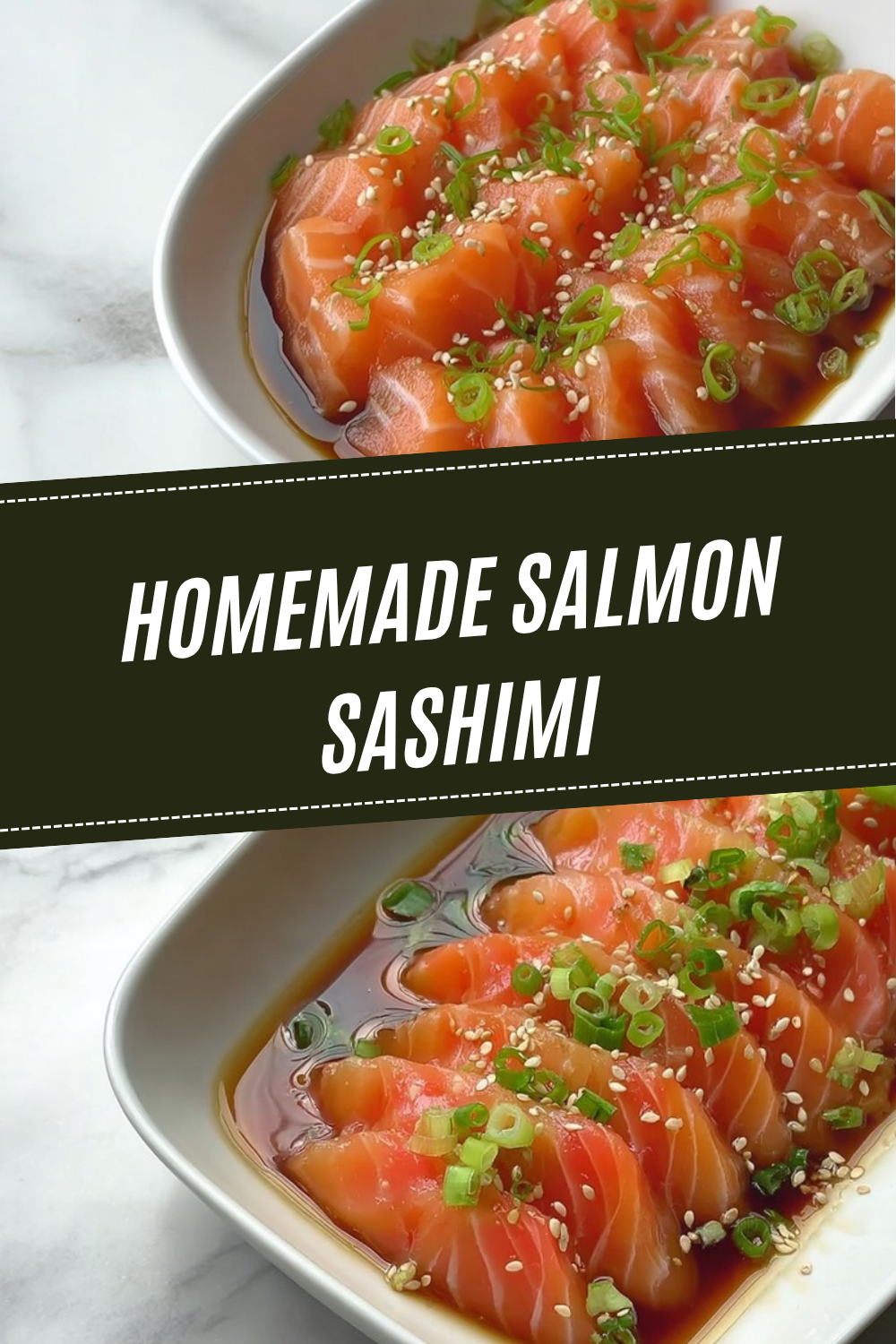
Why You’ll Love This Homemade Salmon Sashimi
If you’ve ever wanted to make Homemade Salmon Sashimi at home, this easy method gives you a clean, fresh taste without a lot of fuss. It starts with simple ingredients, a smart freezing step, and a little patience, which makes it a great fit for home cooks who want something special without spending a ton at a restaurant.
- Easy preparation: You only need a few basics, a sharp knife, and time for the salmon to freeze. The hands-on part takes about 10 minutes, so it works well for busy parents, students, and working professionals.
- Health-minded choice: Salmon brings protein, healthy fats, and key nutrients to the plate. For readers who watch what they eat, this dish fits into many balanced meal plans.
- Flexible serving: You can serve it with sushi rice, wasabi, soy sauce, or a little yuzu aioli made with olive oil. It also works well for small gatherings and relaxed dinners.
- Fresh flavor: When made with good farmed salmon from a trusted local market, the taste is clean, mild, and rich. That fresh flavor is what makes sashimi feel so satisfying.
For the best results, buy salmon from a reliable source and follow the freezing step carefully. That part matters as much as the slicing.
For more salmon nutrition details, you can also read this guide to salmon benefits. If you like easy meal ideas with a fresh, simple feel, this dish can slide right into your regular routine.
Jump to:
- Why You’ll Love This Homemade Salmon Sashimi
- Essential Ingredients for Homemade Salmon Sashimi
- Special Dietary Options
- How to Prepare the Perfect Homemade Salmon Sashimi: Step-by-Step Guide
- First Step: Buy fresh salmon from a trusted local market
- Second Step: Pat the salmon dry and add the salt
- Third Step: Rinse and dry again
- Fourth Step: Store the salmon in a freezer bag
- Fifth Step: Freeze the salmon long enough to kill parasites
- Sixth Step: Defrost in the refrigerator the night before eating
- Seventh Step: Pat dry again and slice thinly
- Eighth Step: Serve and add your favorite sides
- Ninth Step: Fry the salmon skin if it was left on
- Helpful timing at a glance
- Dietary Substitutions to Customize Your Homemade Salmon Sashimi
- Protein and Main Component Alternatives
- Vegetable, Sauce, and Seasoning Modifications
- Mastering Homemade Salmon Sashimi: Advanced Tips and Variations
- Pro cooking techniques
- Flavor variations
- Presentation tips
- Make-ahead options
- How to Store Homemade Salmon Sashimi: Best Practices
- Refrigeration
- Freezing
- Reheating
- Meal prep considerations
- Nutrition facts for Homemade Salmon Sashimi
- FAQs: Frequently Asked Questions About Homemade Salmon Sashimi
- Is it safe to eat homemade salmon sashimi?
- What kind of salmon is best for homemade sashimi?
- How do you prepare salmon for homemade sashimi?
- What’s a simple recipe for homemade salmon sashimi?
- How long does homemade salmon sashimi last in the fridge?
- Homemade Salmon Sashimi
- Ingredients
- Instructions
- Last Step:
- Notes
- Nutrition
- Did you make this recipe?
Essential Ingredients for Homemade Salmon Sashimi
The ingredient list is short, but each item has a purpose. Since raw fish calls for careful handling, it helps to buy everything before you start so the process stays smooth and safe.
- 1 pound fresh farmed salmon – The main ingredient. Choose salmon from a local fish market or trusted market with a clean smell and firm flesh.
- 1 teaspoon salt – Used to lightly season the fish before freezing and help draw out surface moisture.
- 1 freezer bag to prevent freezer burn – Protects the salmon during freezing. A vacuum-sealed or double-bagged freezer bag works even better.
- Optional yuzu aioli made with olive oil – Adds a bright, creamy finish if you want a citrusy dipping sauce.
Special Dietary Options
- Vegan: Salmon sashimi is not vegan, but you can mimic the serving style with sliced watermelon radish, hearts of palm, or chilled avocado.
- Gluten-free: The salmon itself is gluten-free. Just use gluten-free soy sauce or tamari on the side.
- Low-calorie: Skip the rice and keep the portion light. Serve with wasabi, sliced cucumber, or a small amount of yuzu aioli.
| Ingredient | Purpose | Notes |
|---|---|---|
| 1 pound fresh farmed salmon | Main protein | Best from a trusted local market |
| 1 teaspoon salt | Light seasoning | Used before freezing |
| 1 freezer bag | Storage | Helps prevent freezer burn |
| Optional yuzu aioli made with olive oil | Serving sauce | Bright, creamy, and fresh |
How to Prepare the Perfect Homemade Salmon Sashimi: Step-by-Step Guide
This method is simple, but the food safety steps matter a lot. Raw salmon needs careful handling from start to finish, so take your time and keep everything cold and clean.
First Step: Buy fresh salmon from a trusted local market
Start with fresh farmed salmon from a reliable fish market. Farmed salmon is often chosen for lower pesticide risk, and it is easier to trace back to the source. Before buying, ask where the salmon came from and how it was raised. Look for fish that smells clean, feels firm, and has a bright color.
Second Step: Pat the salmon dry and add the salt
Once you get home, place the salmon on a clean cutting board and pat it dry with a paper towel. Sprinkle 1 teaspoon salt per pound over the fish, then let it sit for 20 minutes. This short rest helps with texture and draws out some surface moisture.
Third Step: Rinse and dry again
After 20 minutes, rinse the salmon under running water. Pat it dry once more with a paper towel. This step keeps the texture neat and ready for freezing. Make sure your hands, board, and knife stay clean so you avoid cross-contamination.
Fourth Step: Store the salmon in a freezer bag
Put the salmon into a freezer bag to help prevent freezer burn. A vacuum-sealed bag or double-bagged freezer bag is even better if you have one. Press out extra air before sealing the bag, then label it with the date so you can track the freezing time.
Fifth Step: Freeze the salmon long enough to kill parasites
Freeze the salmon for at least 7 days at -4 degrees Fahrenheit (-20 degrees Celsius) to kill parasites. Some home cooks keep it frozen for 7 to 10 days, and some prefer a longer window of up to 1 month depending on their routine. The key is not to rush this step. If you are pregnant, talk with a doctor before eating raw salmon.
The freezing step is not optional when you plan to eat salmon raw at home. It is the safety net that makes this recipe much more practical.
Sixth Step: Defrost in the refrigerator the night before eating
Move the salmon from the freezer to the refrigerator the night before you want to serve it. Never thaw it on the counter. Slow thawing in the fridge helps the fish keep its texture and lowers the chance of food safety problems.
Seventh Step: Pat dry again and slice thinly
When the salmon is thawed, pat it dry once more before slicing. Use a very sharp knife and cut clean, thin pieces. Many people like slices around 1/4 inch thick. Serve on a chilled plate for the best texture and freshness.
Eighth Step: Serve and add your favorite sides
You can serve Homemade Salmon Sashimi with sushi rice, wasabi, soy sauce, or yuzu aioli made with olive oil. Keep the sides simple so the salmon stays the star. If you want a classic sushi-style meal at home, pair it with a few crisp cucumber slices or pickled ginger.
Ninth Step: Fry the salmon skin if it was left on
If the salmon skin is still attached, do not toss it out. Fry it in oil for 5 to 7 minutes until crispy. It becomes a salty, crunchy snack that many people love. Just drain it well on paper towels and serve it while hot.
Helpful timing at a glance
| Step | Time | Details |
|---|---|---|
| Prep | 10 minutes | Wash, salt, rinse, and bag the salmon |
| Freezing | 7 days to 1 month | Store at -4°F (-20°C) or colder |
| Thawing | Overnight | Move to the refrigerator |
| Serving | 5 minutes | Slice and plate |
The full process takes 7 days and 10 minutes if you follow the shortest safe freezing window. That makes this a great make-ahead option for planners who like to prep food in advance.

Dietary Substitutions to Customize Your Homemade Salmon Sashimi
Protein and Main Component Alternatives
Salmon is the star here, but some readers may want a different raw-fish option or a non-fish version for serving style. If salmon is hard to find, look for another sushi-grade fish that is clearly labeled for raw use. Tuna is a common choice, though the flavor is firmer and less buttery. For a plant-based plate, chilled avocado slices, marinated king oyster mushrooms, or watermelon radish can mimic the look and feel of sashimi-style servings.
Vegetable, Sauce, and Seasoning Modifications
Side dishes can shift with your diet or what you have in the kitchen. Swap regular soy sauce for gluten-free tamari, or keep the plate very light with cucumber ribbons and a little wasabi. If you want more citrus, add ponzu or a small spoonful of yuzu aioli made with olive oil. For a milder meal, serve with plain sushi rice and skip heavier sauces. If you enjoy meal planning, this recipe also pairs nicely with fresh sides from your weekly grocery run. For another fresh dessert idea to serve after a seafood dinner, you might like this lemon cream pie recipe.
Mastering Homemade Salmon Sashimi: Advanced Tips and Variations
Once you have the basic method down, a few small habits can make the dish look cleaner and taste even better. These tips are especially helpful if you cook often or like serving food to guests.
Pro cooking techniques
- Use a very sharp knife so the slices stay smooth instead of ragged.
- Chill the cutting board and serving plate before slicing the salmon.
- Work quickly once the fish is thawed so it stays cold.
- Keep the knife moving in one clean stroke instead of sawing through the flesh.
Flavor variations
Keep the classic version simple, then play with small flavor changes. A little yuzu aioli gives the fish a creamy citrus note. Soy sauce and wasabi bring the familiar sushi bar feel. You can also add a tiny amount of sesame seeds or serve with pickled ginger for a sharper bite. If you want a lighter flavor, stay with just the salmon and a pinch of salt.
Presentation tips
Good presentation makes homemade sashimi feel restaurant-ready. Fan the slices across a chilled plate, then add small piles of wasabi, ginger, or cucumber on the side. If you want a more polished look, place the salmon over a bed of shredded daikon or a few leaves of microgreens. Keep the plate clean and simple so the color of the fish stands out.
Make-ahead options
This recipe already works well as a make-ahead food because the freezing stage happens days before serving. You can also prep your dipping sauce ahead of time and keep it cold in the fridge. Just remember to thaw the salmon in the refrigerator the night before, then slice it right before serving. That keeps the texture better and reduces stress on serving day.
For more salmon nutrition details, you can also read this Healthline guide to salmon nutrition.
How to Store Homemade Salmon Sashimi: Best Practices
Raw fish does not keep long once it is thawed, so storage matters a lot. Keep leftovers cold, covered, and short-lived if you want the best texture and safety.
Refrigeration
Store sliced salmon sashimi in the fridge only if you plan to eat it soon. Keep it tightly wrapped or in a covered container below 40°F (4°C). For the best quality, eat it the same day. If you must hold it, use it within 24 hours.
Freezing
Freeze the salmon before slicing, not after. Use a vacuum-sealed or double-bagged freezer bag to help prevent freezer burn. Label the package with the date and keep it at -4°F (-20°C) or colder. The safest window is 7 to 10 days before serving raw.
Reheating
You do not reheat sashimi. Once frozen salmon is thawed and sliced, serve it cold. Heating would change the texture and turn it into a different dish.
Meal prep considerations
If you like planning ahead, freeze the salmon early in the week and set a reminder to thaw it the night before your meal. Keep your sauces and rice separate until serving time. That way, everything stays fresh and easy to assemble.
Nutrition facts for Homemade Salmon Sashimi
Here is the nutrition information for one serving of this recipe:
| Nutrient | Amount |
|---|---|
| Calories | 161 |
| Protein | 22g |
| Fat | 7g |
| Saturated Fat | 1g |
| Polyunsaturated Fat | 3g |
| Monounsaturated Fat | 2g |
| Cholesterol | 62mg |
| Sodium | 631mg |
| Potassium | 556mg |
| Vitamin A | 45IU |
| Calcium | 14mg |
| Iron | 1mg |
This nutrition profile makes the dish a strong pick for people who want a protein-rich meal with moderate fat and a simple ingredient list.
FAQs: Frequently Asked Questions About Homemade Salmon Sashimi
Is it safe to eat homemade salmon sashimi?
Yes, homemade salmon sashimi can be safe if you follow strict food safety guidelines. Choose sushi-grade or sashimi-grade salmon from a trusted source, which is flash-frozen to kill parasites like anisakis. Thaw it in the fridge overnight, never at room temperature. Use a sharp knife to slice thinly, avoiding cross-contamination by sanitizing surfaces and tools. Consume within 24 hours and keep refrigerated below 40°F (4°C). Avoid if pregnant, elderly, or immunocompromised. The FDA recommends freezing at -4°F (-20°C) for 7 days or -31°F (-35°C) for 15 hours. With these steps, risks drop significantly—millions enjoy raw salmon safely worldwide.
What kind of salmon is best for homemade sashimi?
Opt for sushi-grade or sashimi-grade Atlantic or Norwegian salmon, labeled as safe for raw consumption. These are farm-raised under strict standards and pre-frozen to eliminate parasites. Avoid wild salmon unless verified sushi-grade, as it may carry higher risks. Look for firm, translucent flesh with vibrant orange color and no fishy odor—freshness is key. Buy from reputable fishmongers or Japanese markets. A ½-pound fillet serves 2-4 people. Farmed salmon has lower mercury levels (0.05 ppm average per FDA data) compared to wild king salmon, making it ideal for raw prep.
How do you prepare salmon for homemade sashimi?
Start with cold, sushi-grade salmon. Pat dry with paper towels. Use a sharp sashimi knife (yanagiba) or very sharp chef’s knife—dull blades tear flesh. Skin first: hold tail-end, angle blade at 45°, slide smoothly away. Slice against the grain into ¼-inch thick pieces, angling the blade 30° for clean cuts. Aim for 1-2 oz per serving. Rinse slices gently in ice water, pat dry, and chill 15 minutes before serving. Pro tip: Practice on cooked salmon first. Total prep takes 10-15 minutes for beginners. Always work on a chilled cutting board.
What’s a simple recipe for homemade salmon sashimi?
For 2 servings: 8 oz sushi-grade salmon, soy sauce, wasabi, pickled ginger, sesame seeds. Slice salmon into ¼-inch pieces as described. Arrange on chilled plates. Garnish with microgreens or daikon radish. Serve with small dishes of soy sauce (mix with yuzu for citrus twist), fresh wasabi, and ginger. Pair with sake or green tea. Total time: 20 minutes. Calories: ~200 per serving, high in omega-3s (1.8g per 3oz). Customize with ponzu or chili oil. Store leftovers? No—eat fresh. Link to our full sushi rice tutorial for rolls.
How long does homemade salmon sashimi last in the fridge?
Homemade salmon sashimi lasts 24 hours max in the fridge at 32-40°F (0-4°C), tightly wrapped in plastic or on a covered plate. Beyond that, bacterial growth risks rise—discard after Day 1. Don’t freeze post-slicing, as texture suffers. Signs of spoilage: off smell, slimy feel, or color change. For longer storage, cure into gravlax (salt-sugar rub, lasts 5 days). Track with a fridge thermometer. Per USDA, raw fish quality drops fast; 90% of foodborne illnesses from seafood stem from improper storage. Serve same-day for peak flavor and safety. See our gravlax recipe for alternatives.
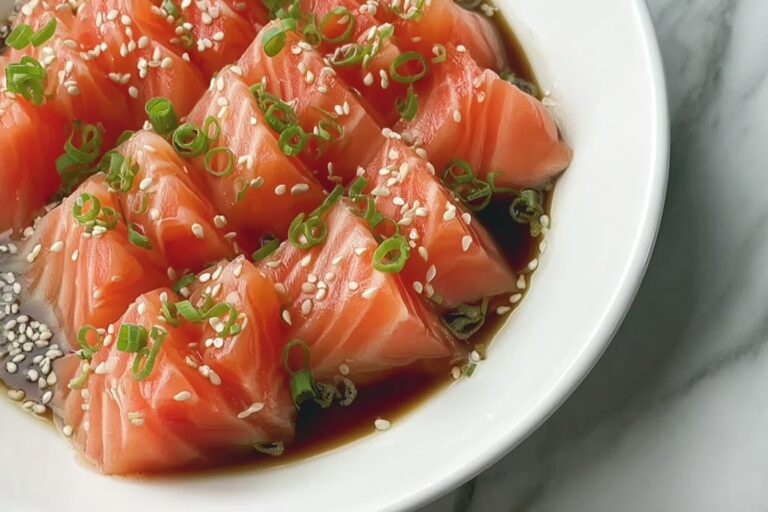
Homemade Salmon Sashimi
🐟 Indulge in fresh, restaurant-quality salmon sashimi safely prepared at home – perfect for sushi enthusiasts!
🍣 Easy method ensures parasite-free fish with minimal effort, delivering silky texture and pure flavor.
- Total Time: 7 days 10 minutes
- Yield: 4 servings
Ingredients
– 1 pound fresh farmed salmon for main protein
– 1 teaspoon salt for light seasoning
– Optional yuzu aioli made with olive oil for serving sauce
Instructions
1-First Step: Buy fresh salmon from a trusted local market Start with fresh farmed salmon from a reliable fish market. Farmed salmon is often chosen for lower pesticide risk, and it is easier to trace back to the source. Before buying, ask where the salmon came from and how it was raised. Look for fish that smells clean, feels firm, and has a bright color.
2-Second Step: Pat the salmon dry and add the salt Once you get home, place the salmon on a clean cutting board and pat it dry with a paper towel. Sprinkle 1 teaspoon salt per pound over the fish, then let it sit for 20 minutes. This short rest helps with texture and draws out some surface moisture.
3-Third Step: Rinse and dry again After 20 minutes, rinse the salmon under running water. Pat it dry once more with a paper towel. This step keeps the texture neat and ready for freezing. Make sure your hands, board, and knife stay clean so you avoid cross-contamination.
4-Fourth Step: Store the salmon in a freezer bag Put the salmon into a freezer bag to help prevent freezer burn. A vacuum-sealed bag or double-bagged freezer bag is even better if you have one. Press out extra air before sealing the bag, then label it with the date so you can track the freezing time.
5-Fifth Step: Freeze the salmon long enough to kill parasites Freeze the salmon for at least 7 days at -4 degrees Fahrenheit (-20 degrees Celsius) to kill parasites. Some home cooks keep it frozen for 7 to 10 days, and some prefer a longer window of up to 1 month depending on their routine. The key is not to rush this step. If you are pregnant, talk with a doctor before eating raw salmon.
6-Sixth Step: Defrost in the refrigerator the night before eating Move the salmon from the freezer to the refrigerator the night before you want to serve it. Never thaw it on the counter. Slow thawing in the fridge helps the fish keep its texture and lowers the chance of food safety problems.
7-Seventh Step: Pat dry again and slice thinly When the salmon is thawed, pat it dry once more before slicing. Use a very sharp knife and cut clean, thin pieces. Many people like slices around 1/4 inch thick. Serve on a chilled plate for the best texture and freshness.
8-Eighth Step: Serve and add your favorite sides You can serve Homemade Salmon Sashimi with sushi rice, wasabi, soy sauce, or yuzu aioli made with olive oil. Keep the sides simple so the salmon stays the star. If you want a classic sushi-style meal at home, pair it with a few crisp cucumber slices or pickled ginger.
9-Ninth Step: Fry the salmon skin if it was left on If the salmon skin is still attached, do not toss it out. Fry it in oil for 5 to 7 minutes until crispy. It becomes a salty, crunchy snack that many people love. Just drain it well on paper towels and serve it while hot.
Last Step:
Please leave a rating and comment letting us know how you liked this recipe! This helps our business to thrive and continue providing free, high-quality recipes for you.Notes
🛒 Choose farmed salmon from trusted local markets to reduce pesticide risks.
❄️ Use a vacuum-sealed or double-bagged freezer method and freeze 7-10 days to kill parasites safely.
👩⚕️ Consult your doctor before eating raw salmon if pregnant or immunocompromised.
- Prep Time: 10 minutes
- Freezing Time: 7 days
- Cook Time: 0 minutes
- Category: Seafood
- Method: No Cook
- Cuisine: Japanese
- Diet: Gluten-Free, Pescatarian, Keto-Friendly
Nutrition
- Serving Size: 4 ounces (113g)
- Calories: 161 kcal
- Sugar: 0g
- Sodium: 631mg
- Fat: 7g
- Saturated Fat: 1g
- Unsaturated Fat: 5g
- Trans Fat: 0g
- Carbohydrates: 0g
- Fiber: 0g
- Protein: 22g
- Cholesterol: 62mg