
Why You’ll Love This Moroccan Chebakia
If you have ever wanted to make Moroccan Chebakia at home, this is one of those recipes that feels special the moment you start. The dough is scented with sesame, anise, cinnamon, saffron, and orange flower water, then fried and dipped in honey for that classic Ramadan finish. It is the kind of treat that makes your kitchen smell amazing and brings a little celebration to the table.
- Easy enough for home cooks: The shaping looks fancy, but once you break it into simple steps, the process becomes very manageable. You can prep the dough, rest it briefly, then shape and fry in batches.
- Great for Ramadan and sharing: This Chebakia recipe is deeply tied to Ramadan traditions, making it a beautiful cookie to serve with harira, tea, or coffee during family gatherings.
- Rich flavor and texture: The mix of sesame, honey, warm spices, and orange flower water gives Chebakia cookies their unforgettable sweet, nutty, and fragrant taste.
- Flexible for different kitchens: You can scale the batch up for parties, keep it traditional for authenticity, or try a gluten-free version with careful adjustments.
If you are new to Ramadan Chebakia, do not worry about perfect shapes on your first try. A smaller practice batch can teach you a lot before you make a bigger tray for guests.
For a broader look at Moroccan-inspired sweets, you may also enjoy my almond croissant bites for another sweet, shareable treat.
Jump to:
- Why You’ll Love This Moroccan Chebakia
- Essential Ingredients for Moroccan Chebakia
- Main ingredients
- For frying and finishing
- Special dietary options
- How to Prepare the Perfect Moroccan Chebakia: Step-by-Step Guide
- First Step: Toast and grind the sesame seeds
- Second Step: Mix the dry ingredients
- Third Step: Add the wet ingredients and form the dough
- Fourth Step: Rest the dough and divide it
- Fifth Step: Roll, cut, and shape the chebakia
- Sixth Step: Heat the oil and warm the honey
- Seventh Step: Fry in batches
- Eighth Step: Soak in honey and finish with sesame seeds
- Ninth Step: Cool completely before storing
- Dietary Substitutions to Customize Your Moroccan Chebakia
- Protein and Main Component Alternatives
- Vegetable, Sauce, and Seasoning Modifications
- Mastering Moroccan Chebakia: Advanced Tips and Variations
- Pro cooking techniques
- Flavor variations
- Presentation tips
- Make-ahead options
- How to Store Moroccan Chebakia: Best Practices
- Refrigeration
- Freezing
- Reheating
- Meal prep considerations
- FAQs: Frequently Asked Questions About Moroccan Chebakia
- What is Moroccan chebakia?
- What are the main ingredients in chebakia?
- How do you fry and honey-dip chebakia?
- Can you make gluten-free chebakia?
- How long does chebakia last and how to store it?
- Moroccan Chebakia
- Ingredients
- Instructions
- Last Step:
- Notes
- Nutrition
- Did you make this recipe?
Essential Ingredients for Moroccan Chebakia
This Moroccan Chebakia recipe uses pantry staples, warm spices, and a honey finish that brings everything together. Below is the full ingredient list in a clear, structured format so you can gather everything before you begin.
Main ingredients
- 1/2 kg flour, about 4 cups, plus additional if necessary
- 1 soup bowl full golden unhulled sesame seeds, about 200 g or 7 oz, toasted and ground
- 1 teaspoon ground anise
- 1 teaspoon ground cinnamon
- 1/2 teaspoon salt
- 1/2 teaspoon saffron threads, crumbled
- 1/4 teaspoon Moroccan yellow colorant
- Pinch of Gum Arabic grains, mixed with 1/4 teaspoon sugar and crushed to a powder
- 1 extra-large egg
- 1/4 cup butter, melted
- 1/4 cup olive oil
- 1/4 cup vinegar
- 1/4 cup orange flower water
- 2 teaspoons yeast, dissolved in 1/4 cup warm water
For frying and finishing
- 1 1/2 kg honey, about 3 lbs
- 2 tablespoons orange flower water
- 1 1/2 liters vegetable oil for frying
- 1/2 cup golden unhulled sesame seeds, toasted for decorating
Special dietary options
- Vegan: Swap the egg for a flax egg, use plant-based butter, and confirm your honey substitute if you need a fully vegan version. Note that the classic flavor will change a bit.
- Gluten-free: Try a gluten-free flour blend with xanthan gum, but expect a slightly different texture. Add liquid slowly because GF dough often needs careful handling.
- Low-calorie: Use a shorter honey soak time for less sweetness, and serve smaller portions.
For more ingredient inspiration and seed-based nutrition ideas, see this helpful article from Healthline about sesame seeds.
How to Prepare the Perfect Moroccan Chebakia: Step-by-Step Guide
First Step: Toast and grind the sesame seeds
Start by toasting the sesame seeds if they are not already ready. This step matters because the toasted sesame gives traditional Moroccan Chebakia its deep nutty taste. Once cooled, grind the seeds until they are fine, but do not turn them into a paste. A food processor or spice grinder works well, and you can do this ahead of time if you want to save effort later.
If you are meal prepping for a busy week, toast extra sesame seeds and store them in an airtight container. That way, your next batch of authentic Chebakia cookies starts with less work.
Second Step: Mix the dry ingredients
In a large bowl, combine the flour, ground sesame seeds, ground anise, ground cinnamon, salt, crumbled saffron, Moroccan yellow colorant, and the crushed Gum Arabic mixture. Stir everything well so the spices are evenly spread through the flour. This gives the cookies that balanced flavor in every bite.
At this stage, you should have a fragrant dry mix with a warm color and a soft, sandy feel. If your flour seems too dry or your kitchen is humid, keep a little extra flour nearby for later.
Third Step: Add the wet ingredients and form the dough
Add the egg, melted butter, olive oil, vinegar, orange flower water, and the yeast dissolved in warm water. Mix gently at first, then bring the dough together by hand. Knead until it feels smooth and elastic. If it sticks too much, add a small amount of flour, but do it slowly so the dough does not become stiff.
This part is where the dough starts to come alive. The orange flower water adds a soft floral note, while the vinegar helps with texture. The dough should feel soft, not dry or crumbly.
Fourth Step: Rest the dough and divide it
Divide the dough into portions and cover them with a clean towel. Let it rest for 15 minutes. This short rest makes the dough easier to roll and shape, which is especially helpful when making a detailed Chebakia recipe at home.
While the dough rests, heat your oil and prepare your honey mixture so everything is ready when you begin frying. That makes the process smoother and keeps the fried pieces from waiting too long.
Fifth Step: Roll, cut, and shape the chebakia
Roll one portion of dough at a time to about 1/8-inch thickness. Cut it into rectangles about 3 by 4 inches. In each rectangle, make 4 lengthwise cuts, but leave the ends intact. Then weave and fold the strips into the traditional flower shape. It may take a few tries to get the rhythm, and that is completely normal.
If you have scraps left over, re-knead them and let them rest before rolling again. That keeps the dough from becoming tough. The traditional flower shape gives the cookies their signature look, but small variations are fine as long as they hold together well.
Sixth Step: Heat the oil and warm the honey
Heat the vegetable oil to 350°F, which is 175°C. Keep an eye on the temperature because oil that is too hot can brown the chebakia too quickly, while oil that is too cool can make them greasy. In another pot, warm the honey with the 2 tablespoons of orange flower water until it comes to a gentle simmer.
Here is a quick guide for timing and temperature:
| Stage | Target | Time |
|---|---|---|
| Dough resting | Room temperature | 15 minutes |
| Frying oil | 350°F or 175°C | 2 to 3 minutes per side |
| Honey soak | Hot honey | 5 to 7 minutes |
Seventh Step: Fry in batches
Fry the shaped pieces in small batches so the oil stays steady. Cook each side for 2 to 3 minutes until golden brown. The cookies should look crisp and beautifully colored, not dark. Use a slotted spoon to turn them and lift them out of the oil.
If you are making a batch for guests, resist the urge to crowd the pot. Smaller batches help the cookies cook evenly and keep their shape. This is one of the biggest secrets behind great Chebakia cookies.
Eighth Step: Soak in honey and finish with sesame seeds
As soon as the chebakia come out of the oil, soak them in the hot honey for 5 to 7 minutes. If you want a crispier bite, shorten the soak a little. If you like a sweeter, softer finish, let them rest longer in the honey. Lift them out and let the extra honey drain on a rack.
While they are still warm, sprinkle the toasted sesame seeds over the top for decorating. This final touch gives the cookies a beautiful finish and a little extra crunch.
Ninth Step: Cool completely before storing
Let the cookies cool fully before moving them into storage containers. If you store them while warm, trapped steam can soften the coating. Once cooled, they are ready to serve with tea, coffee, or a big bowl of harira during Ramadan.
For the best texture, cool the chebakia completely on a rack before sealing them in a container. That helps keep the honey glaze shiny and the cookie edges crisp.
Preparation time is 45 minutes, cook time is 45 minutes, and the rest time is 15 minutes, for a total of 1 hour 45 minutes.

Dietary Substitutions to Customize Your Moroccan Chebakia
Protein and Main Component Alternatives
Although Moroccan Chebakia is not a protein-focused dish, the main ingredient swaps matter a lot when you are adapting it for different diets. For a vegan version, replace the egg with a flax egg and use plant-based butter. If you need a gluten-free option, use a tested gluten-free flour blend with a binder such as xanthan gum. Start with a small batch because the dough may behave differently.
If you are missing orange flower water, a tiny amount of orange zest can add a lighter citrus note, though the flavor will not be exactly the same. The classic recipe depends on wheat flour, eggs, butter, and honey, so each swap will change the final result a bit.
Vegetable, Sauce, and Seasoning Modifications
The main flavor profile comes from sesame, anise, cinnamon, saffron, and honey, so most changes should be small. If you prefer a less sweet cookie, shorten the honey soak time. If you want a stronger floral note, keep the orange flower water as written. For a richer finish, add a little more sesame on top after dipping.
Some cooks like to adjust the spice balance by adding a touch more cinnamon or anise, but the traditional ratio gives the best classic result. You can also adjust the size of each cookie for easier handling, which is helpful for busy parents, students, and party hosts who want manageable portions.
Mastering Moroccan Chebakia: Advanced Tips and Variations
Once you have made Ramadan Chebakia a time or two, the little details start to matter most. These tips can help you get a better texture, cleaner shapes, and a more polished finish.
Pro cooking techniques
- Toast the sesame seeds in advance and store them airtight so their flavor stays fresh.
- Watch the oil temperature closely. If it rises too high, the chebakia can brown too fast.
- Re-knead dough scraps and let them rest before rolling again to keep them tender.
- Use a rack after honey soaking so the excess syrup drains away and the cookies stay neat.
Flavor variations
The classic version is hard to beat, but you can still play a little. Some home cooks add a touch more cinnamon for warmth, while others lean into the sesame by using a little extra toasted sesame on top. If you want a more fragrant cookie, keep the orange flower water front and center. For a slightly lighter finish, reduce the honey soak time and let the natural spice flavor shine through.
Presentation tips
Arrange the chebakia in a shallow stack or a circular pattern on a serving plate. Sprinkle extra toasted sesame seeds over the top for a pretty finish. If you are serving them during a gathering, place them beside tea glasses or a bowl of harira for a classic Ramadan spread.
Make-ahead options
You can toast and grind the sesame seeds a day or two ahead. The dough can also rest briefly before shaping if you need to pause. If you are planning for a larger event, shape the cookies in advance and fry them in rounds close to serving time. That is a smart move for hosts who want to stay ahead of the rush.
For more cozy baked treats to keep on hand, take a look at this cinnamon bread recipe.
How to Store Moroccan Chebakia: Best Practices
Proper storage helps Moroccan Chebakia recipe leftovers stay tasty for days. Because these cookies are dipped in honey, moisture control matters a lot.
Refrigeration
Refrigeration is not the top choice for chebakia, since cold air can cause condensation and soften the coating. If you do refrigerate them, keep them in an airtight container and plan to eat them within 7 to 10 days. Let them come back to room temperature before serving.
Freezing
You can freeze unglazed pieces for up to 3 months. Flash-freeze them on a tray first, then move them to a freezer-safe bag or container. When you are ready to serve, thaw them and re-dip in warm honey if needed.
Reheating
To bring back a bit of crispness, warm the cookies gently at room temperature rather than using strong heat. Too much heat can make the honey coating run. If they seem soft, a short rest on a rack can help.
Meal prep considerations
Chebakia is great for batch cooking and gift giving. Store them in airtight containers lined with parchment, and keep them away from humid spots in the kitchen. For a large batch, separate layers with parchment so they do not stick together.
Fresh chebakia can stay crisp for up to two weeks at room temperature when stored properly in an airtight container.
FAQs: Frequently Asked Questions About Moroccan Chebakia
What is Moroccan chebakia?
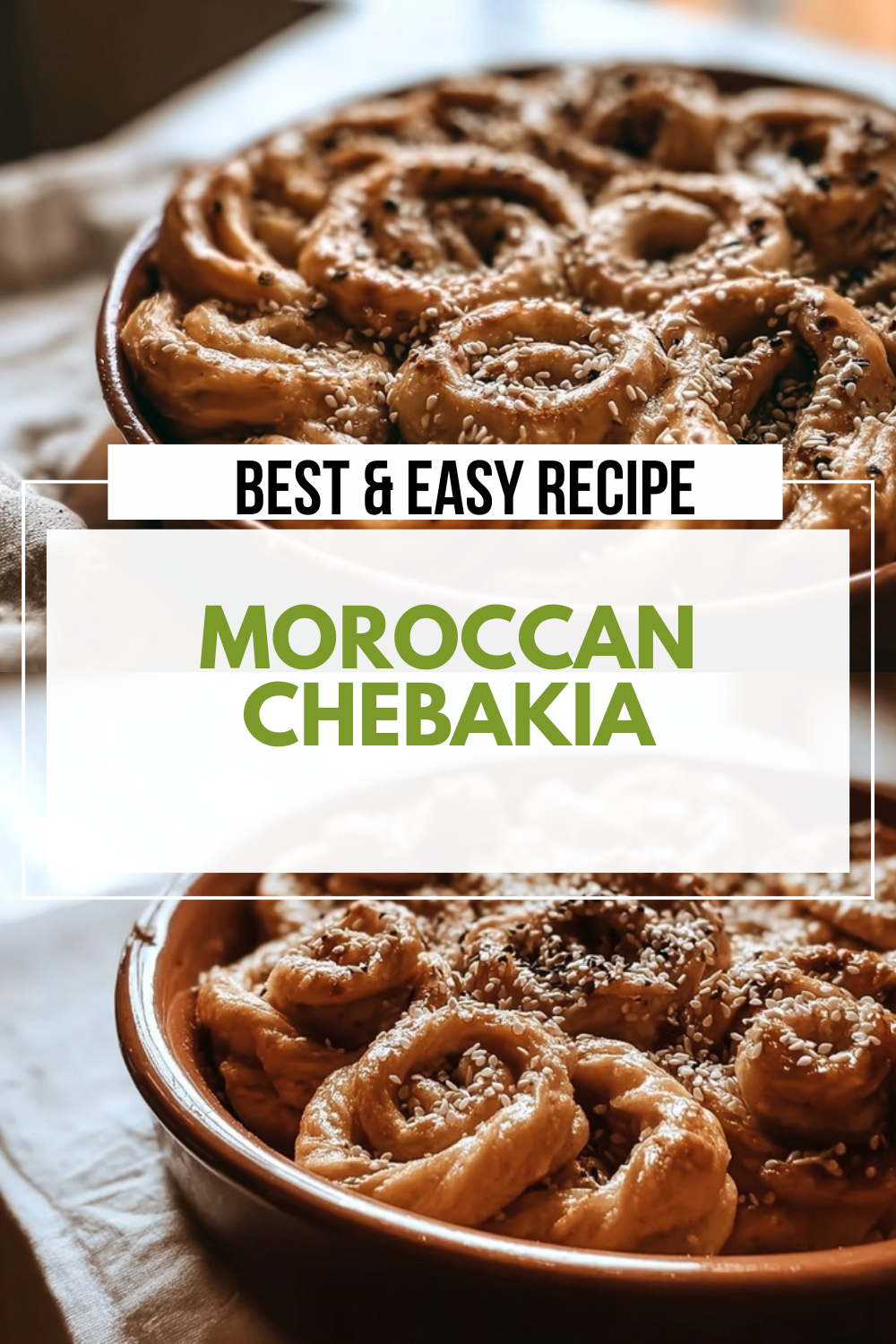
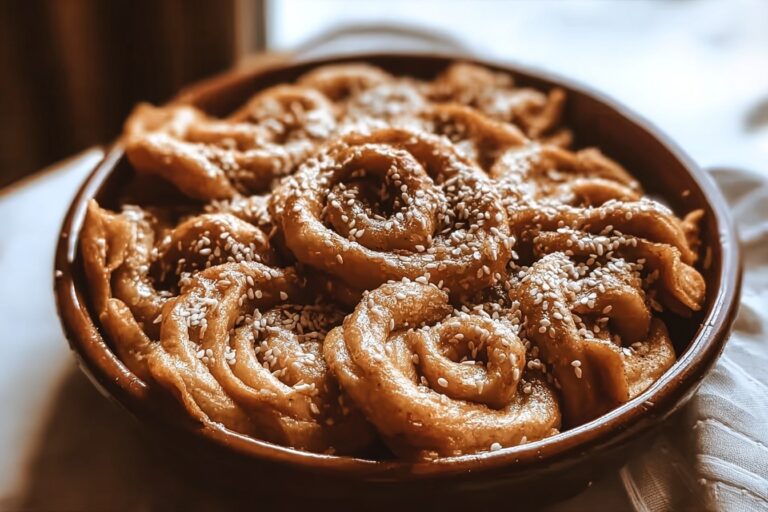
Moroccan chebakia, also known as mkharka or verkla, is a traditional flower-shaped cookie that’s fried until crispy and then dunked in honey. It’s a staple during Ramadan, often enjoyed alongside harira soup to balance the spicy broth with its sweet, anise-flavored sesame crunch. Made from a dough of flour, sesame seeds, fennel, anise, and yeast, chebakia gets its unique texture from being boiled briefly before frying. Each piece features intricate knots that hold the shape during cooking. In Morocco, families spend days preparing batches, symbolizing community and festivity. A single serving is about 2-3 pieces, providing around 200 calories, mostly from the honey glaze. For best results, serve fresh or store airtight for up to two weeks.
What are the main ingredients in chebakia?
Key ingredients for authentic Moroccan chebakia include 1 kg flour, 200g toasted sesame seeds, 100g unsalted butter, 2 tbsp anise seeds, 1 tbsp fennel seeds, 1 tsp yeast, 1 tsp turmeric for color, orange flower water, and vinegar for elasticity. The dough also needs eggs and a bit of salt. For the syrup, use 1 liter honey mixed with orange blossom water and a cinnamon stick, boiled to 110°C. These create the signature nutty, spiced flavor and crisp bite. Grind sesame and spices fresh for maximum aroma. Avoid substitutions like vegetable oil for butter, as it affects texture. This recipe yields about 100 pieces; scale down for home use. Prep time is 1 hour plus resting; frying takes 30 minutes in vegetable oil at 180°C.
How do you fry and honey-dip chebakia?
Heat vegetable oil to 180°C (350°F) in a deep pot. Fry 5-6 shaped chebakia pieces at a time for 2-3 minutes per side until golden and puffed, using a slotted spoon to flip. Drain on paper towels. Meanwhile, boil 1 liter honey with 2 tbsp orange flower water and cinnamon until bubbling. Dip hot chebakia in the honey for 20-30 seconds using tongs, then transfer to a colander over a bowl to drain excess. Let cool on a tray. This seals in crispness and adds shine. Tip: Fry in small batches to maintain oil temperature, and reuse honey syrup up to three times, skimming foam. Properly dipped chebakia stays fresh 10-14 days at room temp in airtight containers. Watch for bubbles to gauge doneness.
Can you make gluten-free chebakia?
Yes, adapt chebakia for gluten-free diets by swapping wheat flour with a 1:1 gluten-free blend like rice flour, almond flour, and xanthan gum (about 1 tsp per kg). Use 500g rice flour, 400g almond flour, 100g tapioca starch, and increase orange flower water for binding. Toast sesame seeds extra to boost flavor, compensating for lost wheat nuttiness. Follow the same shaping, boiling (1 minute in water-vinegar mix), and frying steps at 170°C to prevent crumbling. Honey-dip immediately after. Results are slightly softer but still crispy. Store in fridge up to 10 days. For full recipe, check my dedicated gluten-free chebakia post. Test a small batch first, as GF dough handles differently—chill 30 minutes extra before shaping.
How long does chebakia last and how to store it?
Fresh chebakia stays crispy for 2 weeks at room temperature in an airtight container lined with parchment to absorb moisture. Avoid plastic bags, which trap humidity and soften it. For longer storage, freeze unglazed pieces up to 3 months: flash-freeze on a tray, then bag. Thaw and re-dip in warm honey before serving. In humid climates, add silica packets to containers. Refrigeration shortens shelf life to 7-10 days due to condensation. Signs of spoilage: softness, mold, or off odors from honey fermentation. A 100-piece batch serves 30-50 people; portion into gifts with storage tips. Pro tip: Layer with powdered sugar for extra crunch when serving stale pieces.
Moroccan Chebakia
🥮 Dive into the crispy, floral bliss of Chebakia cookies, a cherished Moroccan Ramadan treat that melts in your mouth with every bite!
🌙 Perfect for festive gatherings, these golden delights bring authentic tradition and irresistible sweetness to your iftar table!
- Total Time: 1 hour 45 minutes
- Yield: 50 cookies
Ingredients
– 1/2 kg flour, about 4 cups, plus additional if necessary
– 1 soup bowl full golden unhulled sesame seeds, about 200 g or 7 oz, toasted and ground
– 1 teaspoon ground anise
– 1 teaspoon ground cinnamon
– 1/2 teaspoon salt
– 1/2 teaspoon saffron threads, crumbled
– 1/4 teaspoon Moroccan yellow colorant
– Pinch of Gum Arabic grains, mixed with 1/4 teaspoon sugar and crushed to a powder
– 1 extra-large egg
– 1/4 cup butter, melted
– 1/4 cup olive oil
– 1/4 cup vinegar
– 1/4 cup orange flower water
– 2 teaspoons yeast, dissolved in 1/4 cup warm water
– 1 1/2 kg honey, about 3 lbs
– 2 tablespoons orange flower water
– 1 1/2 liters vegetable oil for frying
– 1/2 cup golden unhulled sesame seeds, toasted for decorating
Instructions
1-First Step: Toast and grind the sesame seeds Start by toasting the sesame seeds if they are not already ready. This step matters because the toasted sesame gives traditional Moroccan Chebakia its deep nutty taste. Once cooled, grind the seeds until they are fine, but do not turn them into a paste. A food processor or spice grinder works well, and you can do this ahead of time if you want to save effort later. If you are meal prepping for a busy week, toast extra sesame seeds and store them in an airtight container. That way, your next batch of authentic Chebakia cookies starts with less work.
2-Second Step: Mix the dry ingredients In a large bowl, combine the flour, ground sesame seeds, ground anise, ground cinnamon, salt, crumbled saffron, Moroccan yellow colorant, and the crushed Gum Arabic mixture. Stir everything well so the spices are evenly spread through the flour. This gives the cookies that balanced flavor in every bite. At this stage, you should have a fragrant dry mix with a warm color and a soft, sandy feel. If your flour seems too dry or your kitchen is humid, keep a little extra flour nearby for later.
3-Third Step: Add the wet ingredients and form the dough Add the egg, melted butter, olive oil, vinegar, orange flower water, and the yeast dissolved in warm water. Mix gently at first, then bring the dough together by hand. Knead until it feels smooth and elastic. If it sticks too much, add a small amount of flour, but do it slowly so the dough does not become stiff. This part is where the dough starts to come alive. The orange flower water adds a soft floral note, while the vinegar helps with texture. The dough should feel soft, not dry or crumbly.
4-Fourth Step: Rest the dough and divide it Divide the dough into portions and cover them with a clean towel. Let it rest for 15 minutes. This short rest makes the dough easier to roll and shape, which is especially helpful when making a detailed Chebakia recipe at home. While the dough rests, heat your oil and prepare your honey mixture so everything is ready when you begin frying. That makes the process smoother and keeps the fried pieces from waiting too long.
5-Fifth Step: Roll, cut, and shape the chebakia Roll one portion of dough at a time to about 1/8-inch thickness. Cut it into rectangles about 3 by 4 inches. In each rectangle, make 4 lengthwise cuts, but leave the ends intact. Then weave and fold the strips into the traditional flower shape. It may take a few tries to get the rhythm, and that is completely normal. If you have scraps left over, re-knead them and let them rest before rolling again. That keeps the dough from becoming tough. The traditional flower shape gives the cookies their signature look, but small variations are fine as long as they hold together well.
6-Sixth Step: Heat the oil and warm the honey Heat the vegetable oil to 350°F, which is 175°C. Keep an eye on the temperature because oil that is too hot can brown the chebakia too quickly, while oil that is too cool can make them greasy. In another pot, warm the honey with the 2 tablespoons of orange flower water until it comes to a gentle simmer.
7-Seventh Step: Fry in batches Fry the shaped pieces in small batches so the oil stays steady. Cook each side for 2 to 3 minutes until golden brown. The cookies should look crisp and beautifully colored, not dark. Use a slotted spoon to turn them and lift them out of the oil. If you are making a batch for guests, resist the urge to crowd the pot. Smaller batches help the cookies cook evenly and keep their shape. This is one of the biggest secrets behind great Chebakia cookies.
8-Eighth Step: Soak in honey and finish with sesame seeds As soon as the chebakia come out of the oil, soak them in the hot honey for 5 to 7 minutes. If you want a crispier bite, shorten the soak a little. If you like a sweeter, softer finish, let them rest longer in the honey. Lift them out and let the extra honey drain on a rack. While they are still warm, sprinkle the toasted sesame seeds over the top for decorating. This final touch gives the cookies a beautiful finish and a little extra crunch.
9-Ninth Step: Cool completely before storing Let the cookies cool fully before moving them into storage containers. If you store them while warm, trapped steam can soften the coating. Once cooled, they are ready to serve with tea, coffee, or a big bowl of harira during Ramadan.
Last Step:
Please leave a rating and comment letting us know how you liked this recipe! This helps our business to thrive and continue providing free, high-quality recipes for you.Notes
🔥 Toast sesame seeds in advance and store airtight to keep them fresh and flavorful.
⏱️ Adjust the honey soak time: shorter for crispier cookies, longer for sweeter ones.
♻️ Re-knead and rest dough scraps before re-rolling to prevent toughness.
- Prep Time: 45 minutes
- Rest: 15 minutes
- Cook Time: 45 minutes
- Category: Dessert
- Method: Deep Fry
- Cuisine: Moroccan
- Diet: Vegetarian
Nutrition
- Serving Size: 1 cookie
- Calories: 180 kcal
- Sugar: 15 g
- Sodium: 20 mg
- Fat: 10 g
- Saturated Fat: 2 g
- Unsaturated Fat: 7 g
- Trans Fat: 0 g
- Carbohydrates: 20 g
- Fiber: 1 g
- Protein: 3 g
- Cholesterol: 10 mg