
Why You’ll Love This Pasta Primavera Recipe
This pasta primavera recipe delivers a fresh, vibrant dish packed with spring vegetables that brighten any meal. It stands out as an easy option for home cooks who want restaurant-style results without hours in the kitchen. Picture tender pasta coated in a light lemon-garlic sauce, mingled with crisp asparagus, sweet peas, and juicy cherry tomatoes.
Here are the top reasons this primavera pasta will become your go-to:
- Quick and Simple Prep: Everything comes together in under 40 minutes. Minimal chopping means less mess, and the one-skillet method after boiling pasta keeps cleanup easy. Ideal for busy parents, students, or working professionals racing against the clock.
- Nutrient Powerhouse: Loaded with fresh vegetables like asparagus, peas, zucchini, and tomatoes, it offers vitamins A, C, and K, plus fiber for digestion. At about 450 calories per serving, it suits diet-conscious eaters and seniors seeking lighter fare.
- Endless Customization: Swap in seasonal produce, toss in shrimp or chicken for protein, or go vegan by skipping cheese. Food enthusiasts and party hosts love how it adapts to travelers’ tastes or newlyweds’ date nights.
- Bright, Balanced Flavors: The creamy primavera sauce from pasta water, broth, and lemon zest clings perfectly to al dente noodles. No heavy cream needed, yet it tastes indulgent. Baking enthusiasts can even pair it with a dessert twist later.
This vegetable pasta celebrates spring vegetables in a way that feels special yet everyday. Families rave about its color and crunch, making veggies fun for kids too.
Perfect for Any Occasion
Whether you host a gathering or need a solo supper, this pasta primavera with vegetables fits seamlessly. Students appreciate the budget-friendly ingredients, while travelers can recreate it with local market finds. Its light profile keeps you energized without weighing you down.
This simple pasta primavera recipe easy enough for beginners yet impressive for guests.
Keep reading for the full breakdown on how to nail this classic pasta primavera every time.
Jump to:
- Why You’ll Love This Pasta Primavera Recipe
- Perfect for Any Occasion
- Ingredients (Serves 4)
- Step-by-Step Instructions
- Tips for Success and Variations
- The Origins of Pasta Primavera
- Key Elements of Classic Pasta Primavera
- Nutritional Breakdown
- Serving Ideas and Pairings
- Frequently Asked Questions
- What is pasta primavera?
- What ingredients do I need for pasta primavera?
- How do you make pasta primavera step by step?
- Can you make pasta primavera vegan?
- How should I store and reheat pasta primavera leftovers?
- Pasta Primavera Recipe
- Ingredients
- Notes
- Nutrition
- Did you make this recipe?
Ingredients (Serves 4)
Gather these straightforward items for your pasta primavera recipe. Focus on fresh produce for peak taste in this spring vegetable pasta primavera.
- 12 oz linguine or spaghetti
- 2 tbsp olive oil
- 3 garlic cloves, minced
- 1 bunch asparagus, trimmed and cut into 2-inch pieces
- 1 cup frozen peas
- 1 cup cherry tomatoes, halved
- 1 small zucchini, sliced
- 1/2 cup vegetable broth
- Zest and juice of 1 lemon
- 1/4 cup grated Parmesan (optional)
- Salt, pepper, and red pepper flakes to taste
- Fresh basil or parsley for garnish
These measure out precisely for four hearty portions. Note that Parmesan adds creaminess but keeps it optional for dairy-free versions.
Step-by-Step Instructions
Follow these clear steps for a foolproof fresh spring pasta recipe. Total time clocks in at 35 minutes, making it a weeknight winner.
- Cook the Pasta: Bring a large pot of salted water to a boil. Add 12 oz linguine or spaghetti and cook until al dente, about 8-10 minutes. Reserve 1 cup of pasta water before draining. This starchy liquid is key to the sauce’s silky texture in your pasta primavera recipe easy.
- Sauté the Vegetables: Heat 2 tbsp olive oil in a large skillet over medium heat. Add 3 minced garlic cloves and cook for 1 minute until fragrant, stirring to avoid burning. Toss in the asparagus pieces, sliced zucchini, and 1 cup peas. Sauté for 5 minutes until vegetables soften but stay crisp-tender, embodying those fresh vegetables we crave.
- Build the Sauce: Stir in 1 cup halved cherry tomatoes, 1/2 cup vegetable broth, lemon zest, lemon juice, salt, pepper, and red pepper flakes. Let it simmer for 3 minutes, allowing flavors to meld. Add the drained pasta and 1/2 cup reserved pasta water. Toss everything together. Add more pasta water if you want a creamier primavera consistency.
- Finish and Plate: Mix in 1/4 cup grated Parmesan if using, until it melts into the sauce. Garnish with chopped fresh basil or parsley. Serve hot with extra Parmesan on the side for your vegetarian pasta primavera recipe delight.
Taste and adjust seasoning right before serving. Al dente pasta holds up best against the spring vegetables.
Tips for Success and Variations
Master this pasta primavera with these practical pointers. They help busy parents and food enthusiasts achieve consistent results.
- Choose Peak Produce: Opt for in-season asparagus and zucchini for vibrant color and snap. Broccoli florets or bell peppers swap in nicely for primavera pasta variety.
- Gluten-Free Swap: Use your favorite gluten-free pasta. It works seamlessly in this vegetable pasta dish. Check out this gluten-free vegan pasta primavera for more ideas.
- Make-Ahead Friendly: Chop veggies ahead and store in the fridge. Cook pasta fresh, then combine for hot meals.
- Storage Basics: Cool leftovers and refrigerate in airtight containers up to 3 days. Reheat on the stovetop with a splash of water to revive the sauce.
- Protein Boosts: Stir in grilled chicken, shrimp, or tofu during the veggie sauté for heartier options.
For a sweet citrus pairing after your meal, try our lemon olive oil cake recipe. It echoes the lemon notes perfectly. Another favorite is the lemon blueberry bundt cake for dessert lovers.
Pair with crusty bread and a crisp white wine. This setup turns dinner into a feast.
The Origins of Pasta Primavera
Pasta primavera traces back to the 1970s at New York City’s Le Cirque restaurant. Chefs there created it to showcase spring vegetables in a light, creamy sauce over pasta. It quickly became an Italian-American classic, blending fresh produce with simple garlic, lemon, and Parmesan.
Traditional versions use fettuccine or penne with asparagus, peas, broccoli, carrots, and zucchini. The sauce stays bright, avoiding heaviness. Today, home cooks worldwide adapt it seasonally.
Key Elements of Classic Pasta Primavera
Al dente pasta absorbs the sauce without sogginess. Uniform veggie cuts ensure even cooking. Lemon adds zing, while pasta water creates creaminess naturally.
Pasta primavera highlights spring’s bounty in every colorful bite.
Nutritional Breakdown
This pasta primavera recipe keeps things balanced at around 450 calories per serving. It’s rich in veggies for natural nutrition.
| Nutrient | Amount per Serving | % Daily Value* |
|---|---|---|
| Calories | 450 | 23% |
| Protein | 15g | 30% |
| Carbs | 65g | 24% |
| Fiber | 8g | 29% |
| Vitamin C | 45mg | 50% |
| Vitamin A | 1200 IU | 24% |
| *Based on 2000-calorie diet. Values approximate. | ||
Diet-conscious individuals appreciate the fiber from peas and zucchini, aiding fullness. Low in saturated fat, it supports heart health for seniors.
Serving Ideas and Pairings
Serve this creamy primavera warm in shallow bowls to showcase colors. Add lemon wedges for extra brightness. For parties, scale up and present family-style.
- With garlic bread or a side salad for complete meals.
- Top with toasted pine nuts for crunch.
- Enjoy outdoors for spring picnics, appealing to travelers.
Reference this MyPlate pasta primavera for portion guidance.
Frequently Asked Questions
What is pasta primavera?
Pasta primavera is a fresh Italian-American pasta dish featuring spring vegetables tossed in a light cream sauce. Originating in the 1970s from New York City’s Le Cirque restaurant, it highlights seasonal veggies like asparagus, peas, broccoli, carrots, and zucchini with pasta such as fettuccine or penne. The sauce is typically a simple mix of cream, Parmesan cheese, garlic, and lemon for brightness. It’s versatile—add grilled chicken or shrimp for protein—and ready in under 30 minutes. This recipe serves 4 and emphasizes al dente pasta to absorb the sauce without sogginess. Perfect for weeknight dinners or spring meals, it celebrates produce in season for maximum flavor.
What ingredients do I need for pasta primavera?
For a classic pasta primavera recipe serving 4, gather these ingredients: 12 oz fettuccine or linguine, 2 cups mixed veggies (broccoli florets, sliced carrots, snap peas, zucchini), 1 cup heavy cream, 1/2 cup grated Parmesan, 2 garlic cloves minced, 2 tbsp olive oil, 1/4 cup pasta water, juice of 1 lemon, salt, pepper, and fresh basil or parsley for garnish. Optional: 1 cup cherry tomatoes halved or 8 oz shrimp. Chop veggies uniformly for even cooking. Use fresh produce for best taste—frozen works in a pinch but blanch first. This keeps the dish light at around 500 calories per serving.
How do you make pasta primavera step by step?
Boil 12 oz pasta in salted water until al dente; reserve 1/2 cup water and drain. In a skillet, heat 2 tbsp olive oil over medium, sauté 2 minced garlic cloves for 1 minute. Add 2 cups chopped veggies (broccoli, carrots, peas, zucchini); cook 5-7 minutes until tender-crisp. Pour in 1 cup heavy cream, simmer 2 minutes, then stir in 1/2 cup Parmesan, lemon juice, salt, and pepper. Toss with pasta and reserved water for silky sauce. Cook 1-2 more minutes. Garnish with herbs. Total time: 25 minutes. Tip: Blanch denser veggies like carrots first for even texture. Serves 4; pairs well with garlic bread.
Can you make pasta primavera vegan?
Yes, vegan pasta primavera is simple and delicious. Swap dairy: use 1 cup full-fat coconut milk or cashew cream instead of heavy cream, and nutritional yeast or vegan Parmesan for cheese. Follow the standard recipe—boil pasta, sauté garlic and veggies in olive oil, simmer “cream” sauce with lemon juice, garlic, and pasta water. Add pine nuts for cheesiness or tofu for protein. It’s ready in 25 minutes, gluten-free with chickpea pasta. Taste improves with a splash of white wine. This version retains creaminess (about 400 calories/serving) and veggie-forward appeal, ideal for plant-based diets without sacrificing flavor.
How should I store and reheat pasta primavera leftovers?
Store cooled pasta primavera in an airtight container in the fridge for up to 3 days—avoid longer to prevent sogginess. For freezing, portion into bags up to 2 months; thaw overnight first. Reheat gently on stovetop: add splash of milk or water to skillet over low heat, stir 3-5 minutes until warmed. Microwave in covered dish with damp paper towel for 1-2 minutes, stirring halfway. Don’t boil—sauce separates. Pro tip: undercook pasta slightly initially for better reheated texture. Leftovers make great lunch bowls; top with fresh herbs. Always check veggies for crispness post-reheat.
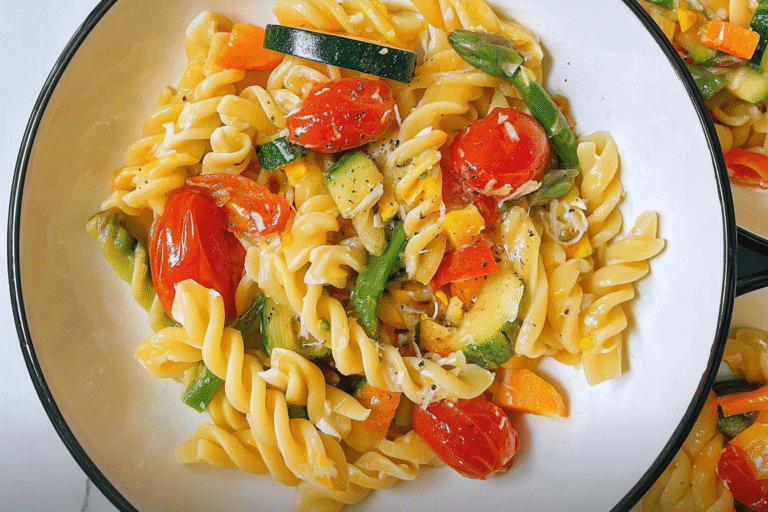
Pasta Primavera Recipe
🌸 Vibrant spring vegetables tossed with tender pasta in a light, creamy sauce for a fresh and satisfying meal
🥗 Nutrient-packed dish that celebrates seasonal produce while providing a perfect balance of carbohydrates and vitamins
- Total Time: 35 minutes
- Yield: 6 servings
Ingredients
Notes
🥕 Cut vegetables into uniform sizes to ensure even cooking and a beautiful presentation
🌸 Don’t overcook the vegetables – they should remain crisp-tender to maintain their fresh spring flavors
🍝 Use pasta water sparingly to thin the sauce – it contains starch that helps the sauce cling to the pasta better than plain water
- Prep Time: 20 minutes
- Cook Time: 15 minutes
- Category: Main Course
- Method: Stovetop
- Cuisine: Italian-American
- Diet: Vegetarian
Nutrition
- Serving Size: 1½ cups
- Calories: 380
- Sugar: 8g
- Sodium: 520mg
- Fat: 16g
- Saturated Fat: 9g
- Unsaturated Fat: 6g
- Trans Fat: 0.5g
- Carbohydrates: 48g
- Fiber: 4g
- Protein: 12g
- Cholesterol: 45mg