
Why You’ll Love This Takoyaki
Takoyaki is a classic Japanese street food made from a light batter filled with octopus, then cooked in a special pan until the outside turns crisp and the inside stays soft. This takoyaki recipe is a practical choice for home cooks who want a dish that feels festive but still fits into a busy kitchen routine. It takes about 20 to 30 minutes from start to finish, and the ingredients are straightforward once you have a takoyaki pan.
- Quick and approachable: The batter comes together in minutes, and each batch cooks in under 10 minutes. That makes homemade takoyaki a good option for weeknight cooking or casual weekend meals.
- Balanced texture and flavor: The crisp shell, tender octopus, rich sauce, and salty bonito flakes create the signature taste that makes japanese octopus balls so memorable.
- Flexible for different tastes: You can keep the filling traditional or try cheese, spicy seasonings, or other add-ins for variety. This makes the dish useful for families with different preferences.
- Great as a snack or side dish: Takoyaki works well for parties, game nights, or as a side with rice. It is also easy to serve in small portions, which suits many eating styles.
For a reliable overview of octopus as a seafood choice, you can also read this external guide on whether octopus is healthy.
If you enjoy Japanese-style cooking at home, you may also like browsing this related guide to another authentic takoyaki recipe for comparison and technique ideas.
Jump to:
- Why You’ll Love This Takoyaki
- Essential Ingredients for Takoyaki
- Batter
- Fillings
- Toppings
- Special Dietary Options
- How to Prepare the Perfect Takoyaki: Step-by-Step Guide
- First Step: Mix the batter
- Second Step: Prepare the pan and fillings
- Third Step: Fill the cavities
- Fourth Step: Turn the balls carefully
- Fifth Step: Finish the cooking
- Final Step: Add toppings and serve
- Recipe Snapshot
- Protein and Main Component Alternatives
- Seafood substitutes
- Meat and plant-based options
- Texture and flavor notes
- Vegetable, Sauce, and Seasoning Modifications
- Vegetable ideas
- Sauce choices
- Seasoning ideas
- Mastering Takoyaki: Advanced Tips and Variations
- Pro cooking techniques
- Flavor variations
- Presentation tips
- Make-ahead options
- How to Store Takoyaki: Best Practices
- Refrigeration
- Freezing
- Reheating
- Meal prep considerations
- FAQs: Frequently Asked Questions About Takoyaki
- Takoyaki
- Ingredients
- Instructions
- Last Step:
- Notes
- Nutrition
- Did you make this recipe?
Essential Ingredients for Takoyaki
The best takoyaki recipe starts with the right balance of batter, filling, and toppings. The ingredients below make about 24 to 30 balls.
Batter
- 200g wheat flour – forms the base of the batter and gives the balls structure.
- 500ml dashi stock or water – loosens the batter and adds savory depth if dashi is used.
- 2 large eggs – help bind the batter and add richness.
- 1 tsp soy sauce – gives the batter a light savory note.
- 1/2 tsp baking powder – helps the takoyaki puff slightly for a softer center.
Fillings
- 200g boiled octopus, minced or diced into 1cm pieces – the traditional filling for authentic takoyaki recipe results.
- 50g tempura scraps (tenkasu) – add crunch and a light fried flavor.
- 2 tbsp finely chopped green onion – bring freshness and mild sharpness.
- 2 tbsp pickled ginger (beni shoga), finely chopped – adds brightness and a classic Japanese taste.
Toppings
- 100ml takoyaki sauce – provides the sweet-savory finish.
- 50ml mayonnaise – adds creaminess and a richer finish.
- 2 tbsp aonori (dried green seaweed flakes) – gives color and sea-like aroma.
- 20g dried bonito shavings (katsuobushi) – create the traditional smoky, savory topping.
Special Dietary Options
- Vegan: Replace octopus with diced mushrooms, tofu, or chopped hearts of palm, and use plant-based mayonnaise.
- Gluten-free: Swap the wheat flour for a gluten-free all-purpose blend and confirm that the sauce and tempura scraps are gluten-free.
- Low-calorie: Use less mayonnaise, serve with extra green onion, and choose a lighter sauce portion.
How to Prepare the Perfect Takoyaki: Step-by-Step Guide
First Step: Mix the batter
Place the wheat flour in a large bowl. Add the dashi stock or water, eggs, soy sauce, and baking powder. Whisk until the mixture is smooth and thin. The batter should be pourable, almost like heavy cream, because a looser batter helps the takoyaki puff and cook evenly.
If you want a stronger savory taste, use dashi instead of water. For a milder version, water works too. Let the batter rest for a few minutes while you prepare the pan and fillings. This short rest helps the flour hydrate fully and gives a better texture.
Second Step: Prepare the pan and fillings
Heat a takoyaki pan over medium heat. Lightly oil each cavity, including the spaces between them, so the batter does not stick. Keep the octopus, tempura scraps, green onion, and pickled ginger close by before cooking begins. Fast assembly matters because the batter starts setting soon after it touches the pan.
If you are making homemade takoyaki for the first time, arrange a bowl of batter, a bowl of fillings, and a small brush of oil within easy reach. This setup makes the process smoother and helps prevent overcooked spots.
Third Step: Fill the cavities
Pour batter into each cavity until it is about two-thirds full. Do not worry if some batter spills over the edges, since that extra batter is part of the classic shaping process. Add a piece of boiled octopus, a small amount of tempura scraps, chopped green onion, and pickled ginger into the center of each cavity.
The filling should be tucked into the middle so the batter can form a round shell around it. If a cavity looks too dry, add a little more batter on top. This helps create the round shape and supports an even cook.
Fourth Step: Turn the balls carefully
After about 2 minutes, the edges should begin to set. Use picks or skewers to loosen the batter around each cavity. Turn each piece 90 degrees so the uncooked batter flows into the empty space. Add more batter if needed to help the ball keep its shape.
Continue turning the takoyaki every 30 to 60 seconds. As the outside cooks, the balls will become more round and evenly browned. Work patiently here, since careful turning is one of the most important parts of making crispy takoyaki recipe results at home.
Fifth Step: Finish the cooking
Keep cooking for a total of 8 to 10 minutes per batch, or until the outside is golden brown and crisp. The inside should still feel tender. If you prefer a more even crust, rotate the balls several more times during the final minutes.
Take the takoyaki out of the pan once the color looks right and the surface feels set. If the first batch is not perfect, do not worry. The next round is usually easier once the pan gets properly heated and the motion becomes familiar.
Final Step: Add toppings and serve
Brush the hot takoyaki generously with takoyaki sauce and mayonnaise. Finish with aonori and dried bonito shavings. The heat from the takoyaki will make the bonito flakes move slightly, which is one of the most recognizable signs of japanese octopus balls served fresh.
Serve immediately for the best texture. Takoyaki tastes best right after cooking, when the shell is crisp and the center is soft. It works well as a snack, party food, or side dish with rice.
Cooking note: A takoyaki pan is the key tool for this recipe. It helps the batter cook into round, even balls and gives the dish its signature shape.
Recipe Snapshot
| Detail | Information |
|---|---|
| Preparation time | About 20 to 30 minutes total |
| Yield | About 24 to 30 balls |
| Cooking time | 8 to 10 minutes per batch |
| Method | Pan-cooked on medium heat |
| Main tool | Takoyaki pan |
| Nutritional information | Not specified |
Protein and Main Component Alternatives
Although classic takoyaki uses boiled octopus, the recipe can be adapted in several ways when seafood is not available or when guests want a different filling. The goal is to keep the structure and cooking method the same while changing the center ingredient.
Seafood substitutes
Cooked shrimp, crab, or chopped squid can replace the octopus. These choices keep the dish close to the traditional flavor profile and work well for diners who like seafood but want a different taste or texture. Keep the pieces small so they fit neatly in the center of each ball.
Meat and plant-based options
For a non-seafood version, try cooked chicken, minced pork, or small pieces of sausage. These are not traditional, but they can suit family meals and casual gatherings. For a vegetarian version, use diced mushrooms, tofu cubes, or hearts of palm. These ingredients give a pleasant bite and pair well with the savory sauce.
Texture and flavor notes
When changing the filling, keep the size about 1cm or smaller so the takoyaki balls still form properly. If the filling is very moist, pat it dry first so the batter can set well. Also, season the substitute lightly before adding it to the pan if you want a stronger flavor.
For readers following a lighter eating pattern, tofu and mushrooms are useful choices because they provide a softer profile without losing the comfort-food feel. These swaps also keep homemade takoyaki practical for mixed households where some people eat seafood and others do not.
Vegetable, Sauce, and Seasoning Modifications
Takoyaki is flexible enough to suit different seasons, pantry needs, and dietary goals. Small changes to the vegetables, sauces, or seasonings can shift the dish from traditional to playful without changing the cooking method.
Vegetable ideas
Green onion and pickled ginger are classic, but you can add finely chopped cabbage, corn kernels, or sautéed mushrooms for extra texture. If you want a softer taste, use more green onion and less pickled ginger. For a richer filling, add a little grated cheese near the center.
Sauce choices
Takoyaki sauce gives the dish its familiar sweet-savory finish, but you can adjust it based on taste. Some cooks use a mix of Worcestershire sauce, ketchup, and soy sauce when takoyaki sauce is not available. Mayonnaise can be used lightly or replaced with a plant-based version. For a sharper flavor, add a small drizzle of spicy mayo.
Seasoning ideas
To keep the recipe close to the traditional style, use aonori and katsuobushi as written. If you want a stronger finish, add a pinch of chili flakes or shichimi togarashi. Those who prefer a milder dish can reduce the sauce slightly and rely on the broth in the batter for flavor.
These changes are useful for busy parents, students, and party hosts because the recipe can fit what is already in the kitchen. It also makes the dish useful across seasons, since you can build a lighter summer version or a richer cold-weather version with the same base method.
Mastering Takoyaki: Advanced Tips and Variations
Pro cooking techniques
For the best crispy takoyaki recipe results, keep the pan at medium heat rather than high heat. Too much heat can brown the outside before the center cooks through. Light oiling also matters because it helps the batter move when you turn it. Use a thin pick or skewer and turn each ball in small stages instead of trying to flip it all at once.
If the first batch looks uneven, test the next batch with a slightly different amount of batter. A properly filled cavity should have enough batter to form a round edge after turning, but not so much that it spills excessively. Practice improves both shape and texture.
Flavor variations
Many home cooks enjoy making homemade takoyaki with cheese, spicy seasoning, or extra green onion. Cheese melts into the center and creates a richer flavor. A small amount of chili powder or shichimi gives the dish a warmer finish. You can also make a stronger seafood version by adding minced shrimp along with octopus.
For a modern twist, try serving the balls with a little extra sauce on the side so guests can dip as they eat. That works especially well at gatherings where people like to control sweetness or saltiness.
Presentation tips
Serve the takoyaki on a flat plate or tray while it is still hot. Arrange the balls in a neat cluster and finish with aonori and bonito flakes right before serving. A small drizzle of mayonnaise in a zigzag pattern adds the familiar look seen at Japanese food stalls.
For a more polished table setting, pair the dish with a simple salad, rice, or pickled vegetables. That creates a complete meal without making the plate feel crowded.
Make-ahead options
You can chop the octopus, green onion, and pickled ginger earlier in the day, then store them separately in the refrigerator. The batter can also be mixed shortly before cooking and kept chilled for a short time. If you are hosting guests, set out the fillings in small bowls so the cooking process moves quickly once people arrive.
How to Store Takoyaki: Best Practices
Takoyaki is best eaten fresh, but leftovers can still be stored safely and reheated with care.
Refrigeration
Let the takoyaki cool to room temperature first, then place it in an airtight container. Store in the refrigerator for up to 2 days. Keep the sauce and toppings separate if possible, since they can soften the shell.
Freezing
For longer storage, freeze the cooked balls on a tray until firm, then move them to a freezer-safe bag or container. This method helps them keep their shape. They can be stored for up to 1 month, though the texture will be softer after reheating than when freshly made.
Reheating
Reheat in a toaster oven, skillet, or air fryer until warmed through and the outside firms up again. A microwave works in a hurry, but it may soften the crust. If possible, add the sauce and toppings after reheating rather than before.
Meal prep considerations
For batch cooking, prepare the fillings and sauce ahead of time, but mix the batter just before cooking. This keeps the texture light. If you plan to serve takoyaki later in the week, store the components separately and assemble fresh batches as needed.

FAQs: Frequently Asked Questions About Takoyaki
Print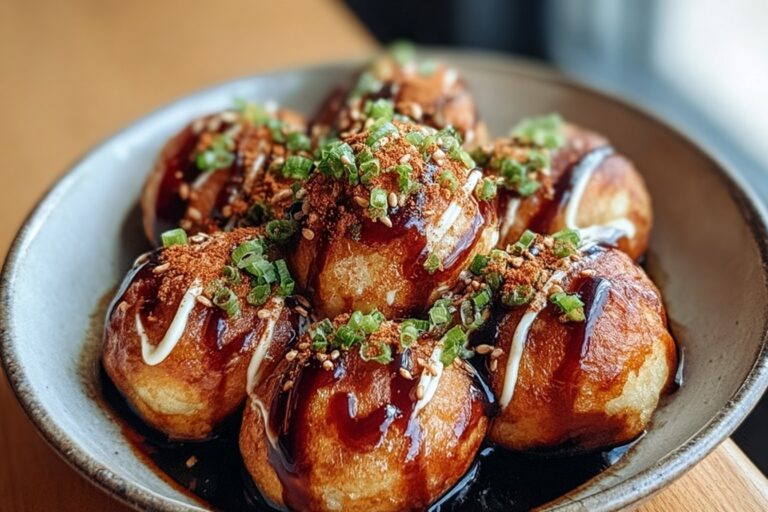
Takoyaki
🐙 Crispy golden takoyaki balls hide tender octopus and savory fillings, offering an explosion of umami flavors in every bite!
🥢 This iconic Japanese street food is fun to flip and customize, perfect for parties or quick snacks that impress everyone.
- Total Time: 30 minutes
- Yield: 24-30 balls
Ingredients
– 200g wheat flour – forms the base of the batter and gives the balls structure.
– 500ml dashi stock or water – loosens the batter and adds savory depth if dashi is used.
– 2 large eggs – help bind the batter and add richness.
– 1 tsp soy sauce – gives the batter a light savory note.
– 1/2 tsp baking powder – helps the takoyaki puff slightly for a softer center.
– 200g boiled octopus, minced or diced into 1cm pieces – the traditional filling for authentic takoyaki recipe results.
– 50g tempura scraps (tenkasu) – add crunch and a light fried flavor.
– 2 tbsp finely chopped green onion – bring freshness and mild sharpness.
– 2 tbsp pickled ginger (beni shoga), finely chopped – adds brightness and a classic Japanese taste.
– 100ml takoyaki sauce – provides the sweet-savory finish.
– 50ml mayonnaise – adds creaminess and a richer finish.
– 2 tbsp aonori (dried green seaweed flakes) – gives color and sea-like aroma.
– 20g dried bonito shavings (katsuobushi) – create the traditional smoky, savory topping.
Instructions
1-First Step: Mix the batter Place the wheat flour in a large bowl. Add the dashi stock or water, eggs, soy sauce, and baking powder. Whisk until the mixture is smooth and thin. The batter should be pourable, almost like heavy cream, because a looser batter helps the takoyaki puff and cook evenly. If you want a stronger savory taste, use dashi instead of water. For a milder version, water works too. Let the batter rest for a few minutes while you prepare the pan and fillings. This short rest helps the flour hydrate fully and gives a better texture.
2-Second Step: Prepare the pan and fillings Heat a takoyaki pan over medium heat. Lightly oil each cavity, including the spaces between them, so the batter does not stick. Keep the octopus, tempura scraps, green onion, and pickled ginger close by before cooking begins. Fast assembly matters because the batter starts setting soon after it touches the pan. If you are making homemade takoyaki for the first time, arrange a bowl of batter, a bowl of fillings, and a small brush of oil within easy reach. This setup makes the process smoother and helps prevent overcooked spots.
3-Third Step: Fill the cavities Pour batter into each cavity until it is about two-thirds full. Do not worry if some batter spills over the edges, since that extra batter is part of the classic shaping process. Add a piece of boiled octopus, a small amount of tempura scraps, chopped green onion, and pickled ginger into the center of each cavity. The filling should be tucked into the middle so the batter can form a round shell around it. If a cavity looks too dry, add a little more batter on top. This helps create the round shape and supports an even cook.
4-Fourth Step: Turn the balls carefully After about 2 minutes, the edges should begin to set. Use picks or skewers to loosen the batter around each cavity. Turn each piece 90 degrees so the uncooked batter flows into the empty space. Add more batter if needed to help the ball keep its shape. Continue turning the takoyaki every 30 to 60 seconds. As the outside cooks, the balls will become more round and evenly browned. Work patiently here, since careful turning is one of the most important parts of making crispy takoyaki recipe results at home.
5-Fifth Step: Finish the cooking Keep cooking for a total of 8 to 10 minutes per batch, or until the outside is golden brown and crisp. The inside should still feel tender. If you prefer a more even crust, rotate the balls several more times during the final minutes. Take the takoyaki out of the pan once the color looks right and the surface feels set. If the first batch is not perfect, do not worry. The next round is usually easier once the pan gets properly heated and the motion becomes familiar.
6-Final Step: Add toppings and serve Brush the hot takoyaki generously with takoyaki sauce and mayonnaise. Finish with aonori and dried bonito shavings. The heat from the takoyaki will make the bonito flakes move slightly, which is one of the most recognizable signs of japanese octopus balls served fresh. Serve immediately for the best texture. Takoyaki tastes best right after cooking, when the shell is crisp and the center is soft. It works well as a snack, party food, or side dish with rice.
Last Step:
Please leave a rating and comment letting us know how you liked this recipe! This helps our business to thrive and continue providing free, high-quality recipes for you.Notes
🔥 Use a dedicated takoyaki pan for perfect round shapes and even heating.
🌀 Turn the balls carefully and frequently for that signature crispy exterior.
🎨 Experiment with fillings like cheese, bacon, or cheese for personalized twists.
- Prep Time: 20 minutes
- Cook Time: 10 minutes
- Category: Snacks
- Method: Pan-fried
- Cuisine: Japanese
- Diet: Pescatarian
Nutrition
- Serving Size: 6 balls
- Calories: 360 kcal
- Sugar: 2g
- Sodium: 800mg
- Fat: 12g
- Saturated Fat: 2g
- Unsaturated Fat: 10g
- Trans Fat: 0g
- Carbohydrates: 48g
- Fiber: 1g
- Protein: 12g
- Cholesterol: 50mg