
Why You’ll Love This Teriyaki Salmon Bowl
If you want a fast dinner that still feels fresh, filling, and full of flavor, this Teriyaki Salmon Bowl is a smart choice. It brings together tender salmon, warm rice, crisp vegetables, and a glossy homemade sauce that tastes better than takeout. Best of all, it comes together in about 30 minutes, which makes it a strong weeknight win for busy parents, students, and working professionals.
- Easy to make: This Teriyaki Salmon Bowl uses simple steps, basic pantry ingredients, and quick-cooking salmon. While the rice cooks, you can prep the sauce and toppings, so everything moves fast without feeling rushed.
- Good for you: Salmon brings protein and omega-3 fats, while cucumber, carrots, edamame, and avocado add fiber, color, and key nutrients. Served over brown rice or white rice, this bowl gives you a balanced meal that feels satisfying without being heavy.
- Flexible for different needs: You can swap brown rice for white rice, use extra vegetables, or make it grain-free with cauliflower rice. It also works well for meal prep, which is helpful for anyone who wants lunch or dinner ready ahead of time.
- Big flavor in every bite: The sweet-savory teriyaki-style sauce combines coconut aminos, honey, garlic, ginger, sesame oil, and rice vinegar. That mix gives the Teriyaki Salmon Bowl its bold taste, with a finish of sesame seeds and green onions for freshness.
Busy night? This bowl gives you a restaurant-style meal at home without a long ingredient list or complicated steps.
For readers who love wholesome bowls, this recipe fits right in with simple, crowd-pleasing meals. If you enjoy easy homemade desserts too, you might also like my easy banana bread recipe for another dependable kitchen favorite.
Jump to:
- Why You’ll Love This Teriyaki Salmon Bowl
- Essential Ingredients for Teriyaki Salmon Bowl
- Main ingredients
- Special dietary options
- How to Prepare the Perfect Teriyaki Salmon Bowl: Step-by-Step Guide
- First step: Get the rice and toppings ready
- Second step: Mix the teriyaki-style sauce
- Third step: Cook the salmon
- Fourth step: Build each bowl
- Final step: Serve and enjoy right away
- Dietary Substitutions to Customize Your Teriyaki Salmon Bowl
- Protein and main component alternatives
- Vegetable, sauce, and seasoning modifications
- Mastering Teriyaki Salmon Bowl: Advanced Tips and Variations
- Pro cooking techniques
- Flavor variations
- Presentation tips
- Make-ahead options
- How to Store Teriyaki Salmon Bowl: Best Practices
- Refrigeration
- Freezing
- Reheating
- Meal prep considerations
- FAQs: Frequently Asked Questions About Teriyaki Salmon Bowl
- Is teriyaki salmon bowl healthy?
- What vegetables go well in a teriyaki salmon bowl?
- What’s the best rice for a teriyaki salmon bowl?
- Can you make a grain-free teriyaki salmon bowl?
- How do you meal prep teriyaki salmon bowls?
- Teriyaki Salmon Bowl
- Ingredients
- Instructions
- Last Step:
- Notes
- Nutrition
- Did you make this recipe?
Essential Ingredients for Teriyaki Salmon Bowl
This Teriyaki Salmon Bowl recipe uses fresh toppings, a quick homemade sauce, and a hearty base to create a balanced meal. Below is the full ingredient list with exact measurements so you can shop and cook with confidence.
Main ingredients
- 4 salmon filets, 5 to 6 ounces each – The main protein for the bowl, flaky and rich after baking or pan cooking.
- 3 cups cooked brown rice or white rice – The filling base that soaks up the teriyaki sauce beautifully.
- 2 cups chopped cucumber – Adds crunch and a cool, fresh contrast.
- 1 cup shelled edamame, cooked and cooled – Brings extra protein, fiber, and a soft bite.
- 1 cup shredded or julienned carrots – Adds color, sweetness, and crisp texture.
- 1 medium avocado, sliced – Gives the bowl creamy richness and helps balance the sauce.
- 2 green onions, thinly sliced – Adds a sharp, fresh finish.
- 1/2 cup coconut aminos – Forms the salty-sweet base of the teriyaki-style sauce.
- 1/4 cup honey – Adds natural sweetness and helps the sauce glaze the salmon.
- 1 tablespoon rice vinegar – Brings brightness and balance to the sauce.
- 1 tablespoon toasted sesame oil – Adds nutty flavor and depth.
- 3 garlic cloves, minced – Gives the sauce a savory kick.
- 1 teaspoon grated fresh ginger – Adds warmth and a classic teriyaki flavor.
- 1 1/2 tablespoons cornstarch – Helps thicken the sauce so it coats the salmon well.
- 2 tablespoons warm water – Mixes with cornstarch to create a smooth slurry.
- Sesame seeds, for garnish – Add texture and a final touch of flavor.
Special dietary options
- Vegan: Swap the salmon for baked tofu or tempeh, and replace the honey with maple syrup.
- Gluten-free: This bowl is naturally gluten-free if your coconut aminos and other packaged items are certified gluten-free.
- Low-calorie: Use cauliflower rice instead of grain rice, reduce the avocado portion, and serve with extra cucumber and edamame for volume.
| Ingredient | Role in the bowl | Easy swap if needed |
|---|---|---|
| Salmon | Protein and main flavor | Tofu or tempeh |
| Rice | Base and comfort factor | Cauliflower rice |
| Coconut aminos sauce | Sweet-savory glaze | Low-sodium tamari for a different taste |
| Avocado | Creamy balance | Cucumber or extra edamame |
If you want more ideas for simple homemade meals, the technique used in this bowl pairs nicely with many quick dinner recipes. You can also check out the detailed bowl ideas from this teriyaki salmon bowl inspiration for another helpful reference.
How to Prepare the Perfect Teriyaki Salmon Bowl: Step-by-Step Guide
Making this Teriyaki Salmon Bowl is easier than it looks. The key is to cook the rice, make the sauce, and prepare the toppings while the salmon bakes or cooks. That way, everything comes together at the same time and stays fresh.
First step: Get the rice and toppings ready
Start by cooking 3 cups of brown rice or white rice if it is not already prepared. Brown rice gives the bowl a nuttier flavor and more fiber, while white rice cooks faster and gives a softer texture. Rinse the rice before cooking if your variety needs it, then prepare it according to the package directions.
While the rice cooks, chop the cucumber, shred or julienne the carrots, slice the avocado, and thinly slice the green onions. If your edamame is not cooked yet, cook it now and let it cool. Prepping everything first makes assembly quick and keeps the textures bright and crisp.
Second step: Mix the teriyaki-style sauce
In a small saucepan, whisk together 1/2 cup coconut aminos, 1/4 cup honey, 1 tablespoon rice vinegar, 1 tablespoon toasted sesame oil, 3 minced garlic cloves, and 1 teaspoon grated fresh ginger. Warm the mixture over medium heat until it starts to steam gently.
In a small bowl, stir 1 1/2 tablespoons cornstarch with 2 tablespoons warm water until smooth. This creates a slurry that helps thicken the sauce without lumps. Pour the slurry into the saucepan while whisking. Keep cooking for 1 to 2 minutes, or until the sauce thickens enough to coat the back of a spoon. Remove it from the heat once it looks glossy.
Tip: If you want a thinner sauce, add a splash of warm water. If you want a thicker glaze, simmer it a little longer.
Third step: Cook the salmon
Pat the 4 salmon filets dry with paper towels. This helps the surface cook more evenly and lets the sauce cling better. You can bake the salmon or cook it in a skillet, depending on what works best for your kitchen.
For baking, place the salmon on a lined baking sheet and cook at 400 degrees Fahrenheit for about 12 to 15 minutes, depending on thickness. The salmon is done when it flakes easily with a fork and reaches an internal temperature of 145 degrees Fahrenheit. If you prefer the stovetop, cook it over medium heat in a lightly oiled skillet for several minutes per side until just cooked through.
Brush or spoon some of the sauce over the salmon near the end of cooking so it gets a nice glaze without burning. If you are making a grain-free version, this step still works beautifully with cauliflower rice in place of the grain base.
Fourth step: Build each bowl
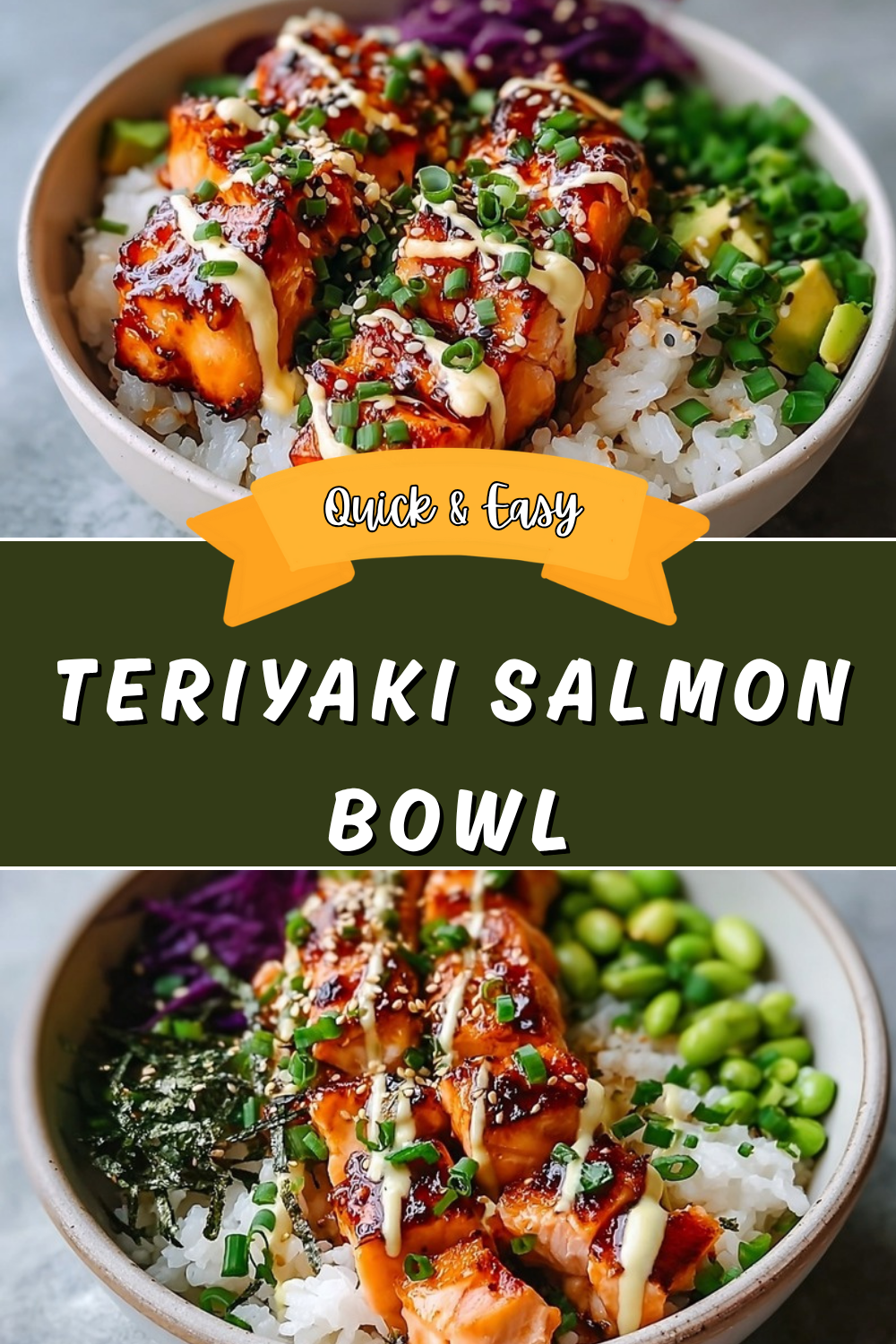
Start each bowl with a scoop of rice as the base. Add cucumber, carrots, and edamame in separate sections so the bowl looks colorful and organized. Place a salmon filet on top or slightly off to the side for a more styled look.
Add sliced avocado and green onions last. Spoon extra sauce over the salmon and rice, then finish with sesame seeds for a little crunch. This simple layering gives every bite a mix of soft, crisp, creamy, and savory flavors.
Final step: Serve and enjoy right away
Serve the Teriyaki Salmon Bowl while the salmon is warm and the vegetables are cold or lightly chilled. That contrast makes each bite more interesting. If you are serving guests, let everyone build their own bowl so they can choose more sauce, more avocado, or extra vegetables.
This recipe also works well for lunch the next day. Just store the ingredients separately if you want the best texture, then assemble before eating. For more simple serving ideas and meal inspiration, you might also like this bright lemon blueberry bundt cake recipe for a sweet finish after dinner.

Dietary Substitutions to Customize Your Teriyaki Salmon Bowl
Protein and main component alternatives
If salmon is not your favorite or you do not have it on hand, this bowl still gives you plenty of room to change things up. You can replace the salmon with tofu, tempeh, shrimp, or chicken. For a plant-based version, baked tofu works especially well because it absorbs the sweet-savory sauce and still gives you a satisfying bite.
If you need a grain-free option, cauliflower rice is a great swap for the rice base. It keeps the bowl light and lower in carbs while still giving you a texture that feels close to rice. Quinoa is another good choice if you want extra protein and a nutty flavor.
Vegetable, sauce, and seasoning modifications
You can use almost any crunchy or tender vegetable you like. Bell peppers, radishes, broccoli, cabbage, snap peas, or steamed green beans all work well in a Teriyaki Salmon Bowl. If you want more heat, add a pinch of red pepper flakes or a drizzle of sriracha to the sauce.
For a lower-sugar version, reduce the honey slightly and let the garlic and ginger stand out more. For a richer flavor, add a little more toasted sesame oil or top the bowl with sliced cucumber and extra avocado. You can also use tamari instead of coconut aminos if that fits your pantry better.
Mastering Teriyaki Salmon Bowl: Advanced Tips and Variations
Once you make this bowl once, it becomes easy to adjust it to your taste and routine. A few small tricks can help the salmon stay tender, the sauce stay glossy, and the whole bowl look polished on the plate.
Pro cooking techniques
Do not overcook the salmon. Pull it from the oven as soon as it flakes easily, since it will keep cooking a little from residual heat. If you want a deeper glaze, brush the salmon with sauce during the final minutes of cooking instead of at the start. That keeps the sugars from browning too quickly.
Another helpful trick is to let the rice cool slightly before assembling. Warm rice with cool vegetables gives a pleasant temperature contrast, and the bowl holds its shape better. If you are making several servings, keep the sauce separate until serving time so nothing turns soggy.
Flavor variations
Try adding steamed broccoli, shredded cabbage, or sliced radishes for extra crunch. You can also add a little grated ginger to the finished bowl if you want more brightness. For a deeper flavor, stir a touch of miso into the sauce or top with furikake seasoning for a Japanese-style finish.
Presentation tips
Build the bowl in neat sections instead of mixing everything together. This gives the Teriyaki Salmon Bowl a colorful, fresh look. Use avocado slices on one side, salmon in the center, and vegetables around it. Finish with sesame seeds and green onions for a clean final touch.
Make-ahead options
You can cook the rice, make the sauce, and prep the vegetables up to 3 days ahead. Store each item in its own container in the fridge. When it is time to eat, cook the salmon fresh for the best texture, then assemble the bowls in just a few minutes. This is a great plan for lunches, weeknight dinners, or easy meal prep.
How to Store Teriyaki Salmon Bowl: Best Practices
Storage is simple if you keep the parts of the bowl separate. Salmon, rice, vegetables, and sauce all hold up better when stored on their own. That helps preserve texture and keeps the bowl tasting fresh later.
Refrigeration
Store cooked salmon and rice in airtight containers in the refrigerator for up to 3 days. Keep cucumber, avocado, and green onions separate when possible. Avocado is best sliced fresh, but if you do store it, add a little lemon juice to slow browning.
Freezing
You can freeze the cooked salmon and rice for longer storage, but the fresh vegetables are best kept out of the freezer. Freeze in individual portions for up to 2 months. Thaw overnight in the fridge before reheating.
Reheating
Reheat the salmon and rice gently in the microwave or in a covered skillet over low heat. Add a small splash of water if the rice feels dry. Warm the sauce separately, then pour it over the bowl after reheating. Add avocado, cucumber, and green onions after reheating so they stay fresh.
Meal prep considerations
For meal prep, divide the rice, salmon, and vegetables into containers with the sauce kept in a small jar or cup. This keeps the Teriyaki Salmon Bowl from getting soggy and makes weekday lunches much easier. If you want more meal prep ideas, this type of bowl is also a good fit for simple family dinners and packed lunches.
FAQs: Frequently Asked Questions About Teriyaki Salmon Bowl
Is teriyaki salmon bowl healthy?
Yes, teriyaki salmon bowls are a nutritious choice. Salmon provides omega-3 fatty acids that support heart health and reduce inflammation, with a 4-ounce serving offering about 2,000 mg of EPA and DHA. Pair it with brown rice or quinoa for fiber and steady energy, plus colorful veggies like broccoli, carrots, and cabbage for vitamins A, C, and K. This combo delivers around 500-600 calories per bowl, balancing protein (30g+), healthy fats, and carbs for lasting fullness. It’s low in processed ingredients if you make the teriyaki sauce from soy sauce, ginger, garlic, and honey. Skip heavy frying for baking or grilling salmon to keep it light—perfect for weight management or balanced diets.
What vegetables go well in a teriyaki salmon bowl?
Top your teriyaki salmon bowl with fresh, crunchy veggies for texture and nutrition. Try sliced cucumbers, shredded carrots, thinly sliced radishes, or bell peppers for mild sweetness. Add cabbage (green or purple for antioxidants), steamed broccoli, green beans, or Brussels sprouts for heartiness. Sautéed mushrooms like shiitake pair perfectly with the umami sauce, while asparagus or a handful of sprouts add freshness. Sprinkle furikake seasoning for a Japanese twist. Prep tip: Chop veggies ahead and store in airtight containers for quick assembly. Steam or roast for 5-10 minutes to retain crunch—aim for 1-2 cups per bowl to boost fiber without overpowering the salmon.
What’s the best rice for a teriyaki salmon bowl?
Choose rice based on your needs—sushi rice or jasmine white rice cooks fast (15-20 minutes) and absorbs teriyaki sauce well for a sticky texture. Brown rice takes longer (40 minutes) but adds more fiber (3g per cup) and nutrients. For speed, use frozen microwave rice or quinoa, ready in 3 minutes. Rinse rice first to remove starch, then cook in a 1:1.5 rice-to-water ratio with a pinch of salt. Fluff and let steam covered for 10 minutes post-cook. Portion ½-1 cup cooked per bowl. Links to our perfect brown rice and sushi rice recipes make it foolproof every time.
Can you make a grain-free teriyaki salmon bowl?
Absolutely—swap grains for cauliflower rice to keep it low-carb and grain-free. Use 1 cup frozen cauliflower rice per serving; microwave for 3-4 minutes or sauté with a teaspoon of sesame oil until tender. It mimics rice’s texture while cutting carbs to under 20g per bowl. Top with baked teriyaki salmon (brush with sauce, bake at 400°F for 12-15 minutes), avocado slices for creaminess, and sesame seeds. This version suits keto or paleo diets, maintaining 400 calories and 35g protein. Add extra veggies like zucchini noodles for volume. Stores well in the fridge for 3 days—reheat gently to avoid mushiness.
How do you meal prep teriyaki salmon bowls?
Meal prep teriyaki salmon bowls for 4 days easily. Bake 1.5 lbs salmon fillets at 400°F for 12-15 minutes after brushing with homemade sauce (¼ cup soy sauce, 2 tbsp honey, 1 tbsp ginger, 2 garlic cloves—simmer 5 minutes). Cook 2 cups rice or cauliflower rice separately. Chop 4 cups mixed veggies (broccoli, carrots, edamame) and steam for 5 minutes. Divide into 4 glass containers: 4oz salmon, ½ cup base, 1 cup veggies per bowl. Drizzle extra sauce and store in fridge up to 4 days. Reheat in microwave 1-2 minutes. Total prep time: 30 minutes. Freezes for 1 month—thaw overnight for best texture.
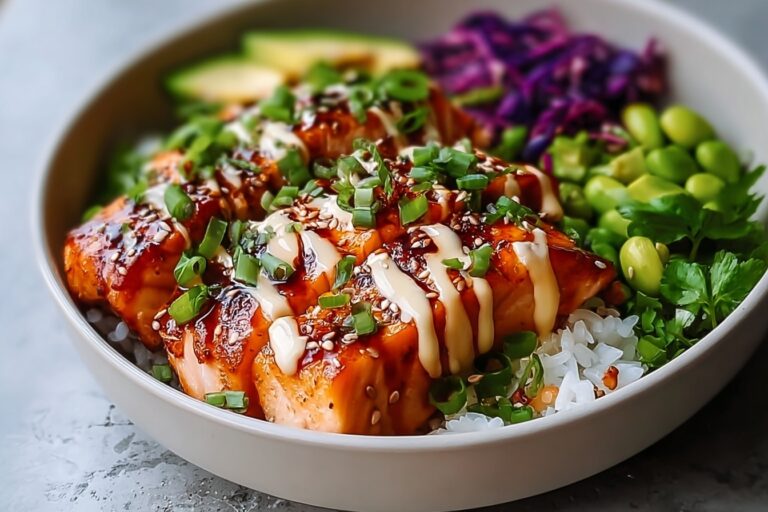
Teriyaki Salmon Bowl
🐟 Enjoy tender, flaky salmon glazed in sweet-savory teriyaki sauce over wholesome rice and crisp veggies, delivering omega-3s and protein for a nutritious power meal.
🍚 Quick and customizable 30-minute bowl that’s perfect for busy weeknights, bursting with fresh flavors and colors to brighten your dinner routine.
- Total Time: 30 minutes
- Yield: 4 servings
Ingredients
– 4 salmon filets, 5 to 6 ounces each for main protein
– 3 cups cooked brown rice or white rice for filling base
– 2 cups chopped cucumber for crunch and fresh contrast
– 1 cup shelled edamame, cooked and cooled for extra protein, fiber
– 1 cup shredded or julienned carrots for color, sweetness, crisp texture
– 1 medium avocado, sliced for creamy richness
– 2 green onions, thinly sliced for sharp, fresh finish
– 1/2 cup coconut aminos for salty-sweet sauce base
– 1/4 cup honey for sweetness and glaze
– 1 tablespoon rice vinegar for brightness and balance
– 1 tablespoon toasted sesame oil for nutty flavor and depth
– 3 garlic cloves, minced for savory kick
– 1 teaspoon grated fresh ginger for warmth and teriyaki flavor
– 1 1/2 tablespoons cornstarch for thickening sauce
– 2 tablespoons warm water for cornstarch slurry
– Sesame seeds for garnish
Instructions
1-First step: Get the rice and toppings ready Start by cooking 3 cups of brown rice or white rice if it is not already prepared. Brown rice gives the bowl a nuttier flavor and more fiber, while white rice cooks faster and gives a softer texture. Rinse the rice before cooking if your variety needs it, then prepare it according to the package directions. While the rice cooks, chop the cucumber, shred or julienne the carrots, slice the avocado, and thinly slice the green onions. If your edamame is not cooked yet, cook it now and let it cool. Prepping everything first makes assembly quick and keeps the textures bright and crisp.
2-Second step: Mix the teriyaki-style sauce In a small saucepan, whisk together 1/2 cup coconut aminos, 1/4 cup honey, 1 tablespoon rice vinegar, 1 tablespoon toasted sesame oil, 3 minced garlic cloves, and 1 teaspoon grated fresh ginger. Warm the mixture over medium heat until it starts to steam gently. In a small bowl, stir 1 1/2 tablespoons cornstarch with 2 tablespoons warm water until smooth. This creates a slurry that helps thicken the sauce without lumps. Pour the slurry into the saucepan while whisking. Keep cooking for 1 to 2 minutes, or until the sauce thickens enough to coat the back of a spoon. Remove it from the heat once it looks glossy.
3-Third step: Cook the salmon Pat the 4 salmon filets dry with paper towels. This helps the surface cook more evenly and lets the sauce cling better. You can bake the salmon or cook it in a skillet, depending on what works best for your kitchen. For baking, place the salmon on a lined baking sheet and cook at 400 degrees Fahrenheit for about 12 to 15 minutes, depending on thickness. The salmon is done when it flakes easily with a fork and reaches an internal temperature of 145 degrees Fahrenheit. If you prefer the stovetop, cook it over medium heat in a lightly oiled skillet for several minutes per side until just cooked through. Brush or spoon some of the sauce over the salmon near the end of cooking so it gets a nice glaze without burning. If you are making a grain-free version, this step still works beautifully with cauliflower rice in place of the grain base.
4-Fourth step: Build each bowl Start each bowl with a scoop of rice as the base. Add cucumber, carrots, and edamame in separate sections so the bowl looks colorful and organized. Place a salmon filet on top or slightly off to the side for a more styled look. Add sliced avocado and green onions last. Spoon extra sauce over the salmon and rice, then finish with sesame seeds for a little crunch. This simple layering gives every bite a mix of soft, crisp, creamy, and savory flavors.
5-Final step: Serve and enjoy right away Serve the Teriyaki Salmon Bowl while the salmon is warm and the vegetables are cold or lightly chilled. That contrast makes each bite more interesting. If you are serving guests, let everyone build their own bowl so they can choose more sauce, more avocado, or extra vegetables. This recipe also works well for lunch the next day. Just store the ingredients separately if you want the best texture, then assemble before eating. For more simple serving ideas and meal inspiration, you might also like this bright lemon blueberry bundt cake recipe for a sweet finish after dinner.
Last Step:
Please leave a rating and comment letting us know how you liked this recipe! This helps our business to thrive and continue providing free, high-quality recipes for you.Notes
🐟 Pat salmon dry before cooking for a crispy sear and better sauce adhesion.
🥬 Prep all veggies ahead to keep the recipe under 30 minutes effortlessly.
🌿 Use tamari instead of coconut aminos if preferred for a soy-based gluten-free option.
- Prep Time: 10 minutes
- Cook Time: 15 minutes
- Category: Main Course
- Method: Pan-Searing
- Cuisine: Asian Fusion
- Diet: Pescatarian
Nutrition
- Serving Size: 1 bowl
- Calories: 550 kcal
- Sugar: 20 g
- Sodium: 800 mg
- Fat: 25 g
- Saturated Fat: 5 g
- Unsaturated Fat: 18 g
- Trans Fat: 0 g
- Carbohydrates: 55 g
- Fiber: 6 g
- Protein: 35 g
- Cholesterol: 80 mg