Ingredients
– 1 pound white fish such as halibut
– 1 1/2 tablespoons olive oil
– 1 teaspoon paprika
– 1 teaspoon garlic powder
– 1/2 teaspoon salt
– 1/2 teaspoon black pepper
– 1/4 cup butter
– 2 tablespoons lemon juice
– 2 tablespoons fresh parsley, minced
– Salt and pepper to taste
– Fresh lemon slices
Instructions
1-First Step: Prep the fish Pat the fish fillets dry with paper towels. This helps them sear better and keeps the seasoning from sliding off. If your fish is very thick in one spot, let it sit at room temperature for about 10 minutes while you get the pan ready. That little pause helps the fillets cook more evenly. Place the fish on a plate or cutting board and drizzle with 1 1/2 tablespoons olive oil. Sprinkle on the paprika, garlic powder, 1/2 teaspoon salt, and 1/2 teaspoon black pepper. Use your fingers or the back of a spoon to coat both sides gently. If you like a stronger spice flavor, add a pinch more paprika, but keep the lemon butter balance in mind.
2-Second Step: Heat the pan Set a large skillet over medium heat. Let it warm for a minute or two before adding the fish. A properly heated pan helps the fish cook with a better texture and keeps the exterior from sticking. If your fillets are thin, keep the heat a little lower so they do not cook too fast. For a busy weeknight, this is the kind of recipe that lets you multitask. While the pan heats, you can slice the lemon, mince the parsley, and measure the butter so everything is ready when you need it.
3-Third Step: Cook the fish fillets Place the seasoned fillets in the skillet and cook for about 3 to 4 minutes on the first side. The exact time depends on thickness, but you are looking for the fish to turn opaque around the edges and release easily from the pan. Flip gently using a thin spatula, then cook the second side for another 2 to 4 minutes. White fish like halibut cooks quickly, so stay close. Overcooking can make it dry, while just-cooked fish stays tender and flaky. A good sign it is ready is when it flakes easily with a fork and the center looks opaque. If you are cooking for a family with different tastes, this mild base works well because each person can adjust the sauce and garnish at the table.
4-Fourth Step: Make the lemon butter sauce Once the fish is cooked, transfer it to a plate and keep it warm. Lower the heat to low and add 1/4 cup butter to the same skillet. Let it melt slowly, then stir in 2 tablespoons lemon juice. Scrape up any browned bits from the pan with a spoon because they add flavor to the sauce. Add the 2 tablespoons minced fresh parsley and taste the sauce. Season with salt and pepper to taste. If you want the sauce a little tangier, add a few extra drops of lemon juice. If you want it richer, let the butter cook just long enough to meld with the lemon without browning too much.
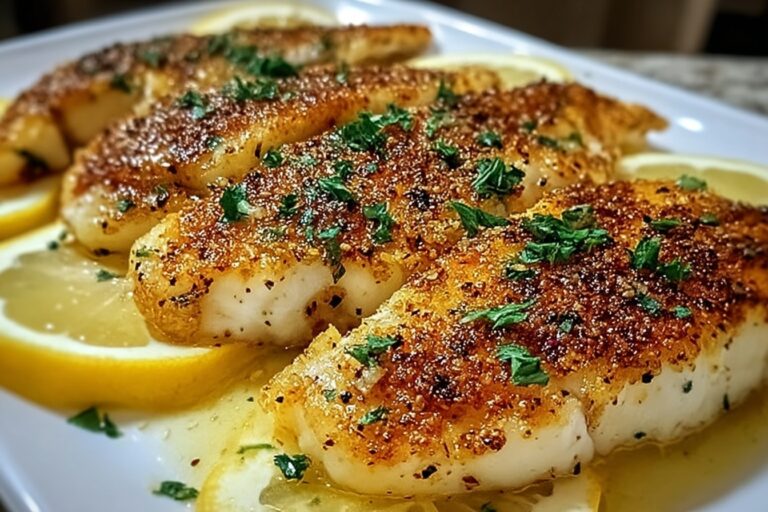
5-Final Step: Finish and serve Spoon the warm lemon butter sauce over the fish fillets. Add fresh lemon slices on top or around the plate for garnish. Serve right away while the fish is tender and the sauce is glossy. This dish works well with simple sides like rice, roasted potatoes, steamed vegetables, or a crisp salad. If you want a dessert afterward that keeps the citrus theme going, this lemon blueberry bundt cake is a lovely follow-up. For a lighter fruit option, you could also check out baked peaches.
Last Step:
Please leave a rating and comment letting us know how you liked this recipe! This helps our business to thrive and continue providing free, high-quality recipes for you.Notes
🐟 Pat fish very dry before seasoning—ensures crispy sear not steaming.
🔥 Don’t overcrowd pan; cook in batches for even golden crust.
🍋 Use fresh lemon juice—bottled lacks bright zing.
- Prep Time: 5 minutes
- Cook Time: 10 minutes
- Category: Main Course
- Method: Pan Sear
- Cuisine: American
- Diet: Pescatarian
Nutrition
- Serving Size: 4 oz fillet
- Calories: 300 kcal
- Sugar: 0g
- Sodium: 400mg
- Fat: 20g
- Saturated Fat: 10g
- Unsaturated Fat: 10g
- Trans Fat: 0g
- Carbohydrates: 1g
- Fiber: 0g
- Protein: 25g
- Cholesterol: 100mg