
Why You’ll Love This Pad Thai
Imagine bringing the vibrant flavors of Thai street food right into your kitchen with this easy Pad Thai recipe. It’s a dish that captures the essence of “pad thai recipe” and offers a balance of tastes that keeps everyone coming back for more. Whether you’re a busy parent or a food enthusiast, this recipe fits seamlessly into your routine. Let’s dive into why this Pad Thai stands out and why it might become your go-to meal.
- Ease of preparation: This authentic Pad Thai recipe comes together in about 30 minutes, making it perfect for busy schedules. You only need a few simple steps and common ingredients, so even beginners can master how to make Pad Thai at home without stress. Its quick cooking time means you can enjoy a homemade meal any night of the week, saving you from ordering takeout.
- Health benefits: Packed with fresh vegetables like bean sprouts and red bell pepper, this Pad Thai provides a nutritious boost. It’s loaded with vitamins, such as Vitamin C from the bell peppers and protein from shrimp, chicken, or tofu, supporting a balanced diet. For those watching their health, the best Pad Thai recipe includes options that align with dietary goals, like reducing sodium or adding more veggies for extra fiber.
- Versatility: Adapt this Pad Thai to suit various needs, such as a vegetarian Pad Thai recipe or one with chicken for protein lovers. It’s easy to swap ingredients based on what’s in your fridge, making it ideal for students or working professionals. This flexibility ensures everyone, from diet-conscious individuals to families, can enjoy a customized version of this Thai favorite.
- Distinctive flavor: The homemade sauce in this Pad Thai recipe delivers a perfect mix of sweet, sour, and spicy notes that define authentic Pad Thai. Ingredients like peanuts and fresh cilantro add a crunchy, aromatic finish that elevates every bite. It’s this unique blend that makes it stand out among easy Pad Thai recipes, turning a simple stir-fry into an unforgettable experience.
As you experiment with this recipe, you’ll find it not only satisfies your cravings but also encourages creativity in the kitchen. For those new to Thai cuisine, it’s a great starting point to explore flavors from around the world.
Jump to:
- Why You’ll Love This Pad Thai
- Essential Ingredients for Pad Thai
- Main Ingredients
- Special Dietary Options
- How to Prepare the Perfect Pad Thai: Step-by-Step Guide
- First Step: Prepare the Noodles
- Second Step: Make the Sauce
- Third Step: Cook the Protein and Veggies
- Fourth Step: Add the Eggs
- Fifth Step: Combine Everything
- Final Step: Garnish and Serve
- Dietary Substitutions to Customize Your Pad Thai
- Protein and Main Component Alternatives
- Vegetable, Sauce, and Seasoning Modifications
- Mastering Pad Thai: Advanced Tips and Variations
- Pro Cooking Techniques
- Flavor Variations
- Presentation Tips
- How to Store Pad Thai: Best Practices
- FAQs: Frequently Asked Questions About Pad Thai
- What ingredients do I need to make traditional Pad Thai?
- How can I make Pad Thai suitable for a vegetarian or vegan diet?
- What’s the best way to store and reheat leftover Pad Thai?
- Can I prepare Pad Thai sauce without tamarind paste?
- How can I make gluten-free Pad Thai at home?
- Pad Thai
- Ingredients
- Instructions
- Last Step:
- Notes
- Nutrition
- Did you make this recipe?
Essential Ingredients for Pad Thai
When it comes to creating the best Pad Thai, having the right ingredients on hand is key. This section breaks down everything you need for an authentic Pad Thai recipe, including precise measurements and why each one matters. We’ll start with the main ingredients and then cover special dietary options to make your cooking experience smooth and inclusive.
Main Ingredients
- 8 ounces rice noodles – These form the base of your Pad Thai, providing a soft, chewy texture that absorbs the sauce well.
- 3 tablespoons oil – Used for stir-frying, it helps evenly cook the ingredients and prevents sticking in the pan.
- 3 cloves garlic, minced – Adds a pungent, aromatic flavor that enhances the overall taste of the dish.
- 8 ounces uncooked shrimp, chicken, or extra-firm tofu, cut into small pieces – This provides the protein; shrimp or chicken offers a savory bite, while tofu is great for a vegetarian option.
- 2 eggs – Scrambled into the mix, they add richness and help bind the ingredients together.
- 1 cup fresh bean sprouts – These bring a crisp, fresh element and add vitamins to the meal.
- 1 red bell pepper, thinly sliced – Contributes sweetness and crunch, plus a boost of color and nutrients.
- 3 green onions, chopped – Offer a mild onion flavor and a fresh garnish to finish the dish.
- 1/2 cup dry roasted peanuts – Provide crunch and a nutty taste; they’re also packed with healthy fats.
- 2 limes – Squeezed for juice, they add a tangy zest that balances the flavors in Pad Thai sauce recipe.
- 1/2 cup fresh cilantro, chopped – This herb brightens the dish with its fresh, citrusy notes.
- For the sauce: 3 tablespoons fish sauce – Gives a salty, umami depth that’s essential for authentic flavor.
- For the sauce: 1 tablespoon low-sodium soy sauce – Adds a savory element while keeping sodium in check.
- For the sauce: 5 tablespoons light brown sugar – Balances the sauce with sweetness, making it a key part of how to make Pad Thai at home.
- For the sauce: 2 tablespoons rice vinegar or tamarind paste – Provides the sour note; tamarind paste offers a more traditional tang.
- For the sauce: 1 tablespoon Sriracha hot sauce or more to taste – Brings heat and spice to customize your Pad Thai ingredients.
- For the sauce: 2 tablespoons creamy peanut butter (optional) – Enhances creaminess and adds extra nutty flavor if desired.
Special Dietary Options
For a vegan version, use tofu as the protein and replace fish sauce with low-sodium soy sauce or tamari to keep it plant-based. If you’re aiming for gluten-free, opt for rice noodles that are certified gluten-free and swap soy sauce with tamari. For low-calorie adjustments, reduce the oil to 2 tablespoons and skip the peanut butter in the sauce to cut down on fats while maintaining the chicken Pad Thai recipe essence.
How to Prepare the Perfect Pad Thai: Step-by-Step Guide
Getting the hang of an authentic Pad Thai recipe is easier than you think, especially with these clear steps. We’ll walk through how to make Pad Thai at home, ensuring every part is simple and fun. Start by gathering your ingredients to set yourself up for success; this is the key to a smooth cooking process.
First Step: Prepare the Noodles
Begin by cooking 8 ounces of rice noodles according to the package instructions until they are just tender. Once done, rinse them under cold water to stop the cooking process and prevent them from sticking together. This step is crucial for achieving the perfect texture in your easy Pad Thai recipe, as overcooked noodles can make the dish mushy.
Second Step: Make the Sauce
In a bowl, mix together 3 tablespoons fish sauce, 1 tablespoon low-sodium soy sauce, 5 tablespoons light brown sugar, 2 tablespoons rice vinegar or tamarind paste, 1 tablespoon Sriracha hot sauce, and 2 tablespoons creamy peanut butter if you’re using it. Stir until everything blends smoothly; this homemade Pad Thai sauce will tie all the flavors together. For adaptations, add more Sriracha for a spicier vegetarian Pad Thai recipe or use tamarind for a more authentic touch.
Third Step: Cook the Protein and Veggies
Heat 3 tablespoons of oil in a large pan or wok over medium-high heat. Add 3 cloves of minced garlic, 8 ounces of your chosen protein (shrimp, chicken, or tofu), and 1 thinly sliced red bell pepper. Sauté until the protein is cooked through, which takes about 5 minutes; stir frequently to ensure even cooking. This step infuses the ingredients with garlic’s aroma, making your chicken Pad Thai recipe or whichever version you’re preparing, truly flavorful.
Fourth Step: Add the Eggs
Push the cooked ingredients to one side of the pan and add a bit more oil if needed. Crack in 2 eggs and scramble them directly in the pan, breaking them into small pieces as they cook for about 1-2 minutes. Once the eggs are set, mix them with the other ingredients for that integrated texture in your Pad Thai. For dietary tweaks, omit the eggs in a vegan version to keep things simple.
Fifth Step: Combine Everything
Add the prepared noodles, the sauce you made earlier, 1 cup of fresh bean sprouts, and 1/2 cup of dry roasted peanuts to the pan. Toss everything together over medium heat for 2-3 minutes until well combined and heated through. This is where the magic happens, blending the best Pad Thai recipe elements for a harmonious dish; adjust the heat to avoid burning.
Final Step: Garnish and Serve
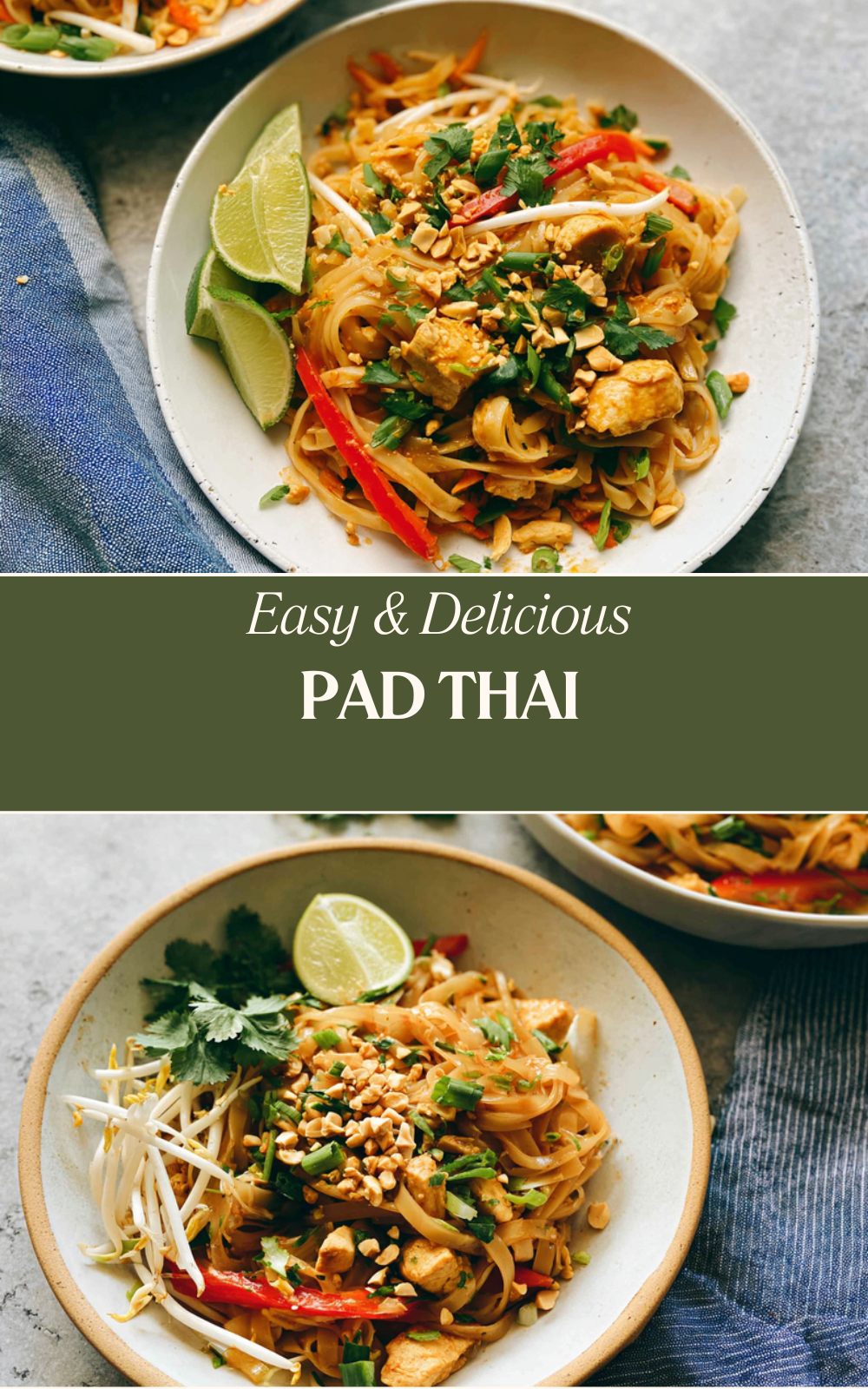
Remove from heat and garnish with 3 chopped green onions, extra peanuts, 1/2 cup of fresh cilantro, and wedges from 2 limes. Serve immediately for the freshest taste, and consider pairing it with a simple side like homemade banana bread for a sweet contrast. The total preparation time is about 30 minutes, including 15 minutes for prep and 15 for cooking, making this Pad Thai ingredients list worth every second.
As mentioned, nutritional info per serving includes about 627 calories, with 77g carbohydrates and 22g protein, so it’s a filling option. For external insights, check out the health benefits of peanuts to see how they enhance your meal.

Dietary Substitutions to Customize Your Pad Thai
Protein and Main Component Alternatives
Swapping proteins can make your Pad Thai adaptable for different tastes and needs. For instance, if shrimp isn’t available, try using chicken for a hearty chicken Pad Thai recipe that’s still quick to prepare. Tofu works wonders for a vegetarian Pad Thai recipe, offering a plant-based protein that soaks up flavors nicely. These changes ensure the dish remains versatile for busy parents or diet-conscious eaters.
Vegetable, Sauce, and Seasoning Modifications
Feel free to switch up vegetables based on what’s in season; for example, add carrots instead of red bell pepper for extra crunch. In the sauce, use rice vinegar if tamarind paste is hard to find, maintaining that tangy edge in your Pad Thai sauce recipe. Seasonings can be adjusted with more Sriracha for spice lovers, making it easy to tailor the authentic Pad Thai recipe to your preferences.
Mastering Pad Thai: Advanced Tips and Variations
Pro Cooking Techniques
To elevate your Pad Thai, focus on high-heat stir-frying for that wok’s char effect, which enhances the authentic flavor. Chopping ingredients ahead, as suggested in the tips, saves time and keeps things organized for working professionals. For creative twists, try adding a dash of sesame oil for depth in your easy Pad Thai recipe.
Flavor Variations
Experiment with herbs like basil alongside cilantro to vary the taste in your best Pad Thai recipe. If you’re into the vegetarian Pad Thai recipe, incorporate more veggies for a nutrient-packed meal. Pair this with apple cranberry crisp for a dessert that complements the spices.
Presentation Tips
Garnish creatively with lime wedges and peanuts for an eye-catching plate. Make-ahead options include prepping the sauce and veggies in advance, ideal for party hosts.
How to Store Pad Thai: Best Practices
Proper storage keeps your Pad Thai fresh and tasty. For refrigeration, place leftovers in an airtight container and chill for up to 2 days to maintain quality. Freezing works for longer storage; portion it into bags and freeze for up to a month, thawing in the fridge overnight. When reheating, use a skillet over medium heat with a splash of water to keep the noodles firm and flavorful, perfect for meal prep.
FAQs: Frequently Asked Questions About Pad Thai
What ingredients do I need to make traditional Pad Thai?
Traditional Pad Thai includes rice noodles, eggs, a choice of protein such as shrimp, chicken, or tofu, bean sprouts, peanuts, and green onions. The dish is flavored with a sauce made from tamarind paste, fish sauce, palm sugar, and sometimes lime juice. Stir-frying these ingredients quickly in a wok creates the characteristic balance of sweet, sour, salty, and savory flavors.
How can I make Pad Thai suitable for a vegetarian or vegan diet?
To make Pad Thai vegetarian or vegan, skip the eggs and replace fish sauce with soy sauce or tamari. You can also add extra vegetables like bell peppers or carrots for more texture. Using tofu as the protein is a great vegan alternative. These substitutions keep the dish flavorful while fitting plant-based diets.
What’s the best way to store and reheat leftover Pad Thai?
Store leftover Pad Thai in an airtight container in the refrigerator for up to 2 days. To reheat, warm it gently in a skillet over medium heat, adding a splash of water or broth to prevent sticking. Avoid microwaving for best texture; reheating in a pan helps maintain the noodles’ firmness and flavor.
Can I prepare Pad Thai sauce without tamarind paste?
If tamarind paste is unavailable, you can substitute with a mixture of lime juice and a bit of brown sugar or vinegar to achieve a similar tangy-sweet taste. This combination replicates tamarind’s sourness and balances the sauce, although tamarind paste offers a more authentic flavor.
How can I make gluten-free Pad Thai at home?
To make gluten-free Pad Thai, use rice noodles that are labeled gluten-free and substitute regular soy sauce with tamari or coconut aminos. Confirm that fish sauce or other condiments do not contain gluten. These adjustments allow you to enjoy Pad Thai without compromising flavor or texture.
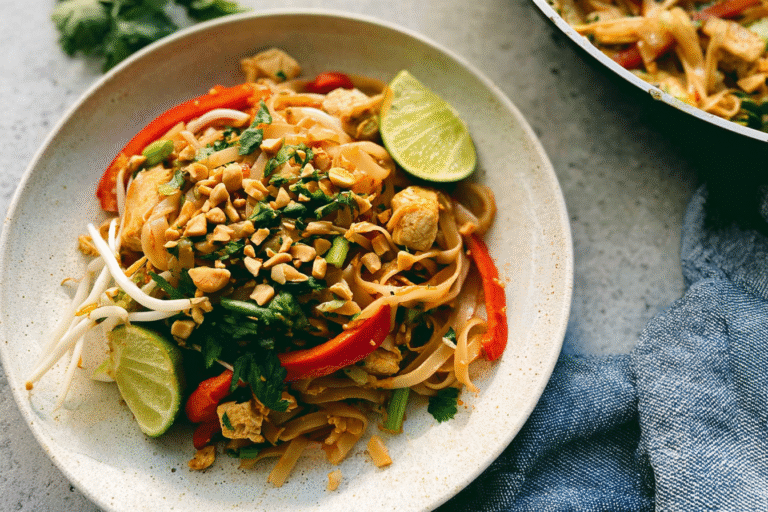
Pad Thai
🍜 Pad Thai brings the authentic taste of Thai street food into your home with bold flavors and fresh ingredients.
🌿 This dish offers a balanced combination of protein, vegetables, and a deliciously tangy-sweet sauce that satisfies cravings and nourishes.
- Total Time: 30 minutes
- Yield: 4 servings
Ingredients
– 8 ounces rice noodles
– 3 tablespoons oil for stir-frying
– 3 cloves garlic, minced for flavor
– 8 ounces uncooked shrimp, chicken, or extra-firm tofu, cut into small pieces for protein
– 2 eggs for richness and binding
– 1 cup fresh bean sprouts for freshness and vitamins
– 1 red bell pepper, thinly sliced for sweetness and crunch
– 3 green onions, chopped for mild onion flavor and garnish
– 1/2 cup dry roasted peanuts for crunch and nutty taste
– 2 limes for juice to add tangy zest
– 1/2 cup fresh cilantro, chopped for fresh, citrusy notes
– 3 tablespoons fish sauce for salty umami depth
– 1 tablespoon low-sodium soy sauce for savory element
– 5 tablespoons light brown sugar for sweetness
– 2 tablespoons rice vinegar or tamarind paste for sour note
– 1 tablespoon Sriracha hot sauce or more to taste for heat and spice
– 2 tablespoons creamy peanut butter (optional) for creaminess and nutty flavor
Instructions
1-First Step: Prepare the Noodles Begin by cooking 8 ounces of rice noodles according to the package instructions until they are just tender. Once done, rinse them under cold water to stop the cooking process and prevent them from sticking together. This step is crucial for achieving the perfect texture in your easy Pad Thai recipe, as overcooked noodles can make the dish mushy.
2-Second Step: Make the Sauce In a bowl, mix together 3 tablespoons fish sauce, 1 tablespoon low-sodium soy sauce, 5 tablespoons light brown sugar, 2 tablespoons rice vinegar or tamarind paste, 1 tablespoon Sriracha hot sauce, and 2 tablespoons creamy peanut butter if you’re using it. Stir until everything blends smoothly; this homemade Pad Thai sauce will tie all the flavors together. For adaptations, add more Sriracha for a spicier vegetarian Pad Thai recipe or use tamarind for a more authentic touch.
3-Third Step: Cook the Protein and Veggies Heat 3 tablespoons of oil in a large pan or wok over medium-high heat. Add 3 cloves of minced garlic, 8 ounces of your chosen protein (shrimp, chicken, or tofu), and 1 thinly sliced red bell pepper. Sauté until the protein is cooked through, which takes about 5 minutes; stir frequently to ensure even cooking. This step infuses the ingredients with garlic’s aroma, making your chicken Pad Thai recipe or whichever version you’re preparing, truly flavorful.
4-Fourth Step: Add the Eggs Push the cooked ingredients to one side of the pan and add a bit more oil if needed. Crack in 2 eggs and scramble them directly in the pan, breaking them into small pieces as they cook for about 1-2 minutes. Once the eggs are set, mix them with the other ingredients for that integrated texture in your Pad Thai. For dietary tweaks, omit the eggs in a vegan version to keep things simple.
5-Fifth Step: Combine Everything Add the prepared noodles, the sauce you made earlier, 1 cup of fresh bean sprouts, and 1/2 cup of dry roasted peanuts to the pan. Toss everything together over medium heat for 2-3 minutes until well combined and heated through. This is where the magic happens, blending the best Pad Thai recipe elements for a harmonious dish; adjust the heat to avoid burning.
6-Final Step: Garnish and Serve Remove from heat and garnish with 3 chopped green onions, extra peanuts, 1/2 cup of fresh cilantro, and wedges from 2 limes. Serve immediately for the freshest taste, and consider pairing it with a simple side like homemade banana bread for a sweet contrast. The total preparation time is about 30 minutes, including 15 minutes for prep and 15 for cooking, making this Pad Thai ingredients list worth every second.
Last Step:
Please leave a rating and comment letting us know how you liked this recipe! This helps our business to thrive and continue providing free, high-quality recipes for you.Notes
🌿 Prepare vegetables, protein, and sauce ahead of time for quicker cooking.
🌰 Add creamy peanut butter to the sauce for a richer, creamier flavor.
🌱 For a vegan version, omit eggs and use tofu; substitute fish sauce with additional soy sauce.
- Prep Time: 15 minutes
- Cook Time: 15 minutes
- Category: Main Course
- Method: Stir-frying
- Cuisine: Thai
- Diet: Can be made gluten-free and vegetarian
Nutrition
- Serving Size: 1 serving
- Calories: 627
- Sugar: 20 g
- Sodium: 1867 mg
- Fat: 27 g
- Saturated Fat: 4 g
- Carbohydrates: 77 g
- Fiber: 5 g
- Protein: 22 g
- Cholesterol: 153 mg