
Why You’ll Love This Prime Rib Roast
Imagine serving a meal that combines simplicity with rich flavors, making it a hit for family gatherings or special occasions. This prime rib roast recipe stands out for its ease of preparation, allowing even novice cooks to create a gourmet dish without spending hours in the kitchen. You’ll appreciate how the straightforward steps lead to tender, juicy results that impress everyone at the table.
Beyond its delicious taste, prime rib roast offers health benefits that make it a smart choice for your diet. Loaded with high-quality protein, it supports muscle health and delivers essential nutrients to keep you energized. By opting for lean cuts and mindful portion sizes, you can enjoy this beefy delight as part of a balanced eating plan.
What sets this recipe apart is its versatility, letting you adapt it to various needs and preferences. Whether you’re catering to gluten-free diets or experimenting with different seasonings, the prime rib roast pairs beautifully with a wide array of side dishes. Its distinctive flavor, with a perfect crust and tender interior, ensures every bite is memorable and satisfying.
Jump to:
- Why You’ll Love This Prime Rib Roast
- Essential Ingredients for Prime Rib Roast
- How to Prepare the Perfect Prime Rib Roast: Step-by-Step Guide
- Getting Started: Preparation Basics
- The Roasting Process
- Finishing Touches
- Dietary Substitutions to Customize Your Prime Rib Roast
- Mastering Prime Rib Roast: Advanced Tips and Variations
- Pro Techniques for Better Results
- Make-Ahead and Pairing Ideas
- How to Store Prime Rib Roast: Best Practices
- FAQs: Frequently Asked Questions About Prime Rib Roast
- How much prime rib should I buy per person for a dinner?
- Should I choose bone-in or boneless prime rib for roasting?
- What is the best way to cook prime rib to achieve medium rare doneness?
- Why should I let my prime rib rest after cooking and how long is ideal?
- How can I slice prime rib for the best texture and tenderness?
- Prime Rib Roast
- Ingredients
- Instructions
- Last Step:
- Notes
- Nutrition
- Did you make this recipe?
Essential Ingredients for Prime Rib Roast
Gathering the right ingredients is the first step to achieving a mouthwatering prime rib roast. This section outlines everything you need, focusing on fresh, high-quality items that enhance the beef’s natural flavors. Using precise measurements ensures your roast turns out just right every time.
- 5 pounds beef prime rib (adjust seasoning for larger roasts)
- 1½ teaspoons salt
- 2 teaspoons pepper
- 2 teaspoons fresh rosemary
- 1 teaspoon fresh thyme
- 8 cloves garlic, minced
- 1/4 cup olive oil
- Horseradish for serving (optional)
These ingredients form the foundation of your dish, creating an herb rub that infuses the meat with aromatic depth. Special dietary options can include vegan substitutes like seitan or mushroom-based roasts for those avoiding meat.
How to Prepare the Perfect Prime Rib Roast: Step-by-Step Guide
Getting Started: Preparation Basics
Before you begin, make sure your prime rib is ready for cooking. Start by removing the prime rib from the refrigerator and letting it sit at room temperature for about one hour; this helps ensure even cooking and better seasoning absorption. Preheat your oven to 500°F and place an oven rack in the center for optimal heat distribution.
Next, prepare the herb rub by combining 1½ teaspoons salt, 2 teaspoons pepper, 2 teaspoons fresh rosemary, 1 teaspoon fresh thyme, 8 cloves minced garlic, and 1/4 cup olive oil in a bowl. This mixture adds layers of flavor that complement the beef’s richness. Pat the roast dry with paper towels and apply the seasoning rub evenly on all sides for a flavorful crust.
The Roasting Process
Position the roast in your roasting pan: place it bone-side down if it’s bone-in, or on a rack if boneless to promote even cooking. Roast at 500°F for 15 minutes to sear the outside and lock in juices. After this initial sear, reduce the oven temperature to 325°F and continue cooking until the internal temperature reaches your desired doneness aim for 115-120°F for rare, 125-130°F for medium rare, 135-140°F for medium, or 145-150°F for medium well.
It’s important to monitor the roast closely with a meat thermometer to avoid overcooking. Once the roast is about 5 to 10 degrees below your target temperature, take it out of the oven, tent it with foil, and let it rest for 30 minutes. This resting period allows the juices to redistribute, resulting in a more tender and flavorful roast. For a detailed guide on achieving medium rare doneness, check out Serious Eats’ perfect prime rib recipe, which offers expert tips.
Finishing Touches
After resting, slice the roast against the grain into ½-inch thick pieces for the best texture and tenderness. Serve it with horseradish or the pan juices if you like an extra kick of flavor. Keep in mind that cooking time after the sear is about 10-12 minutes per pound for rare, 13-14 minutes per pound for medium rare, and 14-15 minutes per pound for medium well, adjusting based on your roast’s size.
Pair this hearty main dish with something sweet, like a classic apple cranberry crisp, to round out your meal and satisfy dessert lovers. This combination makes for a balanced feast that’s perfect for any occasion.

Dietary Substitutions to Customize Your Prime Rib Roast
Adapting recipes to fit different diets is easier than you think, and this prime rib roast is no exception. For those following a non-beef diet, consider using pork tenderloin or lamb leg roasts as tasty alternatives that maintain a similar tender texture. Plant-based eaters can swap in seitan or large portobello mushrooms, seasoned to echo the roast’s savory notes.
When it comes to sauces and seasonings, get creative with modifications. For instance, replace traditional horseradish sauce with a vegan mayonnaise-based version to keep things plant-friendly. If gluten is a concern, opt for gluten-free soy sauce or tamari in your marinades and ensure all herbs and spices are certified gluten-free. Incorporating seasonal vegetables like roasted Brussels sprouts or carrots can add a fresh twist and make the meal more nutritious.
These changes not only accommodate various preferences but also keep the dish exciting. By experimenting with these substitutions, you can make prime rib roast a versatile staple in your kitchen for everyone to enjoy.
Mastering Prime Rib Roast: Advanced Tips and Variations
Pro Techniques for Better Results
Taking your prime rib roast to the next level involves some advanced methods, like reverse searing. This technique means roasting at a low temperature first and then finishing with a high-heat sear to achieve a perfect crust without overcooking the inside. It’s a great way to ensure juicy, evenly cooked meat every time.
Flavor variations can elevate your dish further try adding smoked paprika or cumin to your herb rub for a unique twist. For presentation, slice the roast thinly and arrange it on a platter with fresh herbs for an elegant look that wows your guests. If you’re planning ahead, season the roast a day in advance to let the flavors penetrate deeply.
Make-Ahead and Pairing Ideas
Make-ahead options make this recipe even more convenient; prepare the rub and apply it the night before to enhance taste. When serving, consider pairing with desserts from the blog, such as blackberry cobbler, to create a full meal experience. Bone-in roasts add extra flavor and can be tied by your butcher for easier roasting, while a meat thermometer is essential for precise doneness.
Resting the roast for 30 minutes is key to retaining juices and improving tenderness, so don’t skip this step. These tips help turn a simple roast into a masterpiece that’s both impressive and delicious.
How to Store Prime Rib Roast: Best Practices
Proper storage keeps your prime rib roast fresh and tasty for later enjoyment. After cooking, place it in an airtight container and refrigerate for up to 3-4 days to preserve its flavor and quality. This method helps maintain the meat’s tenderness without risking spoilage.
If you want to extend its shelf life, wrap the roast tightly in plastic wrap and aluminum foil or use vacuum-sealed bags for freezing; it can last up to 3 months this way. When reheating, do so gently in the oven at a low temperature or slice and warm in a skillet to keep the texture soft and juicy. For meal prep, portion the roast into smaller servings before storing to make reheating straightforward for busy days.
FAQs: Frequently Asked Questions About Prime Rib Roast
How much prime rib should I buy per person for a dinner?
A good guideline is to purchase about one pound of prime rib per person. If you’re serving a bone-in standing rib roast, plan on two people per bone. When offering many side dishes, you can reduce this amount to about ½ to ¾ pound per person. This ensures enough meat for everyone without excessive leftovers.
Should I choose bone-in or boneless prime rib for roasting?
Bone-in prime rib generally offers more flavor and tends to cook more evenly due to the insulation provided by the bones. However, boneless prime rib can be easier to carve and also produces excellent results. If you opt for bone-in, you can ask your butcher to remove the bones and tie them back to the roast to retain flavor while simplifying carving.
What is the best way to cook prime rib to achieve medium rare doneness?
Start by roasting your prime rib at 500°F for 15 minutes to develop a crust. Then lower the oven temperature to 325°F and continue cooking for about 13-14 minutes per pound. Use a meat thermometer to check internal temperature: remove the roast when it reaches 125-130°F, as it will rise during resting. Let the meat rest for 20-30 minutes before carving.
Why should I let my prime rib rest after cooking and how long is ideal?
Resting the prime rib for 20 to 30 minutes after cooking allows the juices to redistribute evenly within the meat, which results in a juicier and more tender roast. Cutting into the meat immediately causes the juices to escape, making the roast dry. Keep the roast loosely tented with foil while resting to maintain warmth.
How can I slice prime rib for the best texture and tenderness?
Always slice prime rib against the grain, which means cutting perpendicular to the direction of the muscle fibers. This breaks down the fibers and makes the meat easier to chew. Aim for slices about ¼ to ½ inch thick depending on preference, and use a sharp carving knife for smooth, clean cuts that showcase the roast’s tenderness.
Prime Rib Roast
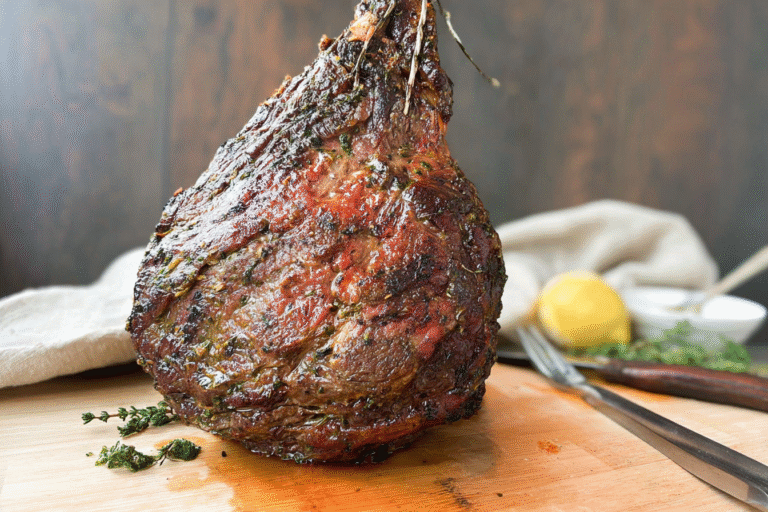
🥩 Master the art of restaurant-quality prime rib with this foolproof technique that guarantees perfect doneness every time
🍽️ Impress your guests with a tender, juicy roast that’s bursting with herb-infused flavor and caramelized crust
- Total Time: 3 hours 15 minutes
- Yield: 8–10 servings 1x
Ingredients
5 pounds beef prime rib (adjust seasoning for larger roasts)
1½ teaspoons salt
2 teaspoons pepper
2 teaspoons fresh rosemary
1 teaspoon fresh thyme
8 cloves garlic minced
1/4 cup olive oil
Horseradish for serving (optional)
Instructions
1- Before you begin, make sure your prime rib is ready for cooking. Start by removing the prime rib from the refrigerator and letting it sit at room temperature for about one hour; this helps ensure even cooking and better seasoning absorption. Preheat your oven to 500°F and place an oven rack in the center for optimal heat distribution.
2- Next, prepare the herb rub by combining 1½ teaspoons salt, 2 teaspoons pepper, 2 teaspoons fresh rosemary, 1 teaspoon fresh thyme, 8 cloves minced garlic, and 1/4 cup olive oil in a bowl. This mixture adds layers of flavor that complement the beef’s richness. Pat the roast dry with paper towels and apply the seasoning rub evenly on all sides for a flavorful crust.
3-Position the roast in your roasting pan: place it bone-side down if it’s bone-in, or on a rack if boneless to promote even cooking. Roast at 500°F for 15 minutes to sear the outside and lock in juices. After this initial sear, reduce the oven temperature to 325°F and continue cooking until the internal temperature reaches your desired doneness aim for 115-120°F for rare, 125-130°F for medium rare, 135-140°F for medium, or 145-150°F for medium well.
4- It’s important to monitor the roast closely with a meat thermometer to avoid overcooking. Once the roast is about 5 to 10 degrees below your target temperature, take it out of the oven, tent it with foil, and let it rest for 30 minutes. This resting period allows the juices to redistribute, resulting in a more tender and flavorful roast. For a detailed guide on achieving medium rare doneness, check out Serious Eats’ perfect prime rib recipe, which offers expert tips.
5- After resting, slice the roast against the grain into ½-inch thick pieces for the best texture and tenderness. Serve it with horseradish or the pan juices if you like an extra kick of flavor. Keep in mind that cooking time after the sear is about 10-12 minutes per pound for rare, 13-14 minutes per pound for medium rare, and 14-15 minutes per pound for medium well, adjusting based on your roast’s size.
6- Pair this hearty main dish with something sweet, like a classic apple cranberry crisp, to round out your meal and satisfy dessert lovers. This combination makes for a balanced feast that’s perfect for any occasion.
Last Step:
Please leave a rating and comment letting us know how you liked this recipe! This helps our business to thrive and continue providing free, high-quality recipes for you.Notes
🌡️ Use a meat thermometer to monitor internal temperature for precise doneness
⏰ Remove the roast a few degrees before target temperature as it continues cooking while resting
🔪 Slice against the grain for maximum tenderness and juiciness
- Prep Time: 1 hour 15 minutes
- Resting Time: 30 minutes
- Cook Time: 1 hour 30 minutes
- Category: Main Course
- Method: Roasting
- Cuisine: American
- Diet: Gluten Free
Nutrition
- Serving Size: 6 ounces
- Calories: 729
- Sugar: 0.03
- Sodium: 102
- Fat: 66
- Saturated Fat: 26
- Unsaturated Fat: 33
- Trans Fat: 0
- Carbohydrates: 1
- Fiber: 0.2
- Protein: 31
- Cholesterol: 137