
Why You’ll Love This Artichoke Soup
This artichoke soup recipe brings something special to your table with its simple preparation and delightful taste. Imagine whipping up a comforting meal that takes just over an hour, making it perfect for busy evenings when you want something homemade without the fuss. Not only is it easy, but artichoke soup also packs a punch of nutrition, helping you feel good from the inside out.
One reason you’ll enjoy this soup is its health perks. Artichokes are full of fiber and vitamins that support your gut and boost your energy, turning a simple bowl into a smart choice for your daily meals. Plus, it’s versatile enough to fit different diets, whether you’re going for something light or hearty. The creamy texture and fresh flavors make every sip feel like a warm hug on a cool day.
To make it even better, this soup stands out with its unique twist on classic veggies. You can tweak it based on what you have on hand, and it always ends up tasty. That’s why it’s become a go-to for home cooks like me who love mixing things up in the kitchen. By including artichoke soup in your routine, you’ll discover a recipe that feels both comforting and exciting.
Jump to:
- Why You’ll Love This Artichoke Soup
- Essential Ingredients for Artichoke Soup
- How to Prepare the Perfect Artichoke Soup: Step-by-Step Guide
- Dietary Substitutions to Customize Your Artichoke Soup
- Mastering Artichoke Soup: Advanced Tips and Variations
- Quick Comparison Table of Variations
- How to Store Artichoke Soup: Best Practices
- FAQs: Frequently Asked Questions About Artichoke Soup
- Can artichoke soup be served cold, and how does the taste change?
- Is it possible to prepare artichoke soup in advance and freeze it?
- What’s the difference between artichokes packed in brine and marinated artichokes when making soup?
- Can I substitute cream in artichoke soup with chickpeas for a dairy-free, higher-protein option?
- How should I store leftover artichoke soup, and how long does it stay fresh?
- Artichoke Soup
- Ingredients
- Instructions
- Last Step:
- Notes
- Nutrition
- Did you make this recipe?
Essential Ingredients for Artichoke Soup
Getting the ingredients right is key to making a great artichoke soup, and I’ve gathered everything you need for this creamy delight. Start with fresh, quality items to bring out the best flavors. Below is a complete list of what goes into this recipe, pulled straight from the details I have. Each one plays a part in creating that rich, smooth finish.
- 1 tablespoon olive oil
- 1 tablespoon butter
- 1 diced onion
- 2 minced garlic cloves
- ¼ teaspoon salt
- ¼ teaspoon freshly cracked pepper
- 2 cans (14 ounces each) artichoke hearts in brine, drained and rinsed
- 3 cups low-sodium vegetable stock
- 1 ½ cups heavy cream
- ½ cup crème fraiche
- 1 sliced and toasted baguette, for serving
- 1 jar grilled artichoke hearts, for garnish
- Lemon wedges for spritzing
These ingredients come together to make a soup that’s not just tasty but also adaptable. For instance, if you’re watching your diet, swapping a few items can keep it just as good. Remember, using the right amounts helps balance the flavors, so follow this list closely for the best results.
How to Prepare the Perfect Artichoke Soup: Step-by-Step Guide
Let’s walk through making artichoke soup, step by step, so you can feel confident in the kitchen. First, prepare your ingredients by dicing the onion and mincing the garlic, which makes everything go smoothly. This setup, often called mise en place, keeps things organized and fun. Heat a large pot over medium-low heat and add 1 tablespoon olive oil and 1 tablespoon butter to start building that flavorful base.
Next, add the diced onion and 2 minced garlic cloves to the pot, stirring often until they turn translucent, about 6 to 8 minutes. Then, stir in the drained and rinsed artichoke hearts from the 2 cans and cook for another 5 minutes to blend the tastes. This step lets the artichokes soak up all the goodness from the onions and garlic. Pour in 3 cups of low-sodium vegetable stock and bring it to a boil, then reduce the heat and simmer for 15 to 20 minutes until the artichokes are tender and almost melt into the soup.
Now, carefully transfer the mixture to a blender and blend until smooth, using a towel on top for safety. Pour it back into the pot and stir in 1 ½ cups heavy cream and ½ cup crème fraiche, then bring it to a simmer for about 30 minutes to thicken slightly. Taste and add more salt and pepper if needed, or extra cream if it’s too briny. For serving, top with a toasted baguette slice, a grilled artichoke heart, and a lemon wedge for a fresh spritz. This recipe, with its straightforward steps, just took about 1 hour and 10 minutes total, making it a breeze for beginners.
To tie this into my blog’s vibe, if you’re looking for more easy treats, check out our apple cranberry crisp recipe for a fruity twist that pairs well with soups on cooler days.

Dietary Substitutions to Customize Your Artichoke Soup
Making artichoke soup your own is all about smart swaps, and there are plenty of ways to do it. For example, if you want to replace the artichoke hearts, try zucchini or asparagus for a milder taste that still keeps the soup hearty. You could also add cooked white beans or lentils to boost the protein, turning it into a more filling meal. These changes help tailor the soup to your preferences while keeping it delicious.
When it comes to other tweaks, swapping vegetable broth with chicken broth can add a deeper flavor for non-vegetarian versions. Feel free to experiment with herbs like thyme or basil to mix up the taste. For a cheesy vibe without dairy, toss in some nutritional yeast or vegan cheese. Adjusting things like garlic or adding a splash of lemon juice can brighten it up, especially if you’re aiming for something lighter. Remember, these options make the soup flexible for everyone, from busy parents to diet-conscious folks.
Another helpful tip is to use the advice from Discover the health benefits of artichokes, which shows how these swaps can enhance nutrition. As you play around, you’ll find combinations that suit your style, much like how I adapt recipes for family gatherings.
Mastering Artichoke Soup: Advanced Tips and Variations
Once you’re comfortable with the basics, let’s dive into some pro tips to elevate your artichoke soup. For a smoky twist, roast the artichoke hearts before adding them to the pot, which brings out a deeper flavor that makes the soup unforgettable. Using a high-quality blender ensures that creamy texture we all love, turning simple ingredients into something special. These techniques can take your cooking to the next level without much extra effort.
Flavor variations are where the fun begins; try adding smoked paprika or curry powder for a spicy kick. You could also mix in fresh spinach or kale at the end for extra nutrients and color. If you’re planning ahead, prepare the soup base and store it for up to 3 days in the fridge, which is great for meal prep. Serving ideas include garnishing with a swirl of cream or toasted nuts to make it look as good as it tastes.
For more inspiration on desserts that complement this soup, explore our blueberry peach crisp, a fruity option that adds a sweet end to your meal. Plus, as per external insights from homemade creamy vegetable soup recipe, experimenting with veggies can lead to endless variations that keep things exciting in the kitchen.
Quick Comparison Table of Variations
| Variation | Key Change | Benefit |
|---|---|---|
| Roasted Artichokes | Roast before adding | Smokier flavor |
| Spicy Add-In | Add smoked paprika | Extra warmth and depth |
| Green Boost | Stir in spinach | More vitamins and color |
How to Store Artichoke Soup: Best Practices
Storing your artichoke soup the right way keeps it fresh and tasty for later. First, let the soup cool completely before putting it in airtight containers, which helps avoid any spoilage. You can keep it in the fridge for up to 3-4 days, making it easy to enjoy leftovers. For freezing, use freezer-safe bags or containers and leave some space for expansion, so it lasts up to 3 months.
When you’re ready to eat, thaw it overnight in the fridge and reheat gently on the stove to keep that creamy texture. Stir occasionally to prevent it from separating, and avoid reheating multiple times for the best quality. Portioning into individual servings before freezing makes meal prep simple, especially for busy families. These steps ensure your soup stays delicious and safe, adding convenience to your routine.
FAQs: Frequently Asked Questions About Artichoke Soup
Can artichoke soup be served cold, and how does the taste change?
Yes, artichoke soup can be served cold, especially during warmer months. Chilling the soup gives it a refreshing quality while the creamy texture remains smooth. Serving it cold pairs well with crusty bread or a light salad, making it a pleasant summer dish. However, some flavors might feel more subdued compared to serving it warm, so adjusting seasoning before chilling is recommended.
Is it possible to prepare artichoke soup in advance and freeze it?
Artichoke soup can be prepared ahead and frozen, but results may vary due to its creamy texture. Since this soup is simmered after adding cream, it tends to maintain consistency better when frozen. To freeze, cool the soup completely, store it in airtight containers, and thaw in the refrigerator before reheating gently to prevent separation.
What’s the difference between artichokes packed in brine and marinated artichokes when making soup?
Artichokes packed in brine are simply preserved in a saltwater solution without added flavors, making them neutral in taste. Marinated artichokes, on the other hand, are soaked in oils, vinegar, and herbs, imparting a more robust, tangy flavor. Using brined artichokes gives a cleaner taste to the soup, while marinated ones can add complexity but may alter the intended flavor profile.
Can I substitute cream in artichoke soup with chickpeas for a dairy-free, higher-protein option?
Replacing cream with blended chickpeas can create a thicker, protein-rich soup while reducing dairy content. Chickpeas add a mild earthiness that slightly changes the flavor but maintain a creamy consistency when pureed. It’s best to season well and adjust texture with broth or water for desired richness. This substitution suits those seeking a plant-based alternative.
How should I store leftover artichoke soup, and how long does it stay fresh?
Store leftover artichoke soup in an airtight container in the refrigerator for up to 3-4 days. For longer storage, freeze the soup in portions. When reheating, warm gently over low heat while stirring to keep the texture smooth and prevent curdling. Avoid reheating multiple times to maintain flavor and food safety.
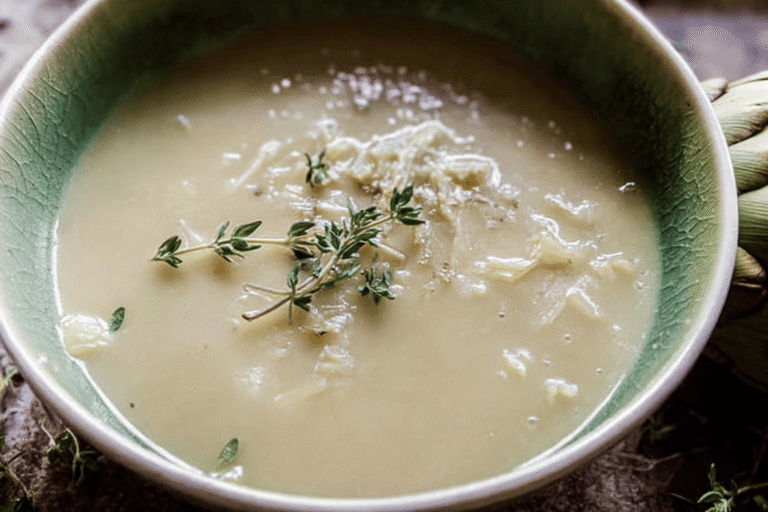
Artichoke Soup
🥣 Enjoy a rich and smooth creamy artichoke soup that’s both comforting and flavorful, perfect for chilly days.
🍋 The subtle tang of artichokes combined with creamy textures makes this soup a soothing and luxurious treat.
- Total Time: 1 hour 10 minutes
- Yield: 4-6 servings
Ingredients
– 1 tablespoon olive oil
– 1 tablespoon butter
– 1 diced onion
– 2 minced garlic cloves
– ¼ teaspoon salt
– ¼ teaspoon freshly cracked pepper
– 2 cans (14 ounces each) artichoke hearts in brine, drained and rinsed
– 3 cups low-sodium vegetable stock
– 1 ½ cups heavy cream
– ½ cup crème fraiche
– 1 sliced and toasted baguette for serving
– 1 jar grilled artichoke hearts for garnish
– Lemon wedges for spritzing
Instructions
1-First, prepare your ingredients by dicing the onion and mincing the garlic, which makes everything go smoothly. This setup, often called mise en place, keeps things organized and fun. Heat a large pot over medium-low heat and add 1 tablespoon olive oil and 1 tablespoon butter to start building that flavorful base.
2-Next, add the diced onion and 2 minced garlic cloves to the pot, stirring often until they turn translucent, about 6 to 8 minutes. Then, stir in the drained and rinsed artichoke hearts from the 2 cans and cook for another 5 minutes to blend the tastes. This step lets the artichokes soak up all the goodness from the onions and garlic. Pour in 3 cups of low-sodium vegetable stock and bring it to a boil, then reduce the heat and simmer for 15 to 20 minutes until the artichokes are tender and almost melt into the soup.
3-Now, carefully transfer the mixture to a blender and blend until smooth, using a towel on top for safety. Pour it back into the pot and stir in 1 ½ cups heavy cream and ½ cup crème fraiche, then bring it to a simmer for about 30 minutes to thicken slightly. Taste and add more salt and pepper if needed, or extra cream if it’s too briny. For serving, top with a toasted baguette slice, a grilled artichoke heart, and a lemon wedge for a fresh spritz. This recipe, with its straightforward steps, just took about 1 hour and 10 minutes total, making it a breeze for beginners.
Last Step:
Please leave a rating and comment letting us know how you liked this recipe! This helps our business to thrive and continue providing free, high-quality recipes for you.Notes
🧄 Use artichoke hearts in brine for a slight tang; avoid marinated ones as they may make the soup oily.
❄️ Frozen artichoke hearts can reduce brininess if preferred.
🍋 Adding a spritz of lemon enhances freshness and balances richness.
- Prep Time: 10 minutes
- Cook Time: 1 hour
- Category: Soup
- Method: Simmering and Blending
- Cuisine: American
- Diet: Vegetarian
Nutrition
- Serving Size: 1 bowl (about 1.5 cups)
- Calories: Approx. 250 calories per serving
- Sugar: 3g
- Sodium: 400mg
- Fat: 20g
- Saturated Fat: 13g
- Unsaturated Fat: 6g
- Trans Fat: 0g
- Carbohydrates: 12g
- Fiber: 4g
- Protein: 5g
- Cholesterol: 70mg